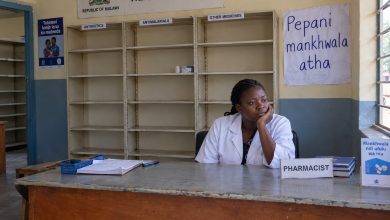
Findings of a new study have shown that corruption continues to undermine government investment in health through diversion of funds meant for infrastructure and services, leading to inefficiencies in health service delivery.
Titled ‘When the cure leaks: corruption, health spending and health outcomes in Malawi’ and developed by economists Bertha Bangara-Chikadza and George Yusufu from the University of Malawi alongside George Banda, an expert in policy analysis and political economy of development from Stellenbosch University in South Africa, the study said the long-term impact is that a one percent increase in the interaction of health expenditure and corruption results in a 0.3176 percent decrease in life expectancy.

Using data from 1990 to 2023, the study shows that corruption significantly weakens the positive impact of health spending, reducing life expectancy and worsening infant and under-five mortality outcomes.
Reads the study in part: “The long-term effects are evident, where a one-unit increase in corruption reduces life expectancy by 0.05 percentage points, holding other factors constant.
“We also found that while health expenditure increases life expectancy in the long run, the relationship turns negative with the contingent effect of corruption, which worsens health outcomes by 0.3176 percentage points.”
In their report, the authors argue that despite persistent financing gaps, the health sector is the breeding ground for corruption in the country, citing the Covid-19 period when public and private sector officials colluded to misspend about $1.3 million (about K2.2 billion) of the pandemic response funds through inflated procurement expenses.
Further reads the study report: “Firstly, this paper recommends prioritising anti-corruption measures, including stricter audits, transparent procurement processes and accountability mechanisms for public health funds.
“This study’s results suggest that health expenditure should be tied to measurable outcomes to ensure efficiency and reduce leakage. Finally, addressing inequality and ensuring economic growth benefits for the broader population are essential for long-term health improvements.”
Commenting on the findings, Human Resources for Health chairperson Solomon Chomba said the study sends a serious message for change towards quality health service delivery.
He said: “We can’t dispute the existence of corruption in our health sector relating to drug theft, embezzlement of funds, bribery for services, and sexual corruption as reported in our various media platforms.”
Malawi Health Equity Network executive director George Jobe agreed with Chomba that the quantified impact, where increased corruption negates gains from health expenditure, shows that funding alone is insufficient without strong governance, integrity, and accountability systems.
He said: “Mhen recommends full transparency in procurement like open contracting, public disclosure of bids, contracts, and suppliers. Have timely audits with clear follow-through and sanctions regardless of status.”
Health rights activist Maziko Matemba said much of health system funding and support are donor funded and use donors’ systems where government financing is minimal with about 20 to 30 percent allocated from domestic resources.
Ministry of Health and Sanitation did not respond to our questions yesterday, but during the swearing-in of deputy ministers last week, President Peter Mutharika warned against corruption, saying he would not shield any official implicated in graft.
Malawi has slowed down in efforts to fight corruption in the past three years, with the Corruption Perception Index showing that since 2022, the country has maintained its score at 34 points, but has only been moving up on ranking.