When communities around Sambakusi, Chinkhande and Chandawe health centres in Ntchisi District moulded bricks and pooled scarce resources to build their own facilities, they believed they were constructing hope, safety and life.
They never imagined that years later, pregnant women would still face preventable suffering—and death.
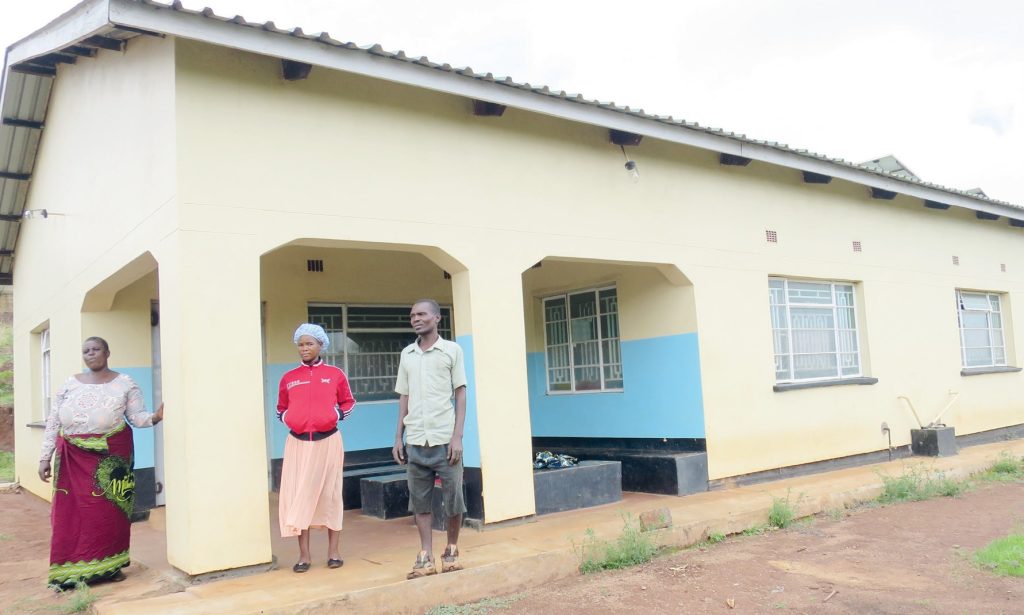
Sambakusi Health Centre | Ayamba Kandodo
The three communities lie in remote parts of the district, more than 20 kilometres from Ntchisi District Hospital, separated by rivers that swell during the rainy season and cut off access to referral health services.
Aware of the danger, especially to expectant mothers, communities took matters into their own hands. Chiefs donated land. Men, women and children abandoned daily livelihoods to mould bricks, ferry sand, cut firewood, raise money for cement and roofing sheets, and participate in every stage of construction.
Their goal was simple: reduce maternal and neonatal deaths.
Sixteen years later, that goal remains unmet.
The three health centres stand complete but silent. Their maternity wards have never received a mother in labour or a newborn child. They are monuments of unfinished hope.
Village Head Sambakusi, Christina Mbalame, says she is baffled by the delay.
“We built this health centre using our own resources so women would stop dying on the way to Ntchisi District Hospital,” she says. “But even today, there are no maternity services.”
She describes maternal and neonatal deaths as alarming.
“Many women and babies die because of the long distance. As a chief, I weep because we are losing productive people. I also cry as a mother—I know the pain of pregnancy and childbirth.”
Recently, she says, three women and five newborns died while travelling to the district hospital.
“We are tired of escorting preventable deaths to the grave,” she adds.
Health authorities initially cited the lack of water, sanitation and hygiene (Wash) facilities as the reason for withholding maternity services. With support from WaterAid Malawi, toilets, bathrooms, an incinerator, ash pits and a water supply were installed.
Yet services remain closed.
“Everything they asked for is now available. Why are we being treated like strangers in our own country?” Mbalame asks.
For 38-year-old Zione Chirwa of Chimatiro Village, the consequences are deeply personal. In 2014, she went into labour during the rainy season and first went to Sambakusi Health Centre, hoping to find a Traditional Birth Attendant. None was available.
With no alternative, she began the journey to Ntchisi District Hospital. At Kapunda River, swollen beyond crossing, her journey ended.
“We could not cross. The pains intensified and I started bleeding,” she recalls.
With no medical help, she gave birth by the riverbank.
“We were lucky it was daytime. My baby and I survived,” she says.
When they eventually reached the hospital, she says nurses questioned why the baby had already been born. Despite explaining the ordeal, she says they were fined before receiving care. Her underweight baby spent three days in kangaroo mother care.
“I nearly died. I decided never to get pregnant again,” she says, recalling the humiliation of giving birth in public.
A similar story comes from 26-year-old Dana Libson of Chinkhande Village. She delayed preparing for the long journey after being told maternity services would soon open locally.
“When labour came, Kalira River had already flooded. My child was born as we waited for the water to calm down,” she says.
She, too, was fined at the hospital. Her daughter is now two years old.
Around Chandawe Health Centre, fear has become entrenched. Some women have stopped giving birth altogether, choosing survival over motherhood. To access maternal services at the district hospital, families spend at least K35 000 one way—far beyond the reach of most.
This situation violates women’s fundamental rights to life, health and dignity. It contradicts international reproductive health standards and undermines Malawi’s commitment to Sustainable Development Goal 3 and Malawi 2063, which recognises a healthy population as the backbone of development.
The crisis affects men as well. Chiyembekezo Daniel of Sambakusi Village lost two children in 2007 and 2010 when his wife delivered on the way to hospital.
“I helped build this health centre to stop such deaths,” he says. “It pains me that the problem continues.”
He says families are draining limited resources on medical recovery and funerals instead of development.
“This is pushing us backwards,” he says.
Ntchisi District Hospital health promotion officer Frank Kaphaso explains that the facilities were not constructed as full-package centres.
“They lack staff houses. We have nurses ready, but without accommodation, we cannot deploy them,” he says, adding that nurses could be deployed immediately if housing is secured.
Council chairperson and Kaliramasamba Ward councillor Maloto Chimkombero acknowledges the crisis and attributes it to the absence of staff houses. He says the 2026/27 Constituency Development Fund will be used to construct houses.
“This year, maternity services will open,” he promises.
WaterAid Malawi programme officer Laston Zungu has urged authorities to act swiftly, warning that continued delays endanger lives and constitute a human rights concern.
As the sun rises and sets over Sambakusi, Chinkhande and Chandawe, hope fades with each day of silence. Communities wait beside health centres built with their own hands, watching women risk death simply for giving life—while buildings meant to save them stand unused.