National Planning Commission (NPC) says Malawi’s ambition to become a middle-income economy by 2063 is being undermined by a widening mismatch between economic growth and rapid population expansion.
NPC director general Frederick Changaya was reacting to the data published by the World Bank in its February 2026 Malawi Economic Monitor, indicating that the proportion of Malawians falling below the international poverty line of $3 (about K5 253) per day increased from 76 percent in 2023 to 76.5 percent in 2025.
In an interview on Monday, he said while the easiest route is to curb population growth, but the most economical way as an agro-based economy is to focus on high-end value chains with land and human capital as key productive sectors.
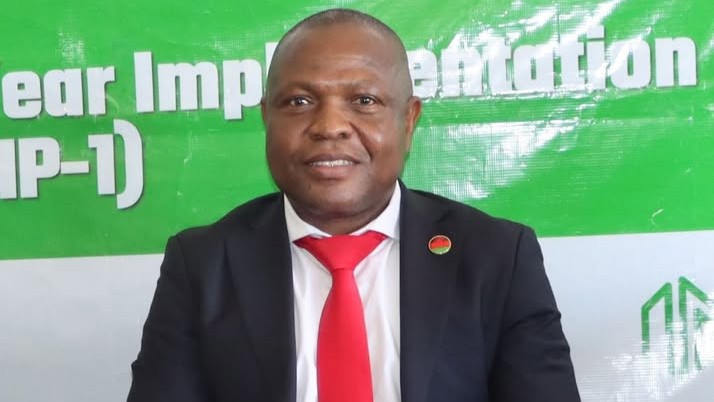
Said Changaya: “Our accelerator strategy is trying to address this mismatch by focusing on high-value chains such as chilli, thyme and vanilla, which can give farmers more income than maize, which is currently generating an average of $500 [about K875 500] per hectare for those practising subsistence farming.”
He said with each natural disaster, the economy loses about 20 percent of its generated growth and noted that Malawi is prone to disasters.
“While we are targeting an average growth of between 12 and 15 percent to make this vision a reality, the current structure where the majority are in the agriculture sector is not helping the economy,” said Changaya.
Economists say despite Malawi aspiring to transform into a lower middle-income economy by 2030 and an upper middle-income economy by 2063, the economic growth rate averaging 1.8 percent is not sufficient to foster development in a country with an annual population growth rate of 2.7 percent.
Malawi registered an economic growth rate of 1.9 percent in 2025, a rise from from 1.7 percent in 2024.
Yet with population growth at 2.6 percent, real gross domestic product (GDP) per capita declined for the
fourth consecutive year due to weather-related conditions, which reduced agricultural output, according to NPC.
World Bank data show that economic growth has averaged 2.2 percent, far below the recommended 10.6 percent required to grow the economy to a lower middle income status by 2030, with a GDP per capita mark of about $1 086 (about K1.9 million) .
On the contrary, despite absorbing more than 10 percent of the national budget, the agricultural sector continues to underperform.
The bank’s data show that maize yields average 2.1 metric tonnes (MT) per hectare (ha), far below the 2024 National Adaptation Plan target of four MT/ha and the estimated potential level of 10 MT/ha.
Centre for Social Concern economic governance officer Agnes Nyirongo, in an interview on Monday said rising poverty levels signal that the benefits of economic activity are not reaching the majority of the population.
She said: “Instead of broad-based development, many households are experiencing worsening economic conditions characterised by food insecurity, high unemployment and rising costs of living.
“The projected rebound to 3.6 percent economic growth in 2026 as anticipated by the government, offers a glimmer of hope. However, even this level of growth may not be sufficient to reduce poverty unless it is inclusive and accompanied by structural reforms.”
Mzuzu University economics lecturer Chistopher Mbukwa observed that the rising poverty levels is an indication that all efforts in the form of development strategies, programmes and projects that the country has been implementing have not succeeded.
He said: “The Malawi 2063 [MW2063] First 10-year Implementaiton Plan has a target of Malawi reaching a lower middle income country. So far, it has not reduced poverty five years since it was launched in 2021.
“It seems we have no solutions to make the economic growth resilient. With each climatic or external shock, our economic growth is affected.”
In the 2025/26 proposed National Budget, Minister of Finance, Economic Planning and Decentralisation Joseph Mwanamvekha said the country’s economic outlook remains cautiously positive, with growth projected to rise to 3.8 percent in 2026 from 2.7 percent in 2025 and further strengthen to 4.9 percent in 2027.