For years, female adolescence in Malawi has remained a serious concern not only among parents, but also education authorities.
This is as a result of unavailability or inappropriate washroom facilities in schools to use during their menstrual cycles.
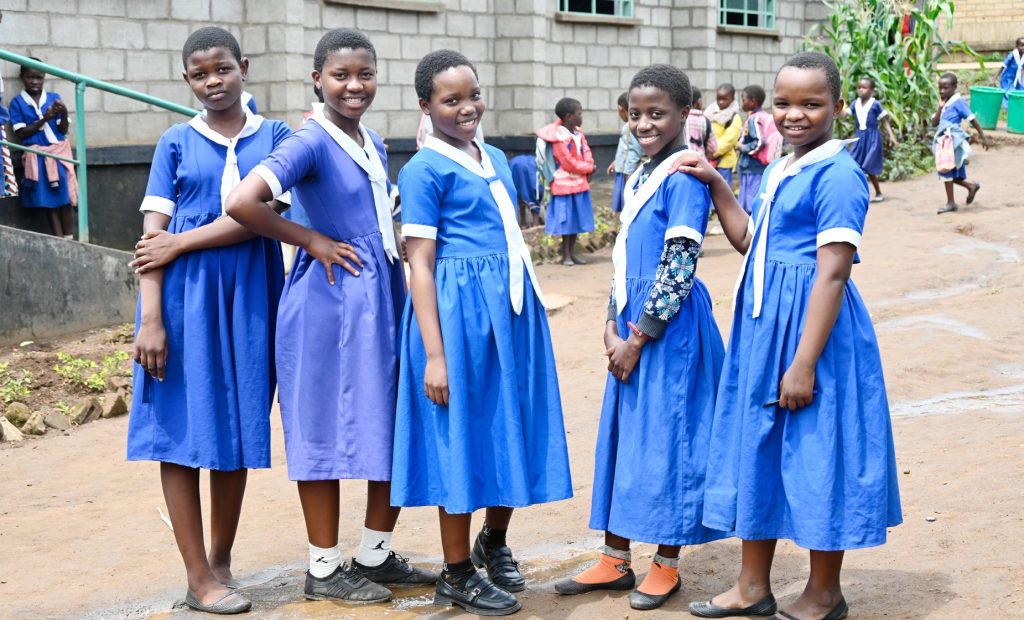
Thus, instead of celebrating their puberty, these school girls have been filled with societal seclusion and pain as they endure taunts and stigma.
Consequently, many of them have been reluctant to attend classes resulting in poor academic performances.
The development has also made a staggering number of girls completely abandoning their education due to lack of a conducive and healthy learning environment.
This glaring issue has far-reaching consequences as it compromises the future of countless young girls while negatively impacting on government’s efforts to get and keep these girls in school.
St. Maria Goretti Girls Primary School in Blantyre is one education facility whose girls, for years, were forced to miss classes during menstruation due to lack of safe and private sanitation spaces.
But the newly constructed sleek sanitation facilities at the school are now rewriting the script as they are turning the interrupted school days into confident and dignity-filled learning experiences.
Standard Seven learner Alefa Kalumbi says the modern toilets and well-designed washrooms symbolise dignity for the girls as they now have a secure space to manage their hygiene needs without fear, embarrassment or disruption.
Kalumbi describes the sanitation block as a source of confidence as it has improved hygiene and motivated girls to attend school consistently.
“We now attend school during our periods because we are able to shower and clean ourselves instead of going back home during lessons and missing out,” says the 15-year-old.
Her classmate Angela Banda echoes similar sentiments stressing the facilities are spacious and uncongested, enabling them to manage their time efficiently.
The 14-year-old class prefect recalls poor sanitation, space limitations and inadequate provision for personal hygiene at school sometimes caused some girls to abandon lessons.
Explains Banda: “They accommodate all of us without affecting school activities. They have also helped the school reduce absenteeism.”
Construction of the sanitation blocks form part of a broader initiative under the Malawi Education Reform Programme (Merp) implemented by the Ministry of Education with financial support from the World Bank.
Merp is a four-year-programme to improve learning environments for students through infrastructure development targeting the most disadvantaged public primary schools in all 34 education districts in the country.
The programme, which has five components, was supposed to run for four years from December 2021 to December 2025 but it has been extended to July 2026.
According to Merp implementation progress report, a standardised sanitation block contains two latrines and a change room for girls’ menstrual health equipped with dedicated sanitary disposal bins and handwashing facilities.
So far, about 5 975 public primary schools have received grants during the last four years (2022 to 2025) to construct a total of 1 000 sanitation blocks by the end of the programme.
The transformation at St. Maria Goretti Girls School has been immediate with authorities reporting improved attendance by girls.
Deputy head teacher Janet Keke says the clean and functional sanitation facilities have removed a major barrier that previously kept most girls away from school.
“Girls no longer feel ashamed because they can access safe and clean wash rooms whenever they feel like and their privacy is 100 percent guaranteed,” she explains.
Keke stresses that school management, parents and guardians are working together to ensure the facility is properly taken care of to benefit generations to come.
School management committee chairperson Joseph Chilewe says adequate sanitation has been a game changer as it has ensured girls attend classes consistently and perform better academically.
He says decent sanitation and hygiene are prerequisites for effective education as without them, not only does the quality of education suffer, but learners get discouraged from attending classes.
Wash plays a significant role in schools to achieve the UN’s Sustainable Development Goals (SDG) 3 (reducing child mortality), SDG 4 (achieving universal access to primary education), SDG 5 (increasing gender equality) and SDG 6 which is clean water and sanitation.
On his part, Parents Teachers Association chairperson Peter Chikopa says the community has embraced the infrastructural development and recognises its impact on the learners’ education.
He emphasises that parents understand the value of the developments and are committed to ensuring the sanitation block remains functional, clean and accessible for the benefit of future generations of learners.
“We had few toilets and changing rooms which made some girls uncomfortable to come to school or attend classes during menstruation but now they freely come because facilities are decent,” explains Chikopa.
He recalls that limited facilities forced girls into uncomfortable situations and discouraged consistent attendance during their menstrual periods.
Across Malawi, menstrual hygiene initiatives like the one at St Maria Goretti have encouraged girls to embrace sanitary pads replacing unsafe alternatives and reducing absenteeism linked to menstrual challenges.
Ultimately, the story of St. Maria Goretti shows targeted sanitation investments can unlock educational potential and give the girls confidence, dignity and opportunity to pursue education without interruption.