Lumbadzi, lying at the edge of Dowa and Lilongwe districts, has its daily rhythm shattered in an instant. A violent crack tears through the air — and then, silence.
The hum of the township’s power transformer dies, silenced by vandals. The selfish act plunges the bustling market, homes and hospital wards into an abrupt, suffocating darkness.
This blackout is more than an inconvenience; it is a thief. In homes, families fumble for candles, their faces lit by flickering, uncertain flames.
But the most desperate scene unfolds at the Lumbadzi Health Centre. With no backup power, nurses deliver babies by candlelight, their gloved hands guided by weak, dancing shadows.
Each new life enters the world to the dim, fragile glow.
“When there is a power outage, some maternity wards are left with no choice but to resort to using candles or the flashlights on mobile phones to assist with childbirth.
“This is not safe, it compromises our standards of care, but we are often left with no alternative,” explains Adrian Chikumbe, the Ministry of Health’s spokesperson.
He further emphasised that the consequences of these blackouts extend far beyond the delivery room saying they cripple essential medical services as well.
“We cannot sterilise contaminated surgical equipment, run vital laboratory diagnoses, or power life-supporting machines.
“Modern healthcare relies on a consistent supply of electricity, and when that is stolen by vandals, it is the lives of the most vulnerable, mothers and new-borns, that are put at immediate risk.”
For Electricity Supply Corporation of Malawi (Escom), vandalism is a chronic, bleeding wound. The utility estimates that repairing such destruction costs nearly K3 billion annually.
“These resources could otherwise be used to expand electricity access to new customers.
“Instead they are diverted to repairing avoidable damage,” asserted Escom chief public relations and communications officer Pilirani Phiri in a written response.
Yet this staggering figure represents only the visible cost. The true economic toll is a silent drain on communities like Lumbadzi; measured in lost wages, spoiled goods and indignity of mothers giving birth.
The most bitter irony, however, lies in the scales of justice.
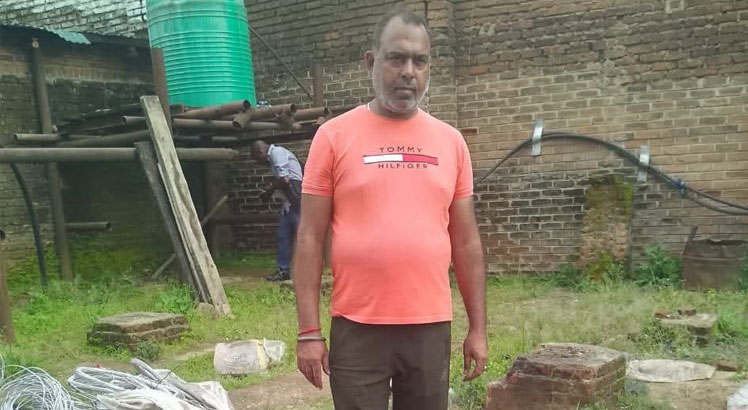
While the nation’s infrastructure is looted at a cost of billions, the very market that thrives on this stolen copper operates under a legal framework frozen in time.
The Second-hand and Scrap Metal Dealers Act was passed in 1973 and has not been revised since. Yet copper cables, transformers and other vandalised equipment continue to flow into scrap yards.
Under this legislation, dealers who break the rules face fines so trivial they barely register as punishment that can deter illicit transactions.
Consider the law itself. Section 9 of the Act imposes a K5 fine on any dealer who fails to record the name and address of a seller, along with the date of the transaction, a procedural detail meant to ensure traceability.
Section 12 obliges dealers to report stolen goods. Failure to do so carries a penalty that might, in another context, be called heart-warming, for the offender.
“Any dealer who contravenes the provisions of this section shall be guilty of an offence and liable to a fine of K10,” the Section declares.
According to Escom, the scrap metal trade is one of the key forces fuelling the problem as it offers a ready market for copper and steel, encouraging criminals to target electricity infrastructure.
“The availability of buyers means stolen materials can quickly be sold to dealers who do not verify where the stock comes from,” he said.
“This creates a systemic cycle where public infrastructure is stripped for private gain, disrupting power supply and stalling national development.”
In 2024, the nation marked the amendment of the ESCOM Act, which introduced significantly harsher penalties for vandalism. Previously, anyone damaging electricity installation equipment or apparatus faced up to 10 years’ imprisonment or a fine of K5 million.
Meanwhile, despite that legal gain, Escom says reforming the scrap metal law is essential to closing the gap.
“While the Electricity Act was recently amended to provide stiffer penalties of up to 30 years’ imprisonment, the Second-hand and Scrap Metal Dealers Act remains a critical area for reform,” said Phiri.
In 2023, the Ministries of Trade and Industry and Homeland Security imposed a six-month ban on scrap metal exports following a surge in theft affecting electricity, water, telecommunications and railways.
The government further promised to review the Second-hand and Scrap Metal Dealers Act, aiming to align it with current enforcement and punishment needs.
But so far, those plans appear to be just words. Ministry of Justice and Constitutional Affairs, the very body needed to drive such reforms, has not been instructed.
“The Ministry does not have any drafting instructions on the Second-hand and Scrap Metal Dealers Act or any subsidiary legislation made thereunder,” said spokesperson Frank Namangale in response to our questionnaire.
On his part, the Ministry of Trade publicist Patrick Botha acknowledged that a review has not been instituted, blaming it on lack of funding.
“We are hopeful to conduct the review in the new financial year,” he said in a response to our questionnaire.
He also doubled up on the Ministry’s position that the scrap metal industry was a catalyst to public infrastructure vandalism.
He said there was a mechanism in place designed to clear any export consignment of scrap metal.
“It is not perfect but it has managed to reduce instances of vandalism. The system is administered by Ministry of Transport and the Malawi Police Service as co-chairs which clears scrap metal for export.
“We also sit in as trade facilitators but we hope the review should give us a clearer way forward,” explained.
Yet, for the communities living in darkness and the health workers delivering babies by candlelight, the current system is far from a solution.
The fines in the Scrap Metal Dealers Act, frozen in time for over five decades, bear no relation to the scale or value of the stolen materials flooding the market.
They do not punish. They do not deter. Instead, they keep the cycle of theft alive, well-fed and largely consequence-free.