When Innocent’s left arm was caught in a factory machine, his life changed in an instant. The employee lost the limb, his ability to work, and ultimately, his future income. For a year he lived without a job; in October 2025 he died before his employer paid the compensation he had been promised. Today his widow and child wait for a payout that has not come.
“Innocent was the breadwinner,” says his aunt, Stella Namakhwa.
“All he wanted was his compensation so he could start a small business. Now my niece and her child are stranded.” Stella says the family returned from Mpingwe in Blantyre to their home village in Namadzi, Chiradzulu, after the injury, hoping the employer’s promise of compensation would allow them to rebuild. That promise has not been fulfilled.
Innocent’s story is not unique. Workers injured on duty across the country face lengthy delays in compensation and when a claimant dies before a settlement is paid, families are often left to navigate a slow, opaque and costly process.
Namakhwa’s previous employer allegedly said they did not have funds to pay out the compensation.
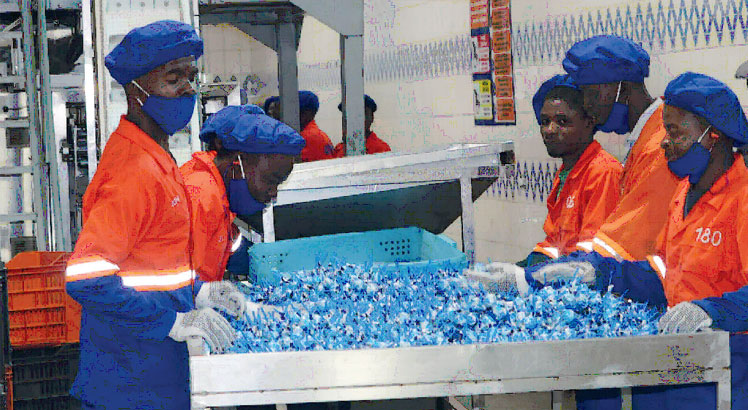
In a telephone interview last week, Stella said the relative worked in a factory within Limbe for about four years.
According to the aunt, the situation became depressing when after losing the arm they returned to Chiradzulu considering he could no longer engage in labour.
She said: “All he expected was to receive his compensation and start a business. He left a child and wife stranded.”
Now, the family is pushing for the company to pay the compensation to help the family.
According to Stella, Innocent’s former employer promised to pay out the compensation in the first quarter of the current year.
All this could have been averted if the Workers Compensation Fund, set up in 2020, was operationalised. The fund was designed to pool contributions from government and employers, provide seed funding from the State, and ensure injured workers receive prompt compensation, medical care, rehabilitation and retraining.
The fund was establisged following an outcry from employers about escalating compensations that were burdening them.
Besides, the fund was also set up in line with international social protection standards while ensuring effective delivery of compensation services to injured workers.
According to the arrangements, government and employers will have to contribute towards the fund once it becomes operationalised.
While the government will have to provide seed funding, its presence will benefit injured workers through timely compensation payments with employers getting relieved as regards such payments.
Its absence, according to the Employers Consultative Association of Malawi (Ecam), is leading to workers’ delayed compensation payments apart from lacking medical care coverage when injured.
Ecam executive director George Khaki said in an interview the fund’s absence is also impacting on escalating costs by employers, exposing them to legal costs that could otherwise have been covered by the Fund.
Khaki argued that employers would have been channelling the funds that otherwise go to compensation towards strengthening workplace safety programmes which, in turn, would improve productivity and contributing to economic the country’s development.
But he could not quantify how much money companies are paying out annually as compensation, referring the matter to the Ministry of Labour, Skills and Innovation.
“We are currently discussing with the government on how we can facilitate operationalisation of the Fund. Employers are ready to start contributing, government is delaying to provide seed money,” he said.
While Minister of Labour, Skills and Innovation Joel Chigona did not respond to our request for comment on Thursday, the 2026 Annual Economic Report says in the preceding fiscal year, government reviewed the Workers Compensation Act (2000) and drafted new worker’s compensation regulations to support the fund’s effective administration.
According to the report, the government’s aim is to have the new Act enacted and the regulations adopted in the first quarter of the 2026/27 financial year.
“Under the Workers’ Compensation Act, the Ministry [of Labour, Skills and Innovation] is mandated to enforce compensation payments for injuries and occupational diseases arising in the course of employment,” reads part of the report.
“During the period under review, the Ministry recorded 8 369 compensation cases. These cases resulted in compensation payments amounting to K252 906 359.”
The report further states that a board for the fund has already been established and that the Ministry of Labour, Skills and Innovation will start operationalising it by establishing a secretariat to manage it.
A 2018 Ombudsman’s investigative report on delays in processing workers’ compensation recommended that processing of claims must be done by a workers’ compensation commission which is well equipped with an established Fund.
Further, the report recommended that the Fund must be specifically for the processing of injuries or death compensations of employees.