Every childbirth is a race against time for nurse-midwife Lena Kalinga at Chitimba Health Centre in Rumphi District.
The facility, a lifesaver for over 18 000 rural Malawians tucked between Lake Malawi and Livingstonia Plateau, delivers at least five babies every week.
“Working in the maternity section leaves us with no room for error. I ‘ve to ensure no life is lost while giving birth,” she says, inspecting her tools near a standby oxygen machine.
The government requires every woman to give birth with the assistance of skilled caregivers like Kalinga to avert emergencies.
The Ministry of Health and Sanitation is collaborating with allied United Nations (UN) agencies—Unicef, UNFPA and World Health Organisation—to strengthen health workers skills to reduce birth-related deaths.
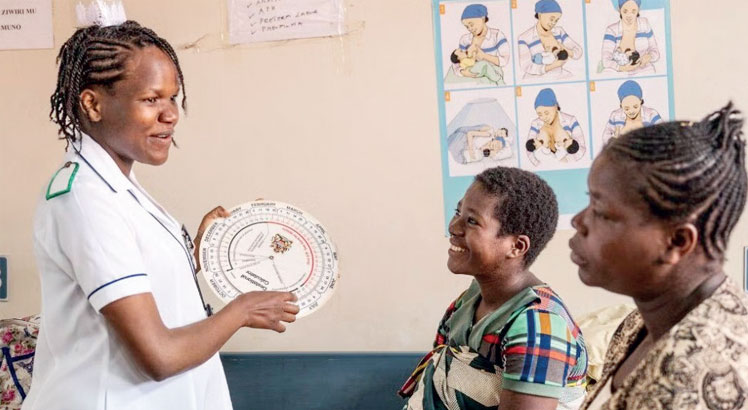
In October 2024, Unicef supported Rumphi District Health Office to mentor maternity staff in constrained health centres—like Kalinga and her colleague Mavuto Chavula—to manage emergencies, including helping at-risk newborns breathe.
The hands-on drill by a seasoned midwife from Rumphi District Hospital equipped the caregivers with necessary skills for resuscitating newborns and preventing deadly infections.
Kalinga states: “The new skills have made me confident to identify and manage birth-related emergencies.
“The tips for helping babies breathe have become handy because every second matters. If we don’t help the baby to breathe within the golden minute, chances of survival are slim. That’s why we call it the golden minute.”
Her team, which lacked basic equipment and expertise, has assembled the tools in a single rack at arm’s length.
“With all the tools labelled and kept in one place, we rapidly respond to emergencies regardless of who is on duty,” says Chavula.
Survival gap
For the healthcare workers, every baby they help breathe on its own testifies to the life-saving power of a government policy for every woman to give birth in a clinical setting.
They say every life lost during childbirth emboldens doubters to give birth dangerously outside health facilities, often with the help of unskilled hands of traditional birth attendants banned in 2010.
Up to 97 percent of babies are born in health facilities, shows the Malawi Demographic and Health Survey.
Despite the milestone, official figures show that pregnancy-related complications still claim 224 lives in every 100 000 babies born alive.
The Ministry of Health and Sanitation is working with UN agencies to fix the gap in maternal health and guarantee safe motherhood for all, including women in rural areas where 84 percent of Malawians live.
Last week, the ministry convened technical experts and district health authorities in Lilongwe to discuss strategies to strengthen emergency maternal and newborn care.
Opening the national orientation, Principal Secretary responsible for administration Bestone Chisamile decried that even though nearly all women now deliver in health facilities, many are still dying due to limited access to life-saving services.
A majority of the country’s healthcare facilities—79 percent or four in every five—lack basic emergency obstetric and newborn care services, a 2020 assessment by the ministry shows.
Only 56 facilities nationwide met the required standards, the finding show.
During the launch of the National Technical Orientation and District Prioritisation Workshops, Chisamile said brick-and-mortar infrastructure alone is not enough to cut maternal mortality.
“Facility-based deliveries alone are not sufficient unless women and newborns have timely access to fully functional emergency care. We are now prioritising a limited number of facilities to operate 24 hours a day, seven days a week,” he said.
The new approach envisions every pregnant woman and newborn getting life-saving care within one hour of travel.
However, the National Universal Health Coverage policy envisages every person getting quality healthcare within five kilometres—a 30 minute-walk.
Investiment priorities
UNFPA deputy representative Sabrina Pestilli calls for targeted investment in functional birth-related care systems.
“A building alone does not save lives,” she says. “We will use geospatial mapping and advanced modelling to identify ‘silent zones’ where women face the highest risk, so that resources are directed where they are most needed.”
The gathering included technical experts and healthcare workers from 11 districts, including Lilongwe, Blantyre and Zomba.
Health authorities expect the participants to use updated 2025 data to redesign referral pathways and address persistent shortages of skilled health workers, especially in remote areas.
Their recommendations will inform the Malawi Health Capital Investment Plan, guiding government and partners on maternal and newborn health priorities.