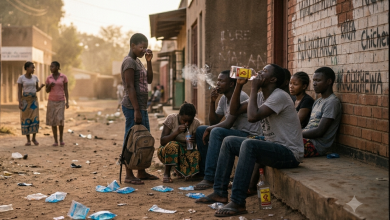
The renewed reports of violence and anti-foreigner protests in South Africa are a grave concern for the entire continent. These acts represent more than just physical violence; they signal a dangerous rejection of the ideal of African integration.
Disturbing footage and social media reports of attacks on suspected “illegal” nationals raise urgent questions about identity, solidarity, and the future of pan-African cooperation.
Malawi’s history is deeply intertwined with South Africa’s. During the apartheid era, many Malawians migrated south under various labour schemes, providing the essential labour that helped build the foundation of South Africa’s economy. Many settled permanently, raised families, and became part of the social fabric.
Today, common Malawian surnames like Phiri, Gondwe, Banda, Mwase, and Manda are found throughout South Africa—clear evidence of shared roots and deep social ties that cannot be erased.
It is deeply troubling that descendants of these migrants, along with those who arrived after independence, are now targeted as “foreigners.” Such xenophobia stems from a narrow understanding of nationality and migration.
Furthermore, it is a profound insult to the continental legacy of solidarity. Nations like Zambia, Tanzania, Mozambique, Zimbabwe, Nigeria, Ghana, and Egypt supported South Africa’s liberation struggle at great cost, providing shelter, funding, and diplomatic backing.
South Africa’s freedom was a collective African achievement; to attack the very nationalities that supported its independence is a betrayal of that shared history.
South Africans must be reminded that we live in an interconnected world; no nation can thrive in isolation. True economic growth, innovation, and social progress depend on the fluid movement of people, skills, and ideas across borders.
Far from being a burden, foreign nationals contribute significantly to South Africa’s economy. Targeting them is not only a “misdiagnosis” of the country’s economic challenges but a dangerous distraction.
The resurgence of xenophobia suggests a government struggling to maintain order as vigilante groups like Operation Dudula (Zulu for “to force out”) claim the country is being overwhelmed by migrants. While these groups blame foreigners for social ills, their rhetoric merely masks a deeper, legitimate frustration among citizens.
However, this anger is being misdirected. While South Africa’s socio-economic hardships are real, scapegoating migrants fails to address the root causes.
Our strength has always rested on unity and a shared historical struggle. One can only imagine the dismay of pan-African giants like Lumumba, Nyerere, Nkrumah, and Machel—or patriots like Thomas Sankara and Dunduzu Chisiza—witnessing these divisions. They dedicated their lives to African dignity and solidarity; today’s discord is a sharp betrayal of their vision for a unified continent.
The time has come to reject xenophobia once and for all. We can no longer remain silent. This message must be clearly understood, especially by our fellow Africans in South Africa: Xenophobia is absolutely unacceptable.