Malawi and Mozambique have recorded some of Africa’s steepest fertiliser price increases in recent months due to the ongoing Middle East conflict, a regional report has shown.
The April 2026 report produced under the Africa Food Trade and Resilience Initiative, links the pressure to disruptions in global energy and fertiliser markets following the escalation of the US–Israel war on Iran and reduced shipping through the Strait of Hormuz, a critical trade route that handles at least 20 percent of global seaborne oil trade, liquefied natural gas and fertiliser.
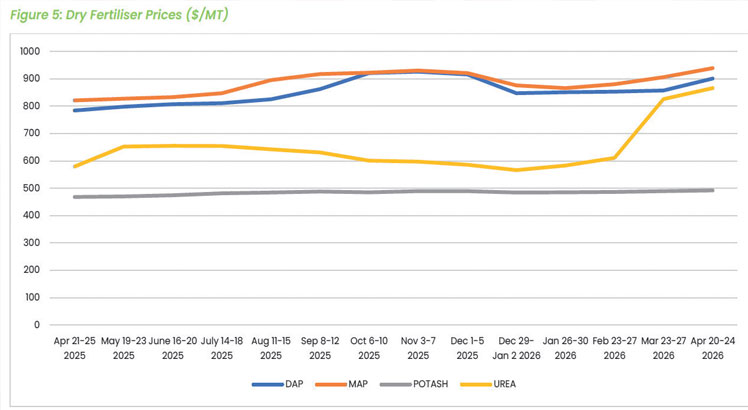
The report says urea prices in Malawi and Mozambique have jumped between 36 and 58 percent within a month and remain nearly 90 percent above year-earlier levels, reflecting “severe supply disruptions and high import dependence”.
The developments are likely to intensify inflationary pressure in Malawi, where households and businesses are already grappling with high transport costs, foreign exchange shortages and elevated food prices.
In an interview yesterday, Scotland-based Malawian economist Velli Nyirongo said fuel remains the biggest transmission channel through which the conflict could destabilise Malawi’s economy.
“Malawi imports most of its petroleum products, so any disruption to global oil supply or rise in prices directly increases domestic inflation, transport costs and production expenses,” he said.
Nyirongo said higher fuel prices spread rapidly through agriculture, manufacturing and distribution systems, worsening the trade balance and increasing pressure on already constrained foreign exchange reserves.
“Although fertiliser remains important for the largely agrarian economy, its effects tend to be seasonal,” he said, adding that shipping and forex pressures often follow rising import bills triggered by fuel shocks.
Economics Association of Malawi president Bertha Bangara-Chikadza said the latest developments highlight the extent to which Malawi’s inflation is externally driven.
She said: “Malawi being a landlocked country is very exposed to global fuel and geopolitical shocks.
“We are heavily dependent on imports like fuel and fertiliser, thus any shocks in the global economy affect the country.”
Bangara-Chikadza, who teaches economics at the University of Malawi, said domestic weaknesses, including poor fiscal discipline and climate-related food shocks, are worsening the impact of imported inflation.
The report comes as Malawi continues its efforts to slow inflation and stabilise the kwacha after prolonged macroeconomic turbulence.
The two economists cautioned that hopes of significantly lowering inflation and interest rates remain vulnerable to external shocks.
They argued that Malawi remains heavily exposed to imported inflation, especially through fuel and fertiliser, which means that renewed geopolitical tensions and supply chain disruptions could quickly slow the disinflation process.
The report warns that rising fuel, fertiliser and logistics costs are increasing the landed cost of food and other essentials across sub-Saharan Africa and are likely to be passed on to consumers.
It further raised concerns about longer-term food security risks if persistently high fertiliser prices force farmers to reduce application rates or shift crops.