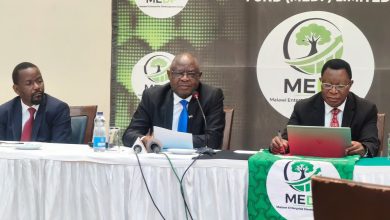
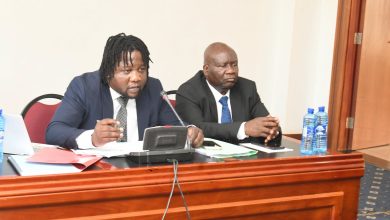
Parliament’s Ad hoc Committee probing the June 2024 military plane crash yesterday heard testimonies of senior officers from Malawi Defence Force (MDF) and Malawi Police Service on the rescue and search mission.
Between 11am and 1pm, the officers explained how the Malawi Air Force Dornier aircraft first hit a bluegum tree at Nthungwa in Viphya Plantation before nosediving, losing landing gears, both engines, door and rode about 70 metres to stop in between two trees on June 10 2024.
They said it emerged that Mzuzu Airport, the destination for the plane which carried former vice-president Saulos Chilima and eight others, was not licensed, indicating that flying to such an airport was at owners’ risk. The Civil Aviation Authority (CAA) only licensed the airport on July 26 2025.

MDF, police, search, rescue
MDF Brigadier General Richard Chagonapanja, who at the time was Commanding Officer for 101 Brigade in Mzuzu, said he led the search team but the wreckage was discovered by Lieutenant Obed Mwenebanda who had three soldiers under his command.
In his explanation, Mwenebanda said that his team on June 11 2024 met sawyers on the other side of the incident spot who told them that they had noticed a strange firebreak.
He said: “We had to go round and then at the tower to this spot because the terrain was not as easy. From what we saw, the plane first hit a blue gum tree, nosedived, creating a crater, rode for about 80 metres and then stopped in between two trees.
“We saw the first body, another two were trapped in the aircraft while the rest were thrown out and we tried to find anyone who could have been alive, but with police, and the sawyers, we found no one alive.”
Chipping in, Colonel Julius Mdokhwe added that their initial assessment was that the plane’s landing gear got broken upon hitting the ground and it slid until it stopped in between two trees that Mwenebanda mentioned.
On his part, Commissioner for Police for the North Glinton Mitai, who at the time was Deputy Commissioner to Richard Luhanga, who is now Inspector General of Police, said Nthungwa was particularly searched because of a tip off from some people.
He said he led a team with some Raiply Malawi Limited employees after some people called to tell them that they had heard sounds similar to gunshots.
“Indeed when we got here, we found the wreckage and I first saw the body of former vice-president Chilima. I instructed my team to cover it because it was damaged,” he said
What the craft suffered?
According to Mdokwe, after hitting the bluegum tree, the plane hit the ground and suffered substantial damage.
“Besides the broken landing gear, both engines got off, and a door,” he said.
The committee also learnt that Chilima’s body was the first to be found then that of co-pilot Major Flora Selemani Ngwilinji.
Disparities on those trapped, how they got out
However, disparities emerged on how many people were trapped in the place.
While Mwenebanda mentioned two, Superintendent Harry Mbewe from the Criminal Investigation Deparment (CID) said three were trapped. His account was similar to that of Mzimba South District Hospital clinical officer Enock Gwetsani while Civil Aviation head of aviation fire Charles Matabwa said four were trapped.
Matabwa further said both police and military officers did not have the required axes to cut through the wreckage to remove the bodies such that used the equipment his team brought from Lilongwe.
He said: “Our team in Mzuzu came with the equipment, but had run out of batteries. So, we relied on what we brought from Lilongwe. That is why it took us long to remove the trapped bodies from 10am to around 3pm.
“We may differ on how many bodies were trapped, but as Aviation, I know they were four and we had tough work to remove them.”
Malawi Red Cross Society communication specialist Felix Washon explained how they quickly arrived at the scene and worked with health authorities providing stretchers, gloves and other materials to help secure the bodies.
Mzuzu Airport not licensed
Mzuzu Airport supervisor Joseph Moyo told the committee that the aircraft had four hours of fuel when it departed Mzuzu, and that he had communicated with the Captain once before losing communication.
He said: “I started checking with colleagues in Karonga, Likoma, Lilongwe but all said they had received nothing, and then informed KIA [Kamuzu International Airport] which started checking with neighbouring countries.
“That plane had fuel for four hours from departure and after that lapsed, we knew it was not flying again and the search was then instituted.”
When committee members sought to know whether the airport was fit to receive flights, CAA director of Aerodromes and Air Navigation Standards Fredrick Chisepeya said by the time of the crash, the airport was not licensed.
“That means anyone flying to that place does that at the owner’s risk. Mzuzu Airport was only licensed on July 26 2025, and that licence expires on July 24 this year,” he said.
During the site visit, committee chairperson Walter Nyamilandu Manda said there was a lot that happened on that particular day and they were now able to appreciate what the police and MDF did.
He said: “It wasn’t easy. They tried their best to handle the situation professionally, you know and there was a lot of team effort. And also the terrain, very difficult terrain to access.
“It was very important for us to come here because this is where it happened and we decided to come here to get acquainted with the terrain, get a full story, understand the processes that were used on that day to identify the site, how they handled the bodies and how they moved on from here.”
President Peter Mutharika ordered the fresh probe in February after Minister of Justice and Constitutional Affairs Charles Mhango cited gaps in three previous inquiries and recommended a new investigation.
Speaker of the National Assembly Sameer Suleman announced a 13-member committee tasked to interrogate previous findings, close gaps and deliver closure and report back within 90 days.