For months, group village head Penembe’s 90-year-old mother, Mezinati Laison gasped for breath.
Next, tongues started wagging in the rural setting in Traditional Authority Kabudula, Lilongwe, where unexplained ailments spark witchcraft suspicion faster than the urge to seek medical care,.
“We thought she was a witch or someone had bewitched her,” Penembe recalls.
But checkups conducted at Kabudula Community Hospital in March 2025 revealed that the distressed woman had high blood pressure, alternatively known as hypertension.
The non-communicable disease affects nearly one in three Malawians, but the count could be higher due to low awareness and limited access to screening services.
“My mom is much better now,” Laison says. “I didn’t know high blood pressure could do so much damage.”
In Chiphukusi Village nearby, Siveli Aliyeri struggled with hypertension linked with smoking, drinking and unhealthy foods.
He was 53 when he was diagnosed with the condition that leads to irreversible damage, including heart attacks, strokes, heart attacks, kidney failure and vision loss.
Aliyeri recounts: “I couldn’t walk or cycle 300 metres without falling. Simple tasks were exhausting.
“But my blood pressure is back to normal after quitting tobacco, liquor, salty meals, sugary drinks and oily bites. My life is not the same.”
Silent killer
Widely misconceived as the scourge of the rich and the elderly, hypertension is the leading cause of preventable death and disability in developing countries, including Malawi.
According to the World Health Organisation (WHO), it kills about 1.5 million people annually from sub-Saharan Africa’s youthful population.
Yet detection, treatment and control remain low in southern Africa, where just about a fifth of hypertensive persons achieve adequate blood pressure control to avert strokes, heart attacks, and kidney failure.
The WHO estimates show that 32 percent of Malawians—about seven million of the country’s population of 22.5 million—are affected, but some die without knowing their status.
Most cases in the country are diagnosed too late, increasing the risk of heart attacks, stroke and kidney diseases.
The implications cut deeper as the chronic disease often strikes during the most economically productive years—the 40s and 50s—and its crippling effects persists into advanced age when one can no longer work, support their families and afford quality care.
When crippling stroke strikes, the hypertensive individuals’ families and productivity collapse too as ndless hospital trips become the order of the day, draining their stretched savings.
Hypertension also strains public healthcare spending as premature deaths and disability depletes productive citizens.
This erodes the human capital required to transform Malawi into a self-reliant, industrialised upper middle-income economy by 2063.
“The good news is that prevention and early detection cost a fraction of treating complications,” says Professor Maureen Leah Chirwa. “Solutions do not require wealth, but behaviour change.”
She states that homegrown solutions and healthy diets do not cost much.
They include backyard gardens where vegetables and ginger grow in used sacks, as well as beans, groundnuts and leafy greens that grow nationwide.
“Community-based prevention uses what people already have, yet changing behaviour is easier than changing culture. I believe eventually people will understand that hypertension is not witchcraft.”
Local action
Moyowathu Healthcare Services works with health workers to end hypertension in T/A Kabudula’s community on the northern margins of Lilongwe City.
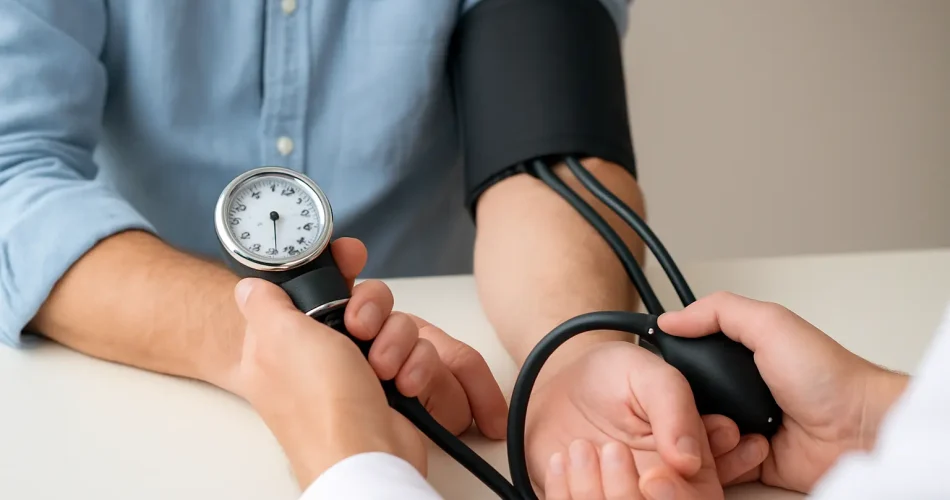
Instead of waiting for critical cases to arrive in treatment rooms, the teams for Zero Hypertension in Malawi go door-to-door to test suspects in their villages.
Armed with blood pressure cuffs and prevention messages, the community agents tackle myths, fears and delayed diagnoses, ensuring timely access to treatment.
“People work, laugh and move as if everything is OK, yet high blood pressure is silently wrecking their lives. We refuse to wait for the collapse,” says Moyowathu managing director Henry Ndhlovu.
Every month, Mercy Kakusa, 25, one of the trained ‘foot soldiers’ fighting high blood pressure, reaches at least 80 people in five villages with life-saving messages and screening tools.
She narrates: “At first, I asked myself: Why do I bother testing healthy people? But awareness and early detection helps hidden cases get timely treatment and support.
Currently, cases are dropping and those with dangerous readings are improving.”
T/A Kabudula says: “Community leaders should champion healthy living. Some village heads have collapsed and required hospital care while others have died. Our country cannot develop while preventable illnesses such as hypertension paralyse and kill our people.”
According to Kabudula Community Hospital in-charge Deborah Katete, confirmed cases from monthly clinics have climbed from 50 to nearly 200, as people increasingly demand to know their status before deadly complications kick in.
Back in Penembe, a simple blood pressure machine accomplished what medicine alone could not: tackling myths and fear of the unknown while increasing access to life-saving services.