Clad in a sky-blue uniform, Maison Kameta is a trusted community health worker at Chiringa Health Centre and in surrounding villages in Phalombe District.
He goes village to village, working with local volunteers to identify suspected TB patients in the rural community.
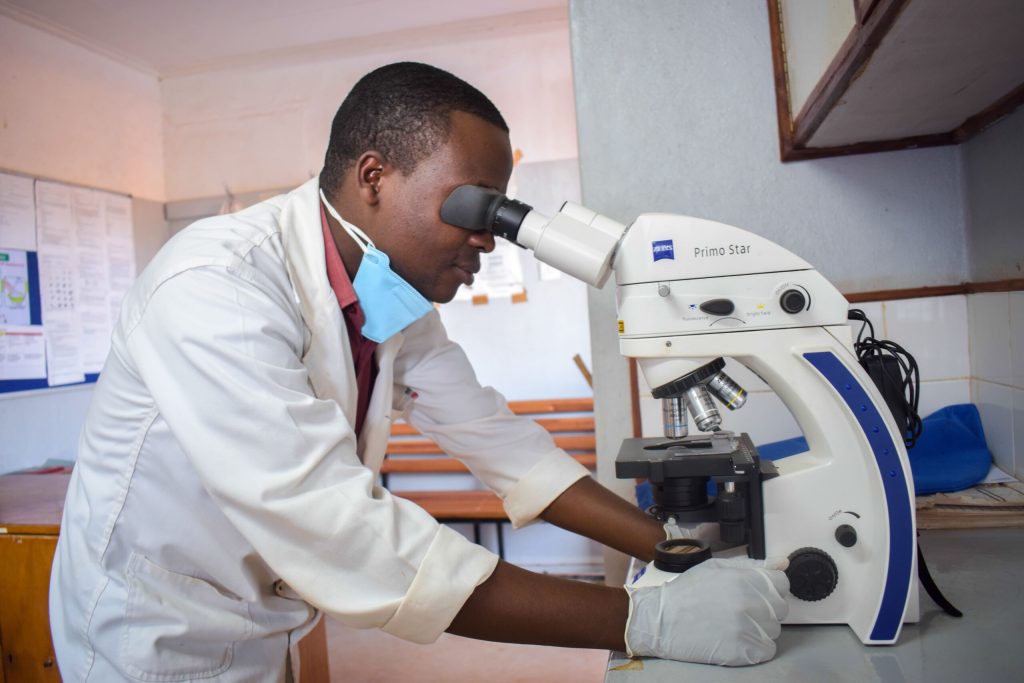
“When someone develops a cough that persists for at least two weeks, sudden weight loss or excessive night sweats, the volunteers discreetly approach them to discuss the importance of TB screening. They take sputum for laboratory tests to ensure they know their status and start treatment immediately if found positive. We want to ensure no one dies of treatable conditions like TB,” Kameta says.
The volunteers collect sputum from TB suspects in their neighbourhood and link the cases at risk of dying without knowing their status to healthcare workers for timely testing, treatment, care and support.
They also provide checks and balances, ensuring the results reach the source in time for treatment.
Kameta narrates: “As community sputum collectors, we used to complain about delayed laboratory results. Our clients expect to get the results within three days, but some could wait for two months and some samples were expiring before being analysed.
“We have dramatically cut the turnaround period with dialogue, collective lobbying for the necessary resources like a new Gene-Xpert machine and reagents. Clients now get their results the same day or within two days.”
Tracking missing cases
Team play between healthcare workers and the communities they serve has also boosted the detection of missing TB cases and treatment, leaving no one behind.
“Together, we unearth hidden cases and issues that we rarely used to talk about. Our community now has a say on efforts to make TB history,” says community consultative group data collector Hanna Katerera.
The Ministry of Health and Sanitation reports that Malawi has registered tremendous declines in TB illnesses and deaths over the past decade.
New data released by the National Tuberculosis and Leprosy Elimination Programme (NTLEP) highlights the tremendous decline attributed to sustained government leadership, improved case detection and strengthened community-based interventions.
The update shared during national dialogues on priorities for the Global Fund on TB, HIV and Malaria shows the country has almost halved TB incidence from 197 cases in 100 000 people in 2015 to 107 last year.
The 46 percent drop in confirmed TB patients came alongside a 72 percent decade-long decline in deaths from 68 to 19 in a population of 100 000.
This means Malawi is edging closer to achieving the global targets to end TB as a public health challenge by 2030. The lung disease is the largest killer of Malawians living with HIV.
Health authorities say the national fightback, powered by community-based allies, has brought notable gains in identifying and treating people with TB.
Over three quarters (77 percent) of people diagnosed with TB were accessing treatment last year, up from 47 percent in 2015.
Healthcare facilities nationwide recorded 18 378 new and recurrent TB cases, with the expanding reach of mobile diagnostic units, community sputum collection points and door-to-door screening.
NTLEP manager Dr Kuzani Mbendera says community-based approaches are playing an increasingly important role in finding people with TB early for timely treatment.
Speaking during the dialogue, he said Malawi is moving in the right direction, but “more work needs to be done” to find undiagnosed cases and ensure access to quality care for all.
The medical doctor in charge of the national fight against TB says: “The progress we are witnessing is encouraging and reflects the collective efforts of government, health workers, communities and our development partners. However, tuberculosis remains a major public health challenge and we cannot afford to be complacent,”
“Our priority is to find every missing TB case, expand access to rapid diagnosis and treatment and strengthen community interventions so that no one is left behind in our journey towards ending TB in Malawi.”
National priorities
The decade of progress was capped by rising costs of new TB testing technology and external aid cuts, especially the sudden shutdown of the US Agency for International Development contribution to TB and HIV programmes.
According to NTLEP, the country also faces the urgent need to strengthen services for children, drug-resistant TB, and vulnerable populations.
“The programme has prioritised expanded screening, improved diagnostic capacity, sustainable financing and stronger integration of TB services with HIV, maternal and child health, nutrition and non-communicable disease programmes,” Mbendera said at the national dialogue.
The Grant Cycle 8 in-country dialogue constitutes an inclusive, national consultation process to shape funding priorities by countries earmarked to receive support from The Global Fund during the eighth grant cycle from 2027 to 2029.
The national talks brought together government representatives, development partners, civil society organisations, researchers and other stakeholders to review progress and shape the next National Strategic Plan for Tuberculosis and Leprosy, HIV and Malaria.