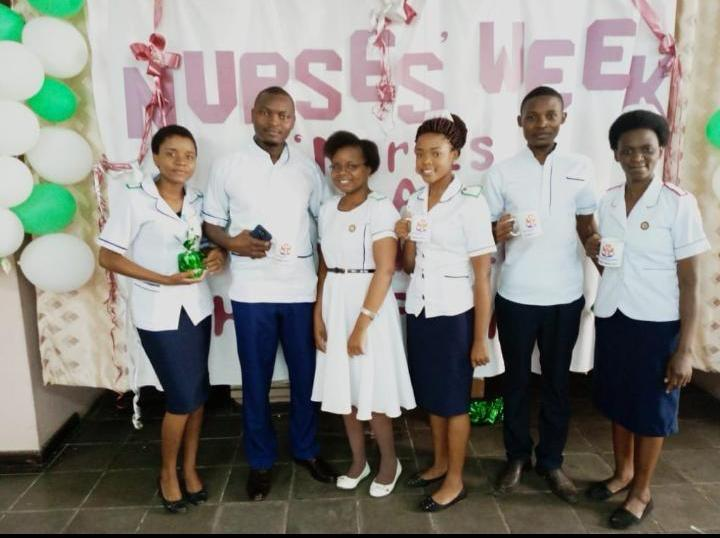
Growing up in Thondwe, Zomba District, Chipiliro Chisao walked to school barefoot, fetched water from streams and wells, and lived in a household where meals were not always guaranteed.
Today, the 36-year-old is a registered nurse and clinical manager in Washington State, US, with a master’s degree in health information technology.
Her journey illustrates the possibilities that education can unlock.
But can the country afford to lose trained nurses when its understaffed hospitals are struggling to meet patients’ needs?
Chisao’s career was shaped by overwhelmed nurses at Mulanje District Hospital.
“I saw patients who were in the wards with only one nurse to attend to them, many were left without any care because the work was too much. I wanted to help those patients who suffered but had no nurse to attend to them,” she says.
Chisao graduated from Kamuzu College of Nursing with a nursing and midwifery degree in 2012.
She worked across Malawi before migrating to the US where she obtained a professional licence and worked in home care and a nursing facility before reverting to clinical management.
Home care is a widely available opportunity for nurses who migrate to the US where even those without nursing qualifications usually gain some qualifications through short courses in home-based care.
Those with prior nursing qualifications have more openings with pay at least equal to what a corporate executive earns in Malawi.
Chisao knew her value, as a nurse, but she did not just focus on making money.
She opted to pursue a postgraduate degree she obtained in 2024.
“My journey required determination, sacrifice, continuous learning and the courage to start again in a different healthcare system,” said Chisao.
With her qualification, she now earns more than she would ever dream of in Malawi.
Her experience comes as Malawi debates whether to start exporting its nurses to wealthy nations, including Israel.
Supporters argue that the labour export deal could replenish the country’s forex earnings while providing employment for qualified professionals who cannot find jobs locally.
However, critics worry about worsening staff shortages in a health system already under pressure.
For Chisao, however, migration is not simply about leaving home for better pay. It requires professional adaptation, further investment in education and compliance with both immigration and licensing requirements.
She cautions aspiring nurses against shortcuts and fraud.
“Do not take shortcuts, submit false documents or rely on promises of guaranteed jobs or visas,” she pointed out.
For people seeking opportunities abroad, lawful migration means securing visa requirements, appropriate work authorisation and following the rules of the destination country.
In Washington, the Malawian community offers a support network for those seeking to establish themselves. Representatives of Malawian associations estimate that the community in Washington alone numbers in the thousands—so too in Indiana.
“Let us always follow the law in our dealings. This is a land of so many opportunities. The more we follow the law, the more we create opportunities for ourselves and others. Visa rules must be followed,” Malawi Washington Area Association leader Mphatso Namwali said.
Chisao hopes to use her experience in nursing and digital health to support professional mentorship, healthcare partnerships and community development back home.
“I strongly believe that digital health is essential to the future of healthcare in Malawi,” she says:
For her, the journey that began in a poor household in Thondwe has opened doors she could only covet.
Chisao’s ambition is to connect clinical practice, technology and community health through Konda YouthNet and Family Health, an initiative she founded.