For women who have children before marriage, motherhood can come with more than the responsibilities of raising a child. It also exposes them to name-calling, stigma and social judgement.
Even women whose marriages break down and
return to their parental homes where they receive similar treatment, with some being labelled ntchembele.
The term derives from uchembere, referring to a woman who has given birth. However, in some social settings, it carries a derogatory connotation when directed at single mothers.
Rather than simply describing motherhood, the labels can be used to shame women and suggest wrongdoing based on their reproductive or marital circumstances.
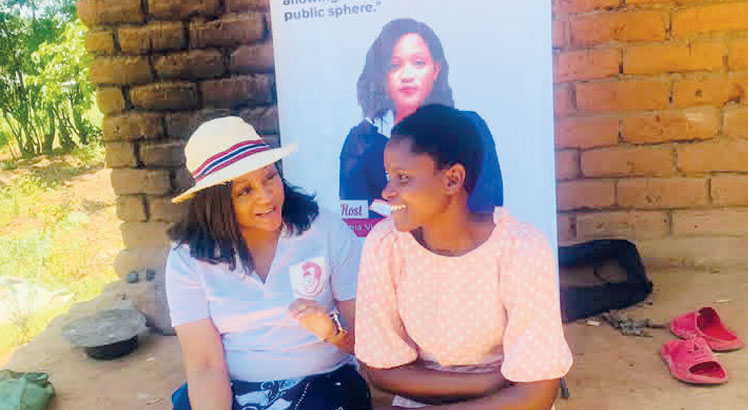
| Courtesy of Venia Bakali.
It is this kind of stigma that Venia Awali Bakali wants to challenge through her work with single mothers.
A social impact advocate, author, entrepreneur and hospitality professional, Venia is a single mother herself.
Her experiences of rejection, emotional abuse and the struggle to raise a child while pursuing a better future inspired her to establish Single Mother Empowerment Organisation (Smeo) in 2021.
Venia’s belief is that a woman’s circumstances should never determine her worth or limit her potential.
Her journey began while young, in love and naive to understand realities and responsibilities that came with decisions she made.
Like many young women, Venia had dreams and expectations about relationships and what her future would look like. But discovering she was pregnant changed her life in ways she had not anticipated.
She was pressured to terminate the pregnancy and made to feel that keeping the child would mean sacrificing her future. At one point, she was even promised an iPhone 7 if she agreed to terminate the pregnancy.
“I chose my child,” she says.
That decision, however, did not automatically prepare her for motherhood.
Venia was financially unprepared and emotionally overwhelmed. When her child was nine months old, she made the difficult decision to travel to South Africa in search of better opportunities.
She worked on a farm and later as a nanny, doing whatever she could to provide for her child.
Leaving her baby behind was one of the hardest experiences of her life.
Even after leaving home in search of opportunities, life did not suddenly become easier. Venia’s experiences gradually built resilience, but she also had to rebuild her confidence and rediscover her self-worth.
“Looking back, I realise that one of the hardest parts of my journey was navigating motherhood while also trying to heal from the experiences that came with it,” she says.
As she grew older, she began recognising that many other women were experiencing similar challenges. Some had been abandoned, others rejected, while many struggled financially and carried emotional wounds without the support they needed.
Venia thought about the support she wished she had received when younger. That reflection became Smeo’s foundation.
“I wanted to create the kind of space a woman could walk in without having to explain or defend her circumstances, where she could find support instead of judgement, encouragement instead of condemnation and opportunities instead of limitations,” she says.
For her, the initiative is about ensuring women do not have to navigate the challenges of single motherhood entirely alone.
Venia believes single mothers remain among the groups of women who experience social stigma, discrimination and exclusion.
In some communities, they are labelled prostitutes or irresponsible women, with their relationship status used to judge their character, morals and worth.
“At Smeo, we have established community-based support groups where women in similar circumstances can come together, understand one another and offer mutual support,” she says.
Through these groups, women discuss parenting, financial challenges, relationships, mental health and the everyday realities of raising children.
The organisation has so far built a network of more than 1 000 women across Thyolo, Bvumbwe, Zomba, Chikwawa and Ndirande.
“One of the most encouraging aspects of our work has been seeing women realise they are not alone,” she says.
For some, simply finding a space where they are understood is an important step towards rebuilding their confidence.
Smeo has also introduced initiatives that go beyond discussing the challenges of single motherhood.
Through Single Moms Catch-Up Date, women meet to interact, network, discuss financial literacy, build confidence and celebrate themselves.
Single Moms Chronicles provides a platform for women to tell their stories and contribute to changing the narrative surrounding single motherhood.
Venia says the impact of these initiatives is not measured only by the number of women reached, but also by the confidence, dignity and opportunities they help create.
The negative reactions that followed the organisation’s Single Moms initiative in Lilongwe further demonstrated the
stigma surrounding single motherhood. Some women were subjected to derogatory remarks on social media simply because they identified as single mothers.
“That experience reinforced why this work remains necessary. Every time single motherhood is mentioned, society seems to have something negative to say,” she says.
However, reaching more women remains one of the organisation’s ambitions.
This year, Smeo took a step towards expanding its outreach to Lilongwe, marking its first expansion beyond its established regional network.
“Our long-term vision is to reach single mothers across all districts of Malawi,” she says.
The organisation intends to strengthen community-based structures and work with local mobilisers, women’s groups and community leaders to establish support networks closer to where women live.
It also recognises that digital platforms alone cannot address the challenge because some women in rural communities have limited access to smartphones and internet connectivity. Consequently, face-to-face engagement and community outreach will remain central to its approach.
Its core support group activities and programmes are provided free of charge. Women do not pay membership or programme access fees, a deliberate decision aimed at ensuring that financial difficulties do not prevent those in need from benefiting.
“We understand that many of the women we work with are already facing significant financial responsibilities, and we would not want financial difficulties to become another barrier preventing them from accessing support,” she says.
But providing free services while expanding its reach requires resources.
“One of our biggest needs is sustainable funding. We want to strengthen our existing support groups, expand into more communities and introduce structured programmes that respond to the economic and psychosocial needs of single mothers,” she says.
The organisation also needs transport, communication resources, programme materials and appropriate meeting spaces, particularly to reach women in rural communities.
Smeo has received encouragement and assistance from individuals, including influential women who are themselves single mothers and understand the realities of its work.
Some have chosen to support its initiatives quietly, without seeking public recognition.
The organisation is also looking for meaningful partnerships with the private sector, development organisations, government institutions and individuals who share its vision.
“We are not simply looking for donations. We are looking for meaningful partnerships that can help us build systems, create opportunities and transform lives,” she says.
Beyond the organisation, Venia’s work as an author and entrepreneur reflects her wider interest in leadership, personal development and women’s empowerment.
Through her book, Solo with a Purpose, she also explores themes of purpose, resilience and navigating life’s challenges.
Her message is that single motherhood should not become a reason for women to abandon their ambitions or accept society’s negative perceptions of them.
Women deserve opportunities to rediscover themselves, pursue their dreams and build fulfilling lives.
For Venia, the greatest meaning of empowerment lies in ensuring that another woman does not have to navigate the challenges she experienced entirely alone.
As Smeo seeks to build a national network of supported and empowered women, its vision is captured in its motto: Empowered mothers raise empowered generations