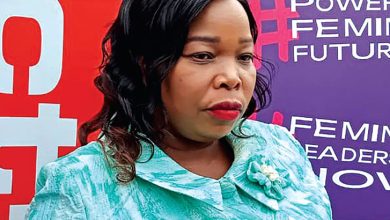
President Peter Mutharika has ordered early preparedness to protect Malawians from potential impact of El Nino weather phenomenon next season, Minister of Agriculture, Irrigation and Water Development Roza Mbilizi said yesterday.
In an interview in the wake of confirmation by the Department of Climate Change and Meteorological Services of the weather phenomenon that disrupts normal atmospheric circulation and triggers a cascading sequence of global climate shifts that can either be extreme drought, rainfall or high temperatures, the minister said President Mutharika has ordered preparedness to intensify.
“As a ministry, we have been directed by the President to make sure we prepare very well so that no single person suffers or dies from hunger in this country,” said Mbilizi.
She said the ministry has already begun preparing farmers for the anticipated dry conditions by promoting drought-resilient crops such as cassava and sweet potato.

In a separate interview yesterday, Department of Climate Change and Meteorological Services director Lucy Mtilatila said forecasts indicate a possibility of below-normal rainfall, although the extent of the impact remains uncertain.
“At this point, we cannot tell whether we will experience reduced rainfall or not, but there are chances of below-normal rainfall,” she said.
Mtilatila added that Malawi could start experiencing warm temperatures as early as June this year ahead of the onset of the rainy season.
According to the World Meteorological Organisation (WMO), the El Niño phenomenon is expected to develop from mid-2026, affecting global temperature and rainfall patterns.
Meanwhile, the Department of Disaster Management Affairs (Dodma) said yesterday it is collaborating with various stakeholders to prepare for possible humanitarian responses.
Dodma Commissioner Wilson Moleni told The Nation yesterday that they are already working with ministries, departments and agencies as well as donors to work out a response plan.
Experts have since urged both government and farmers to take early action to reduce the risk of hunger and crop losses.
Centre for Agricultural Research and Development director Innocent Pangapanga-Phiri acknowledged that there are strong indications that the country could face one of the worst El Niño episodes in recent years.
He advised authorities to invest in irrigation and encouraged farmers to adopt drought-tolerant and early-maturing crops as well as practice moisture conservation techniques
“The government should have seeds and fertiliser ready for the farmers. If they plant and fertiliser will not be there and by the time fertiliser is made available there is drought, the fertiliser will be ineffective,” said Pangapanga-Phiri, whose entity operates under Lilongwe University of Agriculture and Natural Resources.
He also recommended that government restock grain reserves and distribute suitable crop varieties, including sorghum in the Shire Valley and cassava in the Northern Region.
Agricultural and applied economist Steve Kayira said the warning signs demand immediate action at both household and policy levels.
He urged farmers to prioritise adaptation measures such as timely planting and access to drought-resistant seed varieties.
Kayira also called on government and stakeholders to strengthen input distribution systems, expand irrigation support, improve extension services and ensure that strategic grain reserves are adequately stocked.
But maize stocking could prove to be a challenge as Treasury is yet to release at least K120 billion—K60 billion each—to National Food Reserve Agency and Agricultural Development and Marketing Corporation to buy between 100 000 and 120 000 metric tonnes of maize for cushioning poor consumers during lean periods.
With delayed funding, maize vendors are snapping up the grain, which they are likely to hoard to maximise profits during low supply between October and February.
Malawi was among the countries hardest hit by the El Niño-induced drought during the 2023/24 farming season, prompting government to declare a State of Disaster in 23 of the country’s 28 districts.
The affected districts were Nsanje, Chikwawa, Mulanje, Phalombe, Blantyre, Chiradzulu, Thyolo, Zomba, Mangochi, Balaka, Machinga, Mwanza, Neno, Salima, Mchinji, Dowa, Dedza, Lilongwe, Ntchisi, Ntcheu, Nkhotakota, Kasungu and Karonga.
El Niño is caused by the warming of ocean surface temperatures in the central and eastern Equatorial Pacific and is known to influence rainfall and temperature patterns across different regions of the world.