The 16-counter Malawi Stock Exchange (MSE) has lost about K5 trillion in market capitalisation in five months due to plunging share prices with analysts attributing it to institutional investors’ desperate offloading of stocks in compliance with regulations.
Market data show that the local bourse, whose capitalisation surged to K33 trillion in December 2025, had drastically declined to K28.3 trillion by Friday May 22 2026 as shares of 10 of the 16 listed companies plummeted.
For instance, all five listed banks; namely, FDH Bank plc, NBS Bank plc, Standard Bank plc, FMB Capital Holdings plc and National Bank of Malawi plc plus financial and telecommunications players such as Nico Holdings plc, National Investment Trust Limited plc, TNM plc and Airtel Malawi plc registered share price drops.
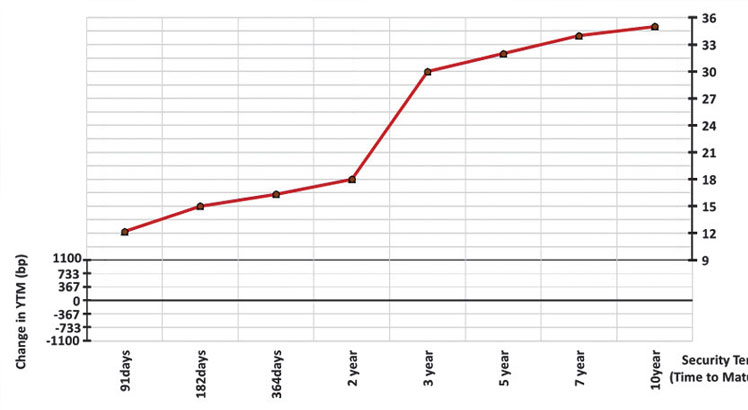
Meanwhile, the declining share values have resulted in the market registering a negative return of 13 percent as the Malawi All Share Index dropped by 80 000 points from 598 062.80 points in December 2025 to 519 488.81 points as of last Friday.
Analysts this week attributed the situation to changes in economic policies that forced both institutional and retail investors to offload some of their shares either to comply with equity investment limits or due to fear of fiscal uncertainties which increased supply.
In an interview on Tuesday, market analyst Brian Kampanje said apart from the introduction of capital gains tax, which led retail investors in a panic sale, pension fund managers and life insurers are also compelled by law to dispose some stocks, resulting in oversupply pulling prices down.
He said the Financial Services (Investment Management of Life Insurers and Pension Funds) Directive of 2025, regulatory cap for pension funds and life insurance investments in listed equities of 60 percent, means disposal of excess shares by such institutions.
Said Kampanje: “The central bank enforces these prudential investment guidelines to minimise contagion risk and encourage sector diversification.
“The other institutional investors have little appetite to mop up the available shares in short-term leading to dwindling market share price.”
He said the uncertainty surrounding the capital gains tax waned off the euphoria among existing and potential retail investors who were greatly influenced by the social media hype which is long gone.
In a separate interview, Minority Shareholders Association of Listed Companies secretary general Frank Harawa noted that the development has resulted in pension managers offloading more stocks that rarely attract demand thus dampening share prices and affecting market capitalisation.
“This situation has created an awkward situation and risks weakening the market, which has been strong until 2025.
“These institutional investors are now looking to invest elsewhere like in infrastructure at the cost of MSE,” he said.
Stockbrokers Malawi Limited equity investment analyst Kondwani Makwakwa in an interview on Tuesday noted that the continued over supply of shares results in most stocks being bought at bargain prices; hence, pulling down the value.
He, however, projected that the situation could improve in the second half depending on inflation direction and exchange rate stability, highlighting that fiscal and monetary policies will remain key in the short to medium term.
“While the fall in market capitalisation is significant, it does not necessarily indicate a deterioration in the underlying fundamentals of all listed companies,” said Makwakwa.
Meanwhile, stock market investor Purity Chitalo observed that the price correction, which the MSE witnessed end last year and early this year, has resulted in some investors exiting the market.
But he remained optimistic of a rebound as investor confidence returns in second half.
Said Chitalo: “With limited tolerance for losses, some investors have rushed to exit their positions, accelerating the market’s downward trend.
“While this reaction is understandable, it also exposes a gap between investor expectations and the reality that equity markets naturally move in cycles.”
The MSE was established in 1994, but officially opened for business and began equity trading on November 11 1996, when it first listed National Insurance Company Limited, now trading as Nico Holdings plc.