They return home with shattered dreams, scarred bodies, and wounded spirits, yet even as they cross the border back into Malawi, their eyes remain fixed on South Africa.
This has been the vicious cycle of Malawians returning from South Africa amid anti-immigrant attacks and return once there is calm.
Now faced with a June 30 deadline as anti-immigrant attacks escalate, Gabriella Chinduta said she does not envision herself returning to Malawi.
“I don’t know what I will be doing if I return. I don’t think there are any economic opportunities compelling me to,” she said in a written response from South Africa on Thursday.
Since the attacks started early this year, Chinduta’s employer has been keeping her indoors in Western Cape where she works as a nanny.
She said she has a good working relationship with her employer; hence, the shielding.
However, Chinduta said her employer once suggested she returns to Malawi, but she insisted on staying.
Initially, she went to South Africa upon the invitation of her ex-husband. She has been staying in South Africa since 2021 and despite the couple breaking up, Chinduta remained in search of work to help her family in Mchinji District.
But it is now close to four months since she stepped out of her employer’s fence for fear of being targeted.
Worse still, she doesn’t have a valid passport as she used a truck driver to ferry her to the country.
The same is the situation with Andrew Mvula who has been living in Johannesburg since 2019 where she works in a clothes shop.
“My employer has closed his shop ever since the anti-immigrant attacks started. He told me he is monitoring the situation and if the attacks persist beyond June 30, he would have to release me,” he said.
But Mvula remains adamant on returning, saying there are plenty of economic opportunities compared to Malawi.
He also said he witnessed some of his colleagues getting beaten, but this did not prompt him to re-think his stay.
Mvula said if his employer decides to release him, he will look for another job.
Recently, some Malawians have also been releasing videos on various social media platforms saying they will not return regardless of the growing attacks.
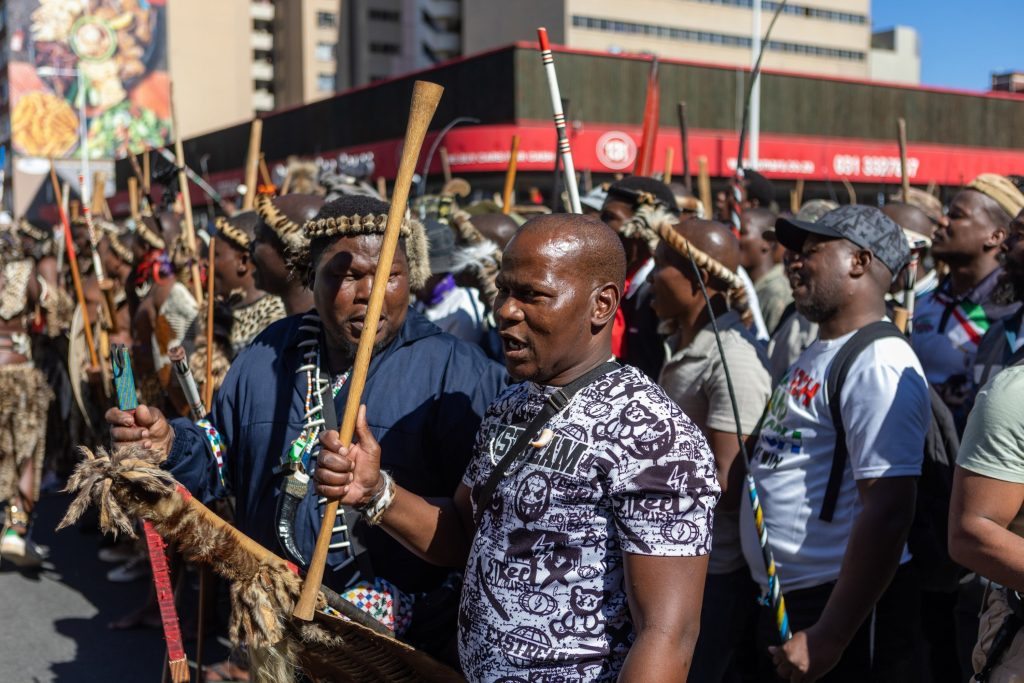
Numerous groups, such as the March and March and Operation Dudula gave the June 30 deadline to immigrants, forcing some of them to close their shops in different localities.
Some have had their shops ransacked and burned, including their homes.
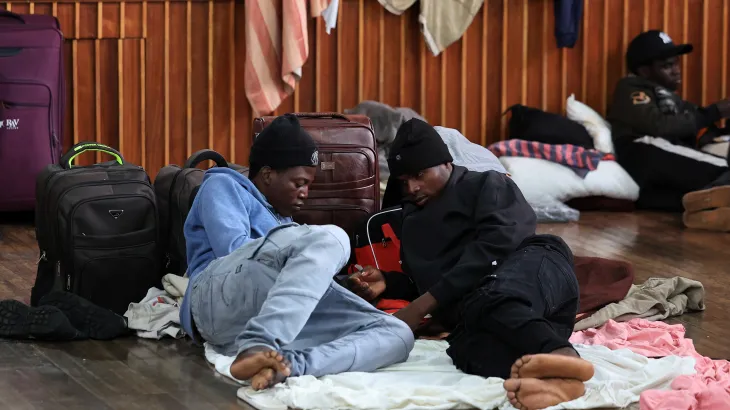
Some foreigners have since sought refuge in churches.
In an interview during the week, Economics Association of Malawi president Bertha Bangara-Chikadza said high levels of unemployment and macroeconomic instability remain the major factors pushing Malawians to insist on remaining in South Africa regardless of the attacks.
She said with Malawi’s economy depending heavily on rain-fed agriculture and frequently hit by climate shocks, it has struggled to create enough jobs in the labour market.
Bangara-Chikadza also cited stagnant domestic production, persistent inflation, misaligned currency and severe foreign exchange as some of the challenges compounding the situation.
“These conditions push young people to migrate to South Africa rather than remain in low-yield subsistence farming with little prospect of wealth accumulation,” she said. “In addition, the wage differentials in low-skilled workers between the countries make migration more attractive.”
She emphasised that Malawi’s policy interventions must focus on improving household-level economic opportunities, including promoting rural industrialisation and agro-processing to create off-farm jobs and that Malawi should also invest in value addition initiatives and ensure reliable electricity and infrastructure to support these industries.
She said the government can expand access to capital through politically neutral credit programmes.
Bangara Chikadza said: “For Malawians already working in South Africa, there is a need for public awareness campaigns to encourage channeling remittances into high-yield treasury bills, domestic bonds, or real estate. This would help build a sustainable asset base at home.”
Further, she said Malawi should actively negotiate bilateral labour agreements with South Africa and other regional economies adding that formalising labour export frameworks would reduce the risks of irregular migration and allow Malawians to travel and work under the protection of institutional agreements.
In a separate interview, social commentator John Kapito said as long as Malawi does not have economic opportunities like those found in South Africa, the trend will continue.
He said: “They get deported, they face elements of xenophobia and come back and they still can’t find any openings for economic support, and yes, they have to go back. What else can they do in a country that has 90 percent of its population unemployed?”
Kapito said the trend can only be stopped if Malawi has strong economic strategies towards creating employment opportunities which he pointed out it remains challenging at present and the foreseeable future.
The Ministry of Foreign Affairs and International Cooperation announced during the week that it will repatriate citizens who are willing to return amid escalating attacks on foreigners.
In a parliamentary address on Tuesday, South Africa’s President Cyril Ramaphosa, while warning against the anti-immigration attacks, said illegal migration continues to exert pressure on the country’s public service delivery.
He said: “We need to deal with illegal migration. We have seen how illegal migration can put pressure on our public services and undermine our efforts to create decent work.”
Historically, labour migration has been in existence for the past decades where Malawians would go to South Africa to work in mines.
Later, more Malawians started going to the rainbow nation seeking greener pastures, but taking up other jobs such as gardeners, shop workers, security guards, waiters and nannies, among others.