The proposed K57.27 billion Luanar Fertiliser Manufacturing Plant faces uncertainty amid funding shortfalls and delays in securing private investment, project coordinator Isaac Chingota has said.
In a written response this week, Chingota said the Lilongwe University of Agriculture and Natural Resources (Luanar), working with the National Commission for Science and Technology (NCST), has completed the second trial phase of the ambitious project, and is preparing for a third trial with support from NCST.
“We are currently engaging private sector partners interested in commercialising the product so that we can work together in scaling up and commercialising it,” Chingota said.
The proposed venture is structured as a partnership between Luanar and its commercial arm, Luanar Holding Company Limited. According to the project’s concept compendium, a special purpose vehicle (SPV) will be established in which the university will hold a 70 percent stake while a private investor, yet to be identified, will own the remaining 30 percent.
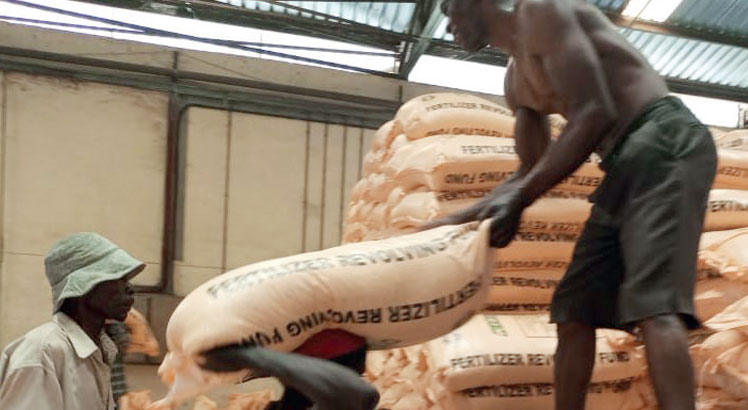
The project aims to produce both chemical and organic fertilisers, boost agricultural productivity and reduce Malawi’s dependence on costly imports.
The fertiliser venture is among 19 bankable projects in agriculture, tourism, mining and manufacturing (ATMM), as well as the health sector, collectively valued at more than K1.4 trillion and unveiled by the Reserve Bank of Malawi (RBM) in July last year.
“Luanar seeks funding to establish a fertiliser manufacturing company budgeted at K57.27 billion. This will be Malawi’s first national fertiliser plant designed to recover its investment over 15 to 20 years through generated revenues,” reads the document.
RBM spokesperson Boston Maliketi Banda declined to comment on the project’s status, referring enquiries to Luanar.
“Our role was to facilitate engagement between financial institutions and these productive ventures for funding consideration,” he said.
The concept document says Luanar has secured land at its Bunda Campus to support research and innovation linked to the plant. However, securing a strategic partner to bridge the funding gap remains the project’s main challenge.
The document further states that the plant is expected to cut fertiliser imports by 50 percent by 2030 and improve access to affordable fertiliser for farmers. It is also projected to recover its investment within 15 to 20 years through revenues generated from operations.
According to Chingota, government, through the Science and Technology Fund, provided about K160 million for the project between 2023 and 2025.
“This financial year, government has increased funding to K500 million after being convinced by the outputs from previous funding cycles,” said Chingota, who is also NCST acting director of technology transfer, innovation and commercialisation.
He said earlier funding focused on research and development, but the project is now transitioning towards commercialisation.
Chingota disclosed that granulation equipment for research purposes has been successfully installed at Luanar.
Information from NCST shows that the initiative will focus on organo-mineral fertilisers, building on a framework launched by the commission in 2022 in partnership with the World Intellectual Property Organisation (Wipo).
Malawi imports large volumes of
fertiliser, placing pressure on foreign exchange reserves. Imports have risen from about 147 000 metric tonnes (MT) in 2004 to more than 600 000 MT today.
Retail prices currently range between K140 000 and K180 000 per 50-kilogramme bag, making fertiliser unaffordable for many smallholder farmers.
Agricultural economist Steven Kayira said a local fer tiliser manuf actur ing plant could strengthen national fertiliser security, create jobs, reduce import costs and stabilise prices.
“It could also stimulate industrial growth and support agricultural productivity,” he said.
Projections indicate that the plant could produce 300 000 MT of organic fertiliser and bio-fertiliser annually in its first year, generating revenues of about $48.5 million and profits of $1.5 million over a 25-year period.
However, Kayira warned that the venture faces significant risks.
“These include high capital requirements, unreliable energy supply, foreign exchange shortages for importing raw materials and the possibility of the plant operating below capacity if management and market systems are weak,” he said.
He also said inadequate financing signals serious implementation challenges for the ambitious project.
Project documents indicate that while land has not yet been formally
allocated to the venture, Luanar has about 300 hectares available that could support the investment.
Kayira said soil-specific fertilisers could improve nutrient-use efficiency, boost crop yields and help address soil degradation.
According to the RBM 2025 Projects Compendium, the projects have the potential to transform Malawi’s economy through export growth, import substitution, job creation and indust r i a l commercialisation.