Not long ago, planeloads of visitors touching down at Bakili Muluzi International Airport in Chileka Township, Blantyre City, thought they were crash-landing in arid croplands dotted with grass-thatched houses.
Currently, mushrooming mansions, shops and other symbols of modernity are fast replacing the rustic setting around the colonial-era airfield.
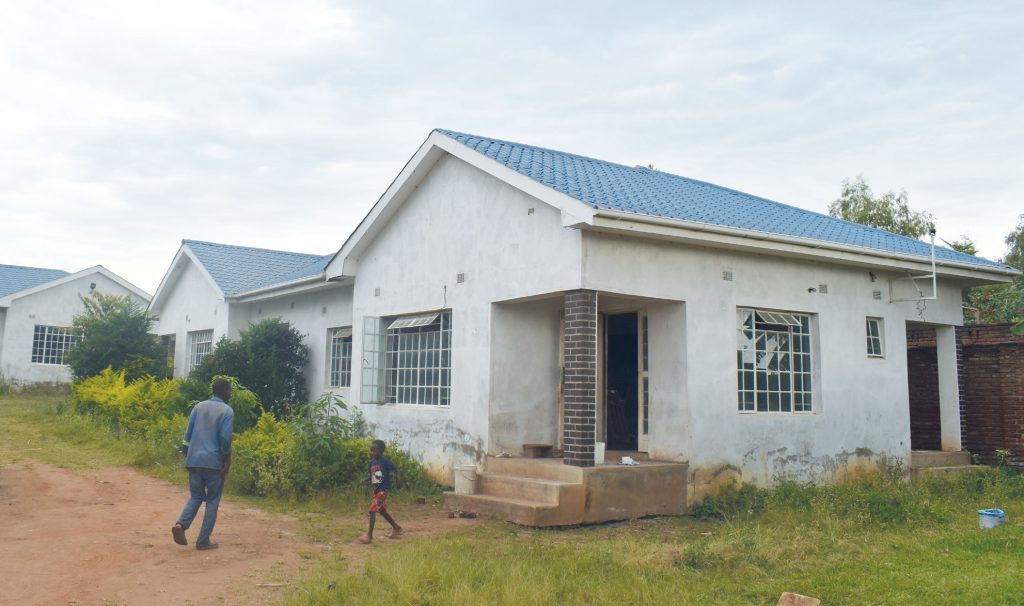
However, essential services, especially electricity, are expanding too slowly for the emerging settlements in the outskirts of the commercial city inundated by exodus from rural settings.
This is the tragedy of Kafere locality, which locals call an island in the dark.
Electricity Supply Corporation of Malawi (Escom) has bypassed about 100 households despite receiving connection fees.
“Three times, Escom staff came to survey our area, but we are still in the dark,” says Eneya Zalero, one of the skipped property owners.
He owns a dozen homes for rent, but they remain unconnected, despite being located almost 300 metres from power lines.
One compound comprises seven houses, each valued at “more than K150 000 per month”. The other has five with similar price tags.
The wait for electricity continues even though the engineer paid connection fees almost five years ago.
“It’s four lost years,” Zalero laments. “How much would I have earned had Escom done its job?”
The first seven houses are complete and fully wired, but remain vacant due to lack of electricity.
Counting the losses, the Zaleros miss an opportunity to make K1.05 million monthly and K12.6 million a year.
The loss totals K50.4 million for the four years of waiting in vain, but it could hit K86 million if you add the other five.
“It’s a good pension, isn’t it?” says the engineer. “I’ve lost count of the visits and phone calls begging Escom to bring power to our retirement investment.”
He reached “a breaking point” in 2024 and slowed down on the compound of five.
He now pays two men to guard vacant houses, he says.
Frustration is the prevalent mood across the emerging off-grid settlement.
So close, yet too far
The nearest Escom pole stands in a homestead almost 300 metres away.
The power line dimly lights energy-saving bulbs at the receiving end.
The persistent low voltage speaks of graver energy poverty in the country where Escom supplies a quarter of households.
Last year, the power supplier asked Kafere residents to buy a transformer, poles and distribution wires for grid extension.
Escom bypassed the community under the Malawi Electricity Access Project (Meap), funded by the World Bank. The $100 million initiative, which phased out two years ago, got underway at a time Escom kept asking applicants to buy poles, wires and other basics.
Meap promised to complete 180 000 long-awaited connections, particularly for applicants who could not afford.
It boosted electricity access from 11 percent in 2019 to 25.9 percent last year, the World Bank reports.
The Ministry of Energy touted the national electrification drive, saying electricity is not a luxury, but an enabler for business, education, health and other sectors.
Not forgotten?
The Nation asked Escom spokesperson Pilirani Phiri about the situation in Kafere and plans to connect the island in the fast-expanding city.
He said concerns raised by Kafere community and other emerging settlements are regrettable and the power supplier remains committed to resolving them.
“Delays in electrification are often due to infrastructure constraints, including the need for transformers, network upgrading and prioritisation of projects within limited financial and technical resources,” he says.
Phiri says communities not included in Meap are considered under subsequent electrification initiatives, including Accelerating Sustainable And Clean Energy Access Transformation] project (Ascent) project, which targets to connect 235 000 customers by 2030.
“Escom confirms that Kafere and surrounding areas are under consideration in ongoing and future network expansion programmes. Site assessments and planning are underway. Once resources are secured, implementation timelines will be communicated.”
National ambitions
The national policies envision 70 percent access to electricity access by 2030 and full coverage by 2063.
The Malawi 2063 targets 2.7 million new on-grid and off-grid solutions consuming 848 megawatts of added generation, mostly from private investment.
However, only faint memories of the Meap power accelerator reach Chileka’s sidestepped locality.
Kafere residents can only covet afterglows from surroundings communities.
When darkness falls, fireflies flicker in the blue-black nights beyond halos created by sporadic solar light that personify residents’ tenacity and desperate attempts to make life bearable as grid power remain so close.