Who polices the courts? President Peter Mutharika asked Parliament in 2020.
“Everyone must account to someone,” he said.
A 75-year-old widow sued for trespassing an estate her husband registered in 1968 urges Chief Justice Rizine Mzikamanda to urgently swear in new Judicial Service Commission members to hold courts accountable.
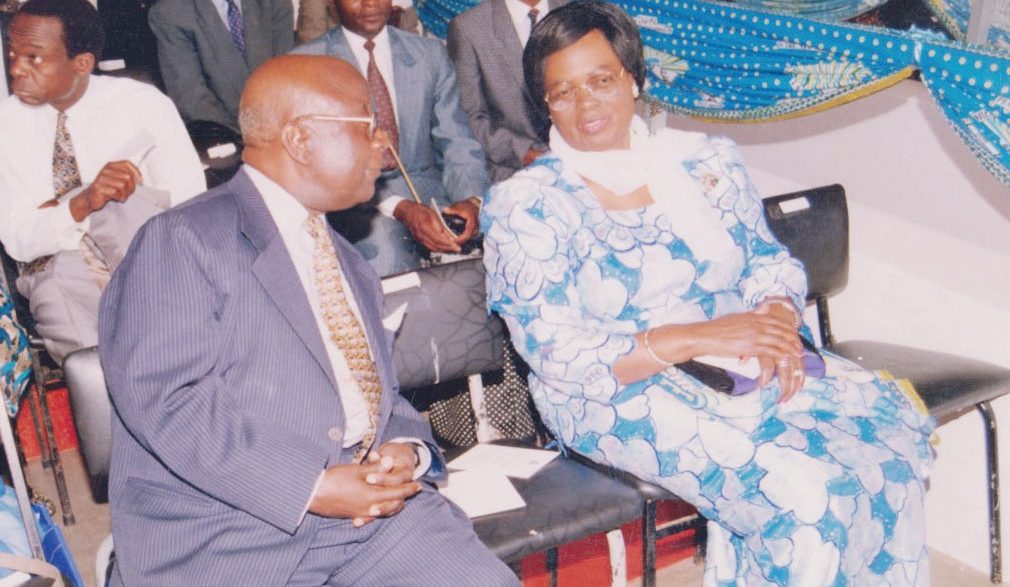
“I want to see justice done. If this happens in my lifetime, I will die peacefully,” says Fales Kaphwiti Banda (see her word-for-word story on the right).
Mzikamanda ordered courts to pass judgements within 90 days, but the late Elias Kaphwiti Banda’s widow bemoans waiting longer since a stay order paused her family’s court victory.
The man got a 99-year title deed in 1968, three years before founding president Hastings Kamuzu Banda exiled them and took over the land.
However, Kamuzu’s official hostess Cecilia Kadzamira claimed the former president surrendered it to her in 1972.
In 2020, the country’s strongest woman during Kamuzu’s 31-year rule obtained a court order outlawing the family from Tichitenji Estate in Mchinji.
Last year, High Court Judge Simeon Mdeza took over the matter after the family petitioned the Mzikamanda-led commission against frequent adjournments by Kenyatta Nyirenda.
On December 30 2025, the court ruled that the 583.7-acre estate belonged to the Kaphwitis because they obtained the title deed earlier and it was never lawfully cancelled.
“If the surrender never happened, the land never reverted to government,” ruled Mdeza, adding: “No person can give what they do not have.”
The judge also found Kadzamira’s papers legally invalid for being registered seven years after execution, not the mandatory three months.
The court found her “defective title, executed in 1982 and registered in 1989— incapable of supporting trespass claims against the family with a superior title deed, as stated by Section 8 of the Deeds Registration Act.
The claimant’s lawyer, Khumbo Soko, said: “ We have a stay order that was granted by the High Court. There is a pending appeal. We are waiting for the record of appeal prepared by the Registrar of the High Court.”
But thet Kaphwiti’s daughter, Tapiwa, said the long wait for justice is taking an economic and health toll on the family.
“I was born in exile 36 years ago when the dispute was already raging and now my first-born daughter is going to university, but the matter is still unconcluded and all our income goes towards endless court processes. How long will we wait for justice? ”
‘I want to see justice done while alive’
I am Fales Kaphwiti Banda, widow of Elias Kaphwiti Banda who acquired Tichitenji Estate in Traditional Authority Kawere, Mchinji, before we fled to Zambia on September 21 1971.
We left our relatives there, but after six months in exile, we heard that the notorious Malawi Young Pioneers had evicted them and the land now belonged to then president Hastings Kamuzu Banda, who later surrendered it to his official hostess Mama Cecilia Kadzamira.
The land dispute has been raging since our return just before the 1993 referendum. This robs me of peace.
My husband died [on May 19 2012] yearning to reclaim Tichitenji Estate as he did with a commercial building at Mchinji Boma and a cottage in Salima.
But the land is still in dispute.
When my daughter Tapiwa and I visited the Regional Lands Commissioner’s office in Lilongwe in 2014 to get a valuation report for the commercial building, an officer asked us if we also wanted ine for Tichitenji Estate, whose original title deed was on file.
Since then, we have done everything to get justice, but courts are too slow. An injunction—a temporary relief—has been in court since 2020 when Kadzamira sued us for trespass.
On December 30 2025, the High Court ruled that Tichitenji Estate belonged to us, the Kaphwiti Family, because we presented a superior title obtained earlier than the claimant’s did and we had never surrendered it.
However, our victory vanished within days when the claimant obtained a stay order against the ruling, pending appeal.
The long wait causes grief. I cry for justice day and night.
Justice delayed is justice denied. The long, costly trial is killing me.
It has caused a heart problem and I am in pain. My blood pressure spikes when I remember the land my husband and I occupied freely before exile.
Still, the search for justice appears far from over despite the judgement passed six months ago.
We are dancing to a new tune.
What more should we do?
I have unanswered questions.
Is it because I am old and poor?
The endless burden brings to mind the agony we endured during Kamuzu’s one-party rule.
Life in exile was tough, but we continue to suffer even 33 years after returning home.
I wish I met someone who could hear our cry. Maybe the President, Minister of Lands or Chief Justice will tell us where to find justice.
We hoped to see justice in court, but the hide-and-seek leaves the poor poorer. It does not serve justice.
I am dying in pain. If the dispute is concluded in my lifetime, I will go in peace.
I am 75-year-old. Should I die–like some witnesses—while the matter is still in court?
Please, my God-fearing nation, I want closure.
I am not asking the court to favour me and my children. No. The Bible says the truth will set me free.
My husband acquired Tichitenji while young to secure his family’s future, but we cannot enjoy its harvest because of the on-off court process.
Why is the court taking long to discharge or sustain the judgement?
My days are numbered and it is my prayer to see justice done.
I want to go and dwell on that land even for a short stint. Let me return to Tichitenji and grow beans. Just a ridge or two. If I taste a fresh harvest from the land of my beloved husband, I will thank God and tell myself: “You have fought a good fight.”