The Economics of Solidarity: Why Social Stability is Africa’s Greatest Investment Risk

As Africa positions itself as the world’s next major growth frontier, social stability has emerged as a defining determinant of capital allocation. In 2024, foreign direct investment into Africa surged by 75% to a record USD97 billion, representing 6% of global flows. Nevertheless, this momentum is increasingly at risk due to recurring waves of xenophobic violence in key economic hubs — most notably South Africa, the continent’s largest industrialized economy.
The economic cost of this instability is substantial and measurable.
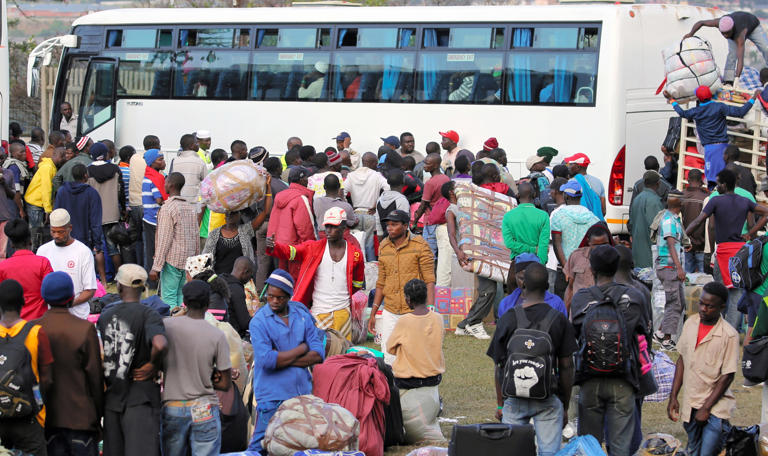
Beyond the immediate destruction of commercial property, xenophobic incidents actively deter investment, disrupt intra-regional trade, and fracture diplomatic relationships. Migrant entrepreneurs are not a burden on the South African economy; they are structural contributors. International Labour Organization data indicates that immigrants contribute approximately 9 percent to South Africa’s GDP, with over a third of international migrant enterprises actively employing South African citizens. As the continent advances in the implementation of the African Continental Free Trade Area (AfCFTA), a framework anticipated to augment intra-African trade by 45 percent by 2045, the success of this integration inherently relies on the unrestricted movement of labor and the safeguarding of cross-border investments. For policymakers and business leaders, addressingxenophobic violence is now recognized not merely as a matter of law and order, but as an essential prerequisite for sustained economic development and regional competitiveness.
The Paradox of the Gateway Economy
South Africa has historically established itself as one of the premier entry point for international investment seeking engagement with Africa. The nation boasts extensive capital markets, resilient financial institutions, and advanced infrastructure that are unmatched by any other sub-Saharan economy in terms of scale. Nonetheless, this economic advantage is progressively compromised by a persistent and detrimental issue: recurrent xenophobic violence targeted at African migrants and their commercial enterprises. can nations, including Malawi, Nigeria, Ghana, and Mozambique, to initiate mass repatriations of their citizens.
The South African Border Management Authority reported that more than 13,000 foreign nationals were either voluntarily repatriated or deported in the weeks preceding July 2026.
While public discourse often characterises these incidents as social or political crises fueled by poverty and inequality, the business community has shown remarkable reticence.
Corporate leaders are generally prompt in voicing concerns about electricity shortages,
logistical bottlenecks, or regulatory uncertainties—issues that directly influence profitability. However, in instances where businesses owned by African migrants are subjected to looting or are compelled to shutter due to targeted violence, the response remains subdued. This silence constitutes a significant misjudgment. Xenophobia transcends social shortcomings; it represents a systemic business risk that directly affects supply chains, consumer markets, and investor confidence.
Migrant Entrepreneurship: A Structural Economic Contribution
The narrative driving anti-immigrant sentiment often asserts that foreign nationals intensify
South Africa’s deepening unemployment crisis. However, empirical data presents a markedly different perspective. In the first quarter of 2026, South Africa’s unemployment rate reached 32.7%, with youth unemployment remaining disproportionately elevated.
While the frustration among economically marginalised communities is palpable, attributing
this structural unemployment to migrant labor neglects established economic facts.
Research indicates that migrant entrepreneurs are net contributors to the South African economy. According to the International Labour Organisation (ILO), immigrant workers have the potential to increase South Africa’s income per capita by as much as 5%.
A comprehensive study conducted by the Southern African Migration Programme (SAMP) and the Gauteng City-Region Observatory found that 35% of international migrant enterprises in South Africa employ local citizens; moreover, 42% of non-family employees within these migrant-owned businesses are South African.
Examine the pivotal role of Somali-owned spaza shops within the township economy. These enterprises depend on advanced collective purchasing systems and highly efficient supply chains, which enable them to provide competitive pricing in low-income areas where formal retail outlets are limited. When such businesses are targeted and dismantled, the resulting economic repercussions extend broadly: local consumers are deprived of affordable goods, domestic suppliers lose dependable distribution channels, and the community endures a net reduction in economic activity.
The entrepreneur who has dedicated years to cultivating customer relationships while generating employment is not the sole victim; the entire local economy experiences contraction. Quantifying the Cost of Conflict Capital is inherently mobile, and investors require predictability. When commercial success makes an enterprise a target for violence rather than a celebrated contributor to economic growth, the investment thesis collapses.
The macroeconomic impact of instability is profoundly significant. Research conducted by the World Bank on fragile and conflict-affected situations demonstrates that high-intensity conflicts are associated with a cumulative loss in per capita GDP of approximately 20% five years after their onset, relative to baseline projections.
Additionally, studies from Oxford University indicate that civil unrest can decrease a nation’s annual growth rate by 3.2%. Although xenophobic violence in South Africa may not qualify as a formal civil conflict, the localised destruction of commercial centers results in comparable economic disruption — especially when such incidents recur with sufficient regularity to become a structural component of the operating environment. The spillover effects extend significantly beyond the borders of South Africa.
The xenophobic attacks of 2019 precipitated diplomatic tensions that prompted major South African corporations — such as MTN, Multichoice, and Shoprite — to temporarily close branches in Nigeria as a consequence of retaliatory threats. This year, analogous patterns emerged once more: Nigeria issued threats of retaliation amid
the repatriation of its citizens, while South African enterprises across the continent experienced operational disruptions.
This recurrent cycle of reputational damage incrementally diminishes the trust essential for
cross-border commercial relations.
The Peace Dividend: What Cooperation is Worth
Conversely, the “peace dividend” — the long-term economic benefit derived from social stability and the reallocation of security resources toward productive investment — is substantial. When communities operate in a secure environment, entrepreneurship flourishes, credit is extended more freely, and fixed capital formation accelerates.
South Africa’s historical relationship with the rest of Africa accentuates the significance of this consideration. Numerous African nations endorsed the anti-apartheid movement and provided refuge to South African exiles during the nation’s most difficult periods.
Xenophobic violence presents an uncomfortable paradox between this historical solidarity and current realities — a paradox that prompts reflection on the country’s dedication to the pan-African ideals it advocates in diplomatic settings. At the community level, the value of cooperation is both economic and social. Migrant entrepreneurs do not operate in isolation; they are embedded in local supply chains, employ local workers, serve local consumers, and pay local taxes. The destruction of these enterprises does not create jobs for South Africans— it eliminates them.
Research consistently demonstrates that immigration and entrepreneurship are complementary rather than substitutive forces in developing economies. For South Africa, securing the peace dividend requires treating xenophobic violence with the same immediacy as the nation’s energy crisis or infrastructure deficiencies. The business community has accurately pinpointed load shedding, logistical failures, and crime as significant threats to economic development. Xenophobic violence should be included in this list — and arguably more prominently, considering its potential to undermine the entire continental integration initiative.
Strategic Implications: The Investment
Solidarity Framework
The narrative surrounding xenophobia must
shift from a purely socio-political discourse
to a hard-nosed economic calculation. Investment solidarity — the principle that African
nations must mutually protect and facilitate
cross-border capital and labour — is not a diplomatic nicety, but a commercial necessity.
The framework rests on four interdependent
pillars.
First, the rule of law must protect all entrepreneurs regardless of nationality; without this,
no rational actor will commit capital.
Second, labour mobility must be facilitated
through the AU Free Movement Protocol and the AfCFTA’s services provisions.
hird, trade integration requires the continued reduction of barriers, harmonisation of
standards, and investment in infrastructure
connectivity.
Fourth, social cohesion at the community level — trust-building, inclusive economic participation, and the rejection of scapegoating —
provides the social foundation upon which the
other three pillars rest.
For policymakers, the distinction between immigration management and xenophobic violence is critical. Every sovereign state has the
right to regulate its borders and enforce immigration laws.
However, these policies must be executed
through democratic institutions and legal
frameworks, not through vigilante intimidation. One can support stronger immigration
management while simultaneously rejecting
violence against businesses and individuals.
The two positions are not contradictory; conflating them serves neither economic development nor social justice.
For the business community, silence is no longer a viable strategy. Corporate leadership must
recognise that attacks on foreign-owned enterprises degrade the broader commercial ecosystem. Advocating for the rule of law and the
protection of all entrepreneurs, regardless of
nationality, is an investment in macroeconomic
stability — not a political statement.
Conclusion: Reassessing the Risk Premium
Africa’s economic trajectory over the coming
decade will be defined by its ability to integrate
its fragmented markets. The continent’s demographic dividend, the operationalisation of the
AfCFTA, and the record FDI inflows of 2024
present an unprecedented growth opportunity.
However, this potential cannot be realised in
environments where social instability threatens
commercial viability.
South Africa faces a critical inflection point.
A nation that seeks to serve as the economic anchor of the continent cannot afford to project uncertainty regarding the safety of African investors and workers.
Protecting businesses from xenophobic violence is not simply a matter of human rights but is a foundational requirement for securing
investor confidence, capturing the peace dividend, and ensuring the future of African commerce.
Until xenophobia is treated as a tier-one macroeconomic risk — alongside energy security and
infrastructure resilience — the continent will
continue to pay an unacceptably high price in
lost growth, diverted capital, and fractured solidarity.
The economics are unambiguous: cooperation
is not merely desirable but is the single greatest determinant of whether Africa’s growth story becomes a growth reality. – Finance Africa Quartely.
🔴Finance Africa Quarterly is a specialized economic publication by the Bard Global Finance Institute that delivers in-depth analysis on major African economies, tracking regional capital trajectories, growth metrics, and market data.