The Economist Intelligence Unit (EIU) says it foresees the International Monetary Fund (IMF) continuing its push for currency realignment as discussions on a new Extended Credit Facility (ECF) for Malawi progresses.
The research and analysis division of the Economist Group’s observation quoted in the Nico Asset Managers Limited Monthly Economic Report for June 2026 comes at a time the kwacha is fixed at K1 751 against the dollar while the parallel market rate is at as high as K4 400 against the greenback.
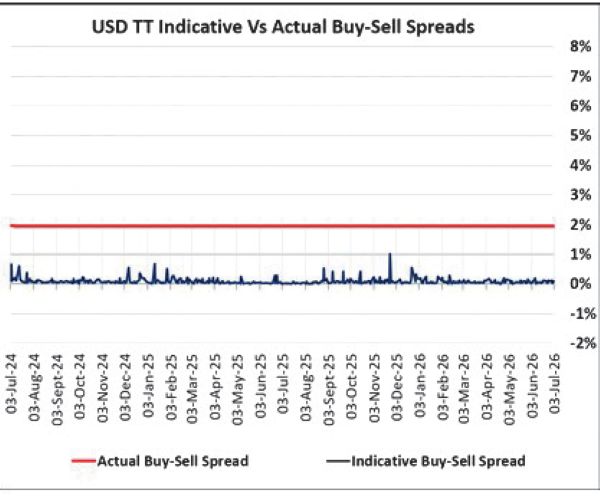
Reads the report in part: “The central bank continues to heavily manage the official exchange rate, keeping the kwacha at about K1 750 per dollar while the parallel market has seen sharp depreciation, with the currency currently trading at about K4 400 per dollar.
“The IMF will continue to push Malawi toward a market-determined exchange rate, but in the absence of a funded programme, the authorities are likely to maintain tight control of the kwacha.”
The report further said lower foreign exchange inflows coupled with a large appetite for imports are likely to maintain downward pressure on the value of the kwacha as foreign reserves continue to decline, resulting in further depreciation of the kwacha.
The forecast comes weeks after the National Planning Commission (NPC) said in a policy brief that the exchange rate unification could help solve current economic challenges such as forex scarcity, but needs to be implemented jointly with a broad reform package to ensure stability.
NPC observed that although removing the exchange rate regime could trigger rampant inflation and worsen livelihoods, the widespread importation of products at informal exchange rates means that the average citizen derives little real benefit from the maintenance of the official rate.
Reserve Bank of Malawi (RBM) spokesperson Boston Maliketi Banda said in an interview on Tuesday said that discussions with the IMF are meant to achieve macroeconomic stability and the devaluation of the kwacha is not one of the issues.
He said: “A detailed plan of the steps to be taken will be made known in due course and will obviously focus on stability and promoting the welfare of Malawians.
“In this case, every step will be carefully analysed to ensure that it benefits the economy.”
Maliketi Banda said learning from the past devaluations, fresh devaluation of the local currency is not part of the negotiations with the global lender.
University of Malawi economics lecturer Edward Leman said in an interview that there is need to solve the economy’s underlying structural challenges such as lack of production and exports.
“This is a structural imbalance we have struggled to address despite various policy documents over the years.
“As long as demand for foreign currency consistently exceeds supply, the local currency will continue losing value,” he said.
On his part, Mzuzu University economics lecturer Christopher Mbukwa said that in theory, devaluation could help to realign the exchange rate and reduce pressure on the foreign exchange market, but in Malawi’s case, it often fuels inflation without reducing demand for imports.
In June this year, IMF team visited the country and met various stakeholders and started discussions on a new ECF programme.
The four-year $175 million (about K306 billion) ECF was terminated in May 2025 after the programme run for 18 weeks without review. At the time of termination, IMF has disbursed $35 million (about K61 billion)of its package, leaving a balance of $140 million (about K245 billion).
The IMF Executive Board approved Malawi’s ECF on November 14 2023 to support the country’s efforts to restore macroeconomic stability and achieve a sustainable and poverty reducing growth.
Malawi sought the new ECF after cancelling the previous arrangement in September 2020 barely two months after the Tonse Alliance administration led by President Lazarus Chakwera ascended to power.
Prior to the approval of the IMF programme in November 2023, RBM devalued the kwacha by 44 percent.