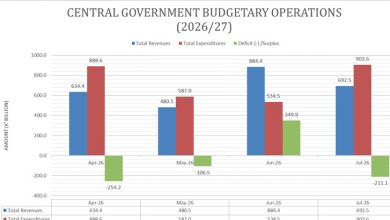
Economists have described the first-half (H1) economic performance as mixed, citing improved fuel supply and easing inflation and interest rates amid persistent foreign exchange shortages and rising fuel costs.
The analysis comes as the inflation pressures fell from 24.9 percent in January to 23.4 percent in May while interest rates eased slightly after the Reserve Bank of Malawi (RBM) cut its policy rate from 26 percent to 24 percent in March.
In an interview on Monday, University of Malawi economics lecturer Edward Lemani said the developments were encouraging, but noted that foreign exchange scarcity continued to affect business activity.
He said: “There were notable improvements in fuel availability, inflation and interest rates, although the recent rise in fuel prices slowed the disinflation process and continues to pose inflationary risks.

to weigh on business activity. | Nation
“Foreign exchange shortages also remain a major constraint on business activity and economic recovery.”
Lemani said that while government austerity measures have contained expenditure and reduced domestic borrowing, repeated restructuring across ministries and agencies has diluted savings.
He said frequent hiring, dismissals and reappointments have created additional fiscal costs.
Scotland-based Malawian economist Velli Nyirongo, in an interview, urged policymakers to shift focus in the second half of the year from stabilisation to growth.
“The first six months have largely been devoted to restoring macroeconomic stability, but sustained recovery will require stronger investment, improved access to foreign exchange, and a more conducive environment for private sector activity,” he said.
Nyirongo argued that higher production and investment are the most durable solutions to Malawi’s macroeconomic challenges.
In a separate inteview, Mzuzu University economics lecturer Christopher Mbukwa described overall performance as subdued, noting that inflation and interest rates, though easing, remain elevated.
He said austerity measures have had limited impact largely due to reduced travel by President Peter Mutharika rather than broad fiscal restraint.
“Surely, his limited travels both in and out of the country have helped to save resources. But generally, the impact of austerity measures is not felt much because they are not implemented at a larger scale,” said Mbukwa.
He said that improvements in the second half will depend on foreign exchange inflows from development partners, given weak export performance.
Malawi Confederation of Chambers of Commerce and Industry chief executive officer Daisy Kambalame said in an interview that the private sector continues to struggle under persistent macroeconomic imbalances driven by low productivity.
She said: “Weak productivity has led to low revenues, declining exports, a negative balance of payments and limited job creation, increasing pressure on social spending.
“The economy is caught in a cycle where increased social expenditures coincide with reduced government revenue, complicating the ability of both government and the private sector to perform their roles effectively.”
The 2025 Real Economic Development Index, published by the Business Council of Africa, shows that Malawi remains among African economies hampered by deep structural weaknesses.
The report questions the country’s readiness to industrialise in line with its Malawi 2063 strategy, which aims to achieve lower middle-income status by 2030 and upper middle-income status by 2063.
It cited weak industrial capacity, persistent energy challenges, limited infrastructure development and policy inconsistencies as key obstacles to economic transformation.