This year’s national examination results have brought mixed fortunes for learners, with the Junior Certificate of Education (JCE) pass rate rising by four percent while the Primary School Leaving Certificate of Education (PSLCE) dropped by six percent.
The Malawi National Examinations Board (Maneb) announced the results in a statement co‑signed by Secretary for Education Ken Ndala and executive director Dorothy Nampota.

Out of 245 048 PSLCE candidates, 198 903 passed, representing 81.17 percent, down from last year’s 87.5 percent. By contrast, the JCE pass rate climbed to 81.21 percent, up from 77.61 percent in 2025.
Gender disparities remain evident. Male PSLCE candidates achieved an 85.69 percent pass rate, compared to 76.94 percent for females. Among candidates with special needs, 71.5 percent passed PSLCE, while at JCE level, the figure was 82.41 percent.
Performance also varied across divisions and districts. The Northern Education Division led PSLCE results with 19.6 percent of candidates scoring A’s and B’s, while Zomba Urban topped both PSLCE (29 percent) and JCE (26 percent) district rankings followed by Mzuzu City at 26.91 percent and Lilongwe West at 25.73 percent. Among education districts, Zomba urban tops the list with 29 percent, followed by Mzuzu City at 26.91 percent and Lilongwe West at 25.73 percent.
At JCE level, 154 880 candidates sat for the examinations, with 125 777 passing, representing an overall pass rate of 81.21 percent.
The JCE pass rate is higher than that recorded last year, when 158 451 candidates sat for the examinations and 122 977 passed, representing a pass rate of 77.61 percent.
Male candidates recorded an 84.04 percent pass rate, while females recorded 78.49 percent whereas candidates with special needs have achieved an 82.41 percent pass rate.
National secondary schools have recorded the highest performance among the listed school categories at 91.16 percent.
Among the top-performing education districts, based on the proportion of A’s and B’s, Zomba urban emerged top with 26 percent, followed by Phalombe at 23.5 percent and Chiradzulu at 22.2 percent.
Reacting to the results yesterday, Civil Society Education Coalition (Csec) board chairperson Limbani Nsapato said there are several grey areas government needs to effectively address.
Among others, Nsapato said government needs to investigate the decline in PSLCE performance and introduce targeted remedial measures, further highlighting persistent gender gaps and socio-economic barriers affecting girls.
“Government should strengthen inclusive education through specialist teachers, assistive devices, accessible infrastructure and appropriate teaching and learning materials,” he said.
“It should target underperforming divisions and districts through equitable resource allocation, teacher deployment and focused school-improvement interventions.”
On secondary school results, Nsapato said government should accelerate the construction and expansion of secondary schools, particularly Community Day Secondary Schools (CDSS), increase recruitment and equitable deployment of secondary school teachers, provide adequate teaching and learning resources and expand opportunities for learners with special needs to transition to secondary education.
He further said development and adequate finance of a strategy for progressive increasing secondary school transition beyond the current 55.57 percent would also be integral.
In a separate interview, Mzuzu University based educationist Foster Lungu said the results show the country is making little progress in the education sector.
Lungu attributed the situation to inadequate allocation of resources, which he said authorities need to urgently address.
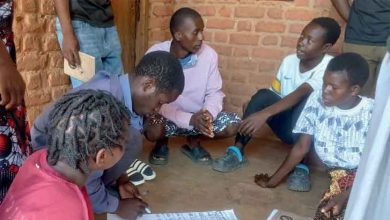
He said: “The expectation is that we should have been making progress, but from the look of the results, little progress is being made. Resource allocation is a problem, as is evident from the fact that some primary schools are being manned by only a few teachers, while learners are sitting on the floor.
“The situation is similar in secondary schools, where standards are also dwindling.”