On 10 July this year, a 26-year-old teacher disguised as Fiona for her privacy was admitted for four days to a district hospital, waiting for doctors to remove fibroids from her sexual and reproductive system.
She was optimistic the surgery would end six years of excruciating stomach pains, excessive menstruation and loss of appetite.
Yet, when a surgeon ushered Flora into the operating theatre, she waited for another four hours because she could not understand instructions from the anaesthetic in a surgical mask.
“I was telling him I am deaf and rely on lip reading but he could not remove his mask. I needed urgent attention. I was in terrible pain. Besides, I did not eat or drink anything for over 24 hours, as instructed,” she recalls.
The team only proceeded to operate on the mother of two when a reproductive health surgeon arrived.
Like Fiona, Kettie Mwamvani, 26, is also deaf. Her education, from Dedza Primary School to Umbwi Secondary School and the University of Malawi (Unima) was an arduous journey. In the absence of special needs teachers, she struggled to follow lessons, instructions and discussions since she lost her hearing faculties due to meningitis at the age of 10 when she was in Standard Seven.
“Fellow learners made fun of me and my self-esteem was so low. At times, I wished not to go to school. The experience of forgetting made me feel different from anyone else,” says the 2023 bachelor of humanities graduate.
Her academic performance only peaked when a sign language interpreter, supportive colleagues and encouraging lecturers came to her aid.
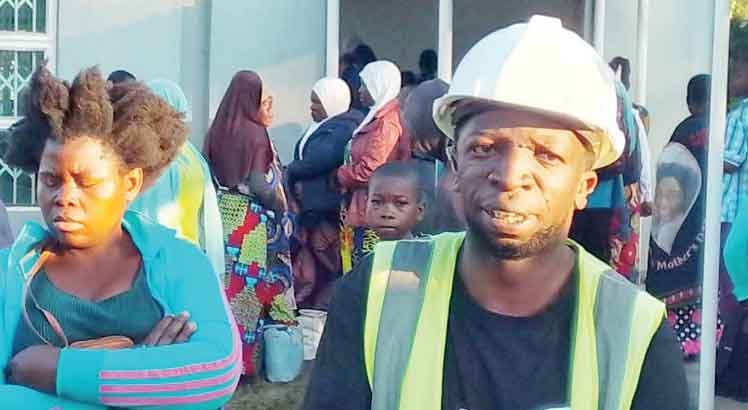
l Kondwani Kamiyala
“In my second year, I experienced the love, acceptance and support I had long yearned for. I found an inclusive learning environment,” recalls Mwamvani, now an assistant labour officer in Dedza.
If you find Izaya Mkwaila sensitising people to railway safety using poetry, music and drama, you would think he had it easy to get the job as a social monitor at Blantyre train station.
Before Nacala Logistics employed him, many employers rejected him because of his hearing difficulties even though he holds a City and Guilds certificate in electrical engineering and electronics and a diploma in information technology.
“One potential employer told me outright: We can’t employ someone who can’t hear us,” Mkwaila recalls.”Yet, my education, from Henry Henderson Institute primary and secondary schools in Blantyre to college was a struggle. I had to sit in the front row to read the teachers’ lips.”
The 2018 Population and Housing Census by the National Statistical Office indicates that 10 percent of people in Malawi—more than 1.5 million—have at least one disability. About one fifth or 377 790 have hearing difficulties, while 6 020 don’t hear at all.
The findings amplify calls for schools to teach sign language for inclusive interaction and service delivery.
Sign language interpreter Savita Wirima, a special needs teacher at Namiwawa Private School in Blantyre, says the communication barrier obliterates rights of deaf persons.
“Although our laws protect people with hearing loss, shortage of sign language interpreters impedes access to education, health, justice, employment and public information. Yet, the affected persons are not asking for any special treatment, but equal rights, equal treatment and equal opportunities,” she says.
The special needs teacher says making the Malawi Sign Language (MSL) official—as Uganda, Kenya, Zimbabwe and South Africa recognised their versions— can help close the gap.
Concurring, Malawi National Association for the Deaf (Manad) executive director Byson Chimenya says the local sign language has grown into a defining identity for the country’s community of people with hearing loss.
He considers the publication in 2022 of the MSL dictionary as a milestone in preserving the language and expanding access to education, leadership and advocacy.
He states: “Sign language interpretation is also increasingly visible at national events, on television, in churches and other public spaces, while Manad trains interpreters, teachers, health workers and service providers.
“However, major gaps remain: MSL is not fully institutionalised in public services, while a severe shortage of qualified interpreters leaves people struggling to access education, healthcare, justice, employment and government services.”
Manad has 12 000 members nationwide.
Chimenya says communication barriers, lack of interpreters and negative attitudes from senior management often makes it difficult for deaf persons to compete equally for jobs and learning opportunities.
“In schools, some deaf learners have depended on peers to communicate because teachers lack sign language skills; limited access to information also increases vulnerability to discrimination and abuse,” he laments.
In 2019, Isaac Msuku founded the Sign Language for Inclusive Development (Slid) after observing that the deaf were being sidelined in public life due to communication barriers.
The organisation sponsors deaf people to access education and vocational skills to become self-reliant. Slid also offers an 18-month sign language training.
“Anyone can become a sign language interpreter, whether deaf or hearing, provided they have the necessary skills and interpretation training,” says Msuku.
He believes recognising MSL as an official language taught in schools would increase the number of people who can communicate with deaf people.
“People should take sign language seriously and make an effort to learn it to bridge the communication gap between deaf and hearing people and contribute to a more inclusive society,” he said.
During the International Day of Sign Language commemoration at Migowi Primary School, Minister of Gender, Children, Disability and Social Welfare Mary Navicha, announced government’s plans to start teaching local sign language in primary and secondary schools nationwide.
“The new curriculum is in the final stages,” she said. “Time has come for Malawi to move from mere recognition of sign language to practical implementation of language rights for deaf persons.”