For Alice Dickson of Mtandire Township in Lilongwe, the rising cost of water has forced her family to abandon kiosks and rely on a nearby unprotected well despite the risk of cholera and other waterborne diseases.
Her struggle reflects the plight of millions of Malawians still without safe water and sanitation, as government admits it needs K554 billion annually to meet Sustainable Development Goal 6 (SDG 6) on water, sanitation and hygiene (Wash) by 2030.
According to the Ministry of Agriculture, Irrigation and Water Development, current allocations stand at just K131 billion, or 1.2 percent of the national budget, which is far below the required investment.
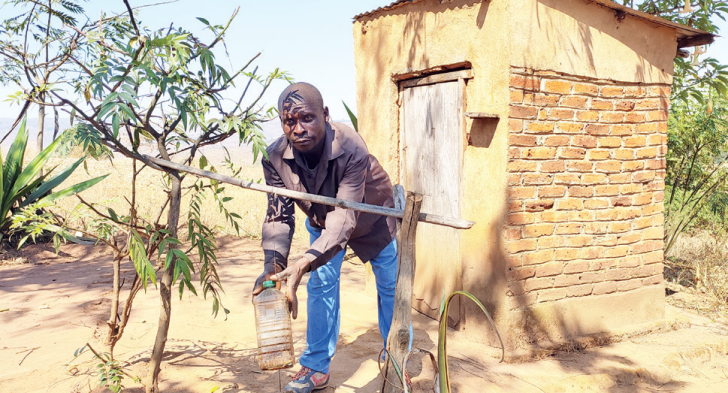
At this pace, officials warn, it could take 34 years to achieve universal access to basic drinking water, 30 years for sanitation, and an astonishing 6 000 years for hygiene coverage, which remains at only 12 percent.
Speaking at the launch of the Presidential Wash Compact, Minister of Agriculture Roza Fatch Mbilizi acknowledged the daunting challenge but pledged to raise investment to at least 5 percent of the budget, while mobilising blended financing from development banks, bilateral partners and the private sector.
“Government will scale up access to sustainable Wash services. By 2030, access to at least basic drinking water services will increase from 73 percent to 85 percent nationally, reaching 100 percent in urban areas and 80 percent in rural areas. Access to at least basic sanitation services will increase from 40 percent to 65 percent nationwide,” said Mbilizi.
Unicef country representative Penelope Campbell described the compact as a bold commitment, stressing that Wash is not just about infrastructure but about “health, learning, dignity and opportunity for every child.”
Water and Environmental Sanitation Network (Wesnet) executive director Safari Mbewe said the compact would help address challenges affecting access to quality water in households, schools and hospitals.
Mbewe called for increased domestic financing, prudent use of available resources, transparency and accountability calling on development partners to increase their investment in Wash projects.
“We need prudence in the use of those resources because if we can use the little resources that we have prudently, we will be able to deliver what has been committed in Wash. Of course, this is also the right time to call upon the development partners to increase their investment towards Wash,” said Mbewe.
Deputy Minister of Health and Sanitation Charles Chilambula said the compact targets increasing access to basic sanitation from 40 percent in 2026 to 65 percent by 2030 through collaboration, improved planning, appropriate technologies and increased investment.
Chilambula said presidential executive order number 2 of 2026 mandates the provision and maintenance of sanitation and waste disposal facilities in public places, schools and workplaces.
He said his ministry would work with government institutions, local authorities and partners to translate the order into action and deliver measurable improve-ments in sanitation and waste management.