Morgan Disaso’s homestead in Blantyre City has no space for his vehicles and children’s games.
Every day, the 41-year-old leaves his two vehicles at a dead-end of an earth road that zigzags in the thick of Mbayani Township and walks the remaining distance home.
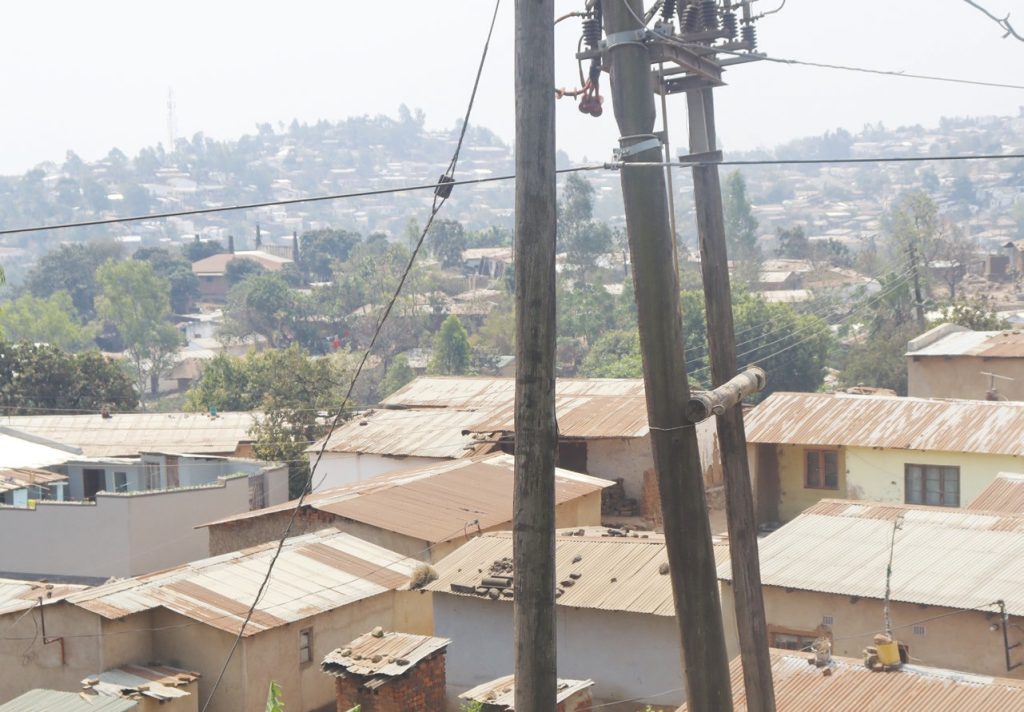
The vehicles cannot reach his home at the end of a narrow footpath in the mazy walls that stand where a road should have been.
“Sometimes, I wish I moved to a low-density settlement where the vehicles could take me all the way home, as do homeowners in better-planned neighbourhoods,” says Disaso, as a dog patrols the backyard, barking at passers-by.
The sneaky roads and shrinking open spaces in the hilly, populous township near Blantyre Central Business District personifies Malawi’s population boom, estimated at 2.5 percent nationwide and 4.3 percent in cities.
In clustered settlements dominated by low-income earners, spacious homes, green spaces, parking areas, clean water and playgrounds have become luxuries.
Some well-off but frustrated residents have abandoned or sold their properties and moved elsewhere in search of breathing space and basic amenities.
Disaso refuses to discard the land his father bought in the 1980s when homes were far apart.
Still, he pays the price every day.
“I pay K20 000 to K60 000 monthly in parking fees away from home,” he states. “When I have no money, I have to park at my relatives places or leave it at work.”
The irked Mbayani resident blames Blantyre City Council for failing to enforce city planning rules.
He looks back: “When dad developed his property, homes were mushrooming in the hills and valleys.
“In no time, there were houses left, right and centre. They was no space left for a road.”
Disaso asks local councils, as owners of the land, to vet plans of all buildings emerging in cities.
“The law requires them to do so, but we have never seen them doing that. There was no plan from the start and this is why there is no road,” he says.
Today, makeshift buildings around the city are giving way to permanent structures, making it difficult and costly to create roads and communal spaces without demolishing structures in the way.
This is a common tragedy in Malawi’s cities that are fast degenerating into dumps.
There are similar scenes in Ndirande, Kachere, Soche, Manje, Bangwe and Machinjiri in the commercial city.
Similarly, the likes of Zolozolo in Mzuzu, Mtandire in Lilongwe and Chikanda in Zomba represent runaway cities with no room for future, planned growth.
For residents, the consequences go beyond inconvenience.
Emergency service providers—ambulances, police vans, waste collectors and firefighters—struggle to reach overcrowded areas.
As new buildings emerge, the movement of people and goods becomes a daily challenge.
Kachere resident Emmanuel Makina says some neighbourhoods have no space for communal activities, including funerals.
Lilongwe, the capital city, faces similar challenges in crowded locations such as Area 24, Kauma, Ntandire and Chiuzila.
Property development expert Geoff Wawanya blames population pressure, as many Malawians flee rural areas in search of greener pasture.
He urges government to revive satellite towns and rural growth centres to stop the exodus.
Past administrations, under founding president Kamuzu Banda and his admirer Bingu wa Mutharika, trialled the rural cities’ concept to expand economic opportunities beyond urban hubs, but continued migration bares underwhelming results.
Wawanya blames the urban crisis on poor coordination among institutions responsible for land, housing and urban planning.
“Traditional leaders, city councils, housing authorities and planning institutions should work together to ensure that settlements are developed with roads and other infrastructure in mind,” he says.
Urbanisation and urban development are pivotal to Malawi 2063. The country’s long-term development blueprint promotes productive, inclusive and well-planned urban centres capable of supporting economic activity and providing people with the infrastructure and services they need.
But experiences such as Disaso’s show city planners are failing to keep pace with urban growth.
Andrew Malambia says many developers sidestep formal planning processes due to prohibitive charges by city authorities.
“The costs of getting things right discourages ordinary residents from engaging city planners and surveyors,” he says.