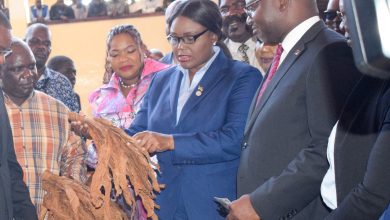
At the National Youth Summit in Lilongwe last week, I stood before hundreds of young Malawians and made a simple case: young people are not the leaders of tomorrow, they are the leaders of today.
A week on, with the five-year National Economic Recovery Plan (Nerp) still fresh in the national conversation, I want to extend that argument. Malawi’s recovery and the growth agenda beyond it, will not be built without her youth. It will be built by them, or it will not be built at all.

At Malawi Stock Exchange-listed Standard Bank plc, we believe that growth starts with honest conversations. Through the Growth Conversations platform, the bank has spent this year in dialogue about macroeconomic stability, execution and public private partnership.
Sitting through the Nerp workshop in June and then the Youth Summit in August, what has become clear is that these are not two separate conversations. Recovery and youth development are one conversation.
From beneficiaries to economic participants
For too long, discussions about young Malawians have positioned them primarily as beneficiaries: of programmes, of grants, of training, of donor goodwill. That narrative must change. Young Malawians are already entrepreneurs, farmers, engineers, bankers, artists and innovators.

They are not waiting for permission to shape this country; they are already shaping it. The question before government, business, faith leaders and civil society is no longer simply what we can do for young people. It is which barriers the country must remove so that young people can do more for themselves, their communities and their country.
The demographic dividend Malawi cannot afford to waste
According to data from World Bank, approximately 80 percent of Malawi’s population is under the age of 35. Quantified by 2026 demographic projections from the World Population Review, which place Malawi’s total population at 22.78 million, this means that roughly 18.22 million Malawians are children, adolescents, or young adults.
That fact can either be our greatest liability or our greatest asset. The difference lies entirely in how deliberately we invest in it now. A demographic dividend is not automatic; it is earned when a growing working-age population is matched with productive jobs, viable enterprises and rising incomes. Left unmatched, that same demographic weight becomes a burden of unemployment and lost potential.
This is precisely why Nerp and youth development cannot be treated as separate agendas. Nerp’s core objectives, single-digit inflation, debt sustainability, higher exports and more resilient production, will only be achieved sustainably if the workforce driving them is productive, skilled and moving from dependency into ownership.
Consequently, any economic recovery framework will remain structurally incomplete without a deliberate youth strategy.
Capital that matches ambition
Financial institutions carry a direct responsibility here. Traditional lending has long asked what collateral a borrower holds. For most young entrepreneurs, that is the wrong first question. The better questions are: what problem is being solved, who are the customers and is the business commercially viable? That is where Standard Bank plc’s programmes such as the Phuka Incubator Hub comes in.
The bank has also invested in technology that assists to answer viability questions with more confidence than collateral ever could and there is need to keep innovating so that access to finance expands without compromising sound banking.
Survey findings shared at the Youth Summit showed that three in five young Malawians want to build something of their own. Standard Bank plc’s task as an industry is to meet that ambition with financing structured for people who have skills but not yet collateral.
This is not a theoretical commitment. Alongside the National Youth Council of Malawi, Standard Bank plc recently committed K100 million to this year’s Summit, not as a donation but as an investment in Malawi’s greatest asset: her young people.
Through the Growth Accelerator, Getf and Zanchito Project, Standard Bank plc is connecting young entrepreneurs to financing, mentorship, markets and networks, not capital alone. Through the bank’s Financial Fitness Academy and the What Matters App, it is helping young Malawians build the financial discipline that turns a first digital bank account into a track record and a track record into bankable ambition.
Agriculture and the digital economy are the frontier
Two sectors stand out as the clearest paths for turning youth energy into enterprise. Agriculture must stop being presented as the option of last resort and become the modern, technology-enabled business it can be, moving young Malawians up the value chain, from subsistence production into processing, packaging and export.
And the digital economy is erasing geography altogether: a young Malawian in Karonga or Mangochi can, with the right skills and connectivity, serve customers anywhere in the world. Both frontiers demand the same thing from us as an industry: financing structured for people with skills but not yet collateral, and sustained investment in digital infrastructure and inclusion.
Partnerships, not programmes
Institutions do not grow nations; partnerships do. No bank, ministry or council, however well-resourced, can close this gap alone. The government must hold the policy runway steady. The private sector must provide capital and markets.
Development partners must bring global expertise and patient capital. Religious and community leaders must keep faith and mentorship in the conversation. And young people themselves must bring the discipline, integrity and courage that no institution can supply on their behalf.
Our time is now
Malawi’s greatest natural resource is not beneath our soil or in the country’s lakes. It is in the energy and potential of its young people. Nerp gives Malawi a plan for macroeconomic recovery.
Malawi 2063 gives the country a destination. Neither will arrive on schedule unless youths are treated as a core economic strategy, not a side programme running alongside it.
Standard Bank plc remains clear about its role: deploying capital, building partnerships and standing behind the young Malawians who are already building this country. The bank is committed to driving her growth and increasingly, that growth will be driven by its youth.
*Phillip Madinga is the chief executive of Standard Bank plc and Bankers Association of Malawi president.