


The Executive arm of government has queried the legality of Speaker of Parliament Sameer Suleman’s decision to order 12 investigations into governance concerns negatively impacting public service delivery.
Chief Secretary to the Government Justin Saidi said in a statement last evening that while the Executive is committed to the principles of separation of powers among the three arms of government, the power to establish parliamentary committees rests with Parliament and cannot be exercised unilaterally by the Speaker.
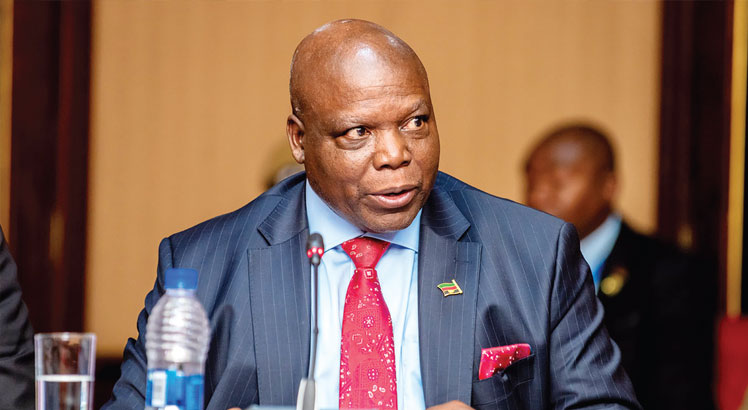
cannot decide. |
He said: “Whilst government fully appreciates the oversight function of the National Assembly, members of the public may wish to know that under Section 56(6) of the Constitution of the Republic of Malawi, the power to establish parliamentary committees is vested in Parliament.
“Under Section 49(1) of the Constitution, Parliament consists of the National Assembly and the President as Head of State. Therefore, the Speaker alone or the National Assembly cannot unilaterally constitute ad hoc parliamentary committees.”
The Executive’s position comes days after the High Court of Malawi formally granted concerned citizen Austin Mkoka an order stopping Parliament from launching the 12 investigations and allowed him to proceed with judicial review.
In an interview on Wednesday, Suleman confirmed being served with the injunction granted by Judge Allan Muhome restraining Parliament from establishing joint ad hoc committees to investigate 12 governance concerns.
He said Parliament will decide the next course of action and that challenging the order is a possibility.
“It is within our right to challenge the injunction. We want to proceed with the work. We will decide what to do and how to do it,” said the Speaker.
Under the court order, Parliament will now face the substantive judicial review proceedings with the interpartes hearing expected within 14 days.
The Speaker last week announced investigations into alleged governance concerns involving Department of Immigration and Citizenship Services, Electricity Supply Corporation of Malawi, Electricity Generation Company, Power Market Limited, Blantyre Water Board and National Oil Company of Malawi, among other government institutions.
The other concerns include alleged preferential treatment of international transporters in fuel transportation, problems surrounding the Salima-Lilongwe water project, pension administration and delays in pension payments.


