President Peter Mutharika has reaffirmed his government’s commitment to working with the private sector, stressing that no nation can achieve meaningful development without its active participation.
He made the remarks on Friday after meeting leaders of the Malawi Confederation of Chambers of Commerce and Industry (MCCCI) at Kamuzu Palace in Lilongwe.
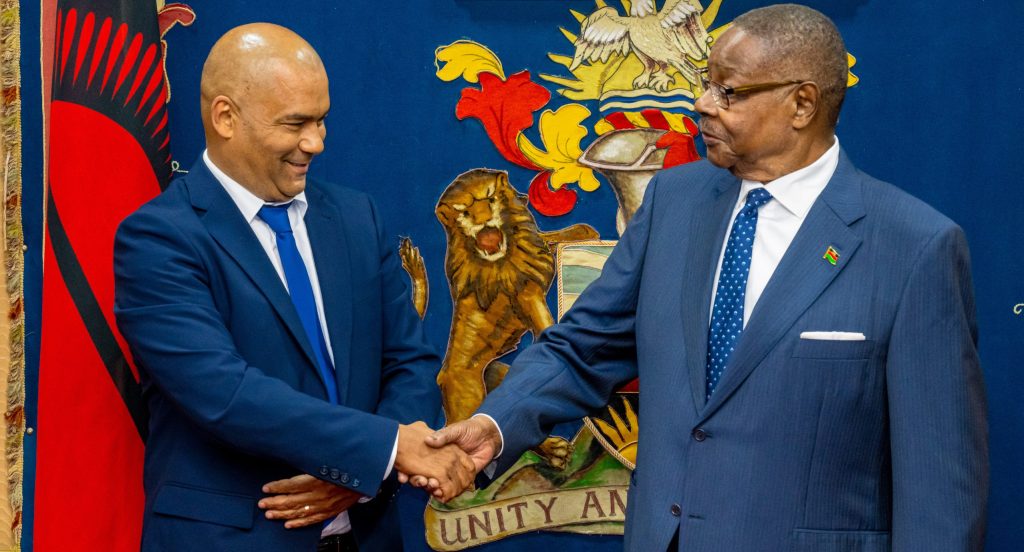
Mutharika said his administration is partnering with the private sector on trade and developing proactive measures to mitigate the effects of the impending El Niño weather phenomenon expected to affect Malawi during the upcoming farming season.
“The most important takeaway is our shared understanding that the government and MCCCI are two components of the same body. Both must work together to develop the country, and we are in complete agreement on this,” he said.
Mutharika added that the meeting provided an opportunity to discuss long-term structural and technical reforms, particularly in key areas such as foreign exchange and investment.
“This is just the beginning of a series of engagements where we will discuss the proposals presented today,” he added.
MCCCI president Ronald Ngwira commended Mutharika for granting industry leaders an audience.
He said MCCCI, if fully utilised, could serve as a vital engine for advancing the government’s development agenda.
“This meeting offered us a platform to engage the President directly and present our insights, challenges, and proposed solutions on moving the economy forward, especially in light of the impending El Niño weather pattern,” said Ngwira.
Government has put the cost of preparing Malawi for a possible El Niño-induced dry spell at K488.5 billion. However, only K163.7 billion has so far been mobilised, leaving a funding gap of K324.8 billion.
In a statement last week, Chief Secretary to the Government Justin Saidi, who is also chairperson of the Ad Hoc Cabinet Committee on El Niño, said the K488.5 billion estimate is preliminary and will be refined as sector assessments and climate forecasts become clearer.
Saidi said the preparedness plan is built around 14 priority clusters, with investments spread across key sectors.