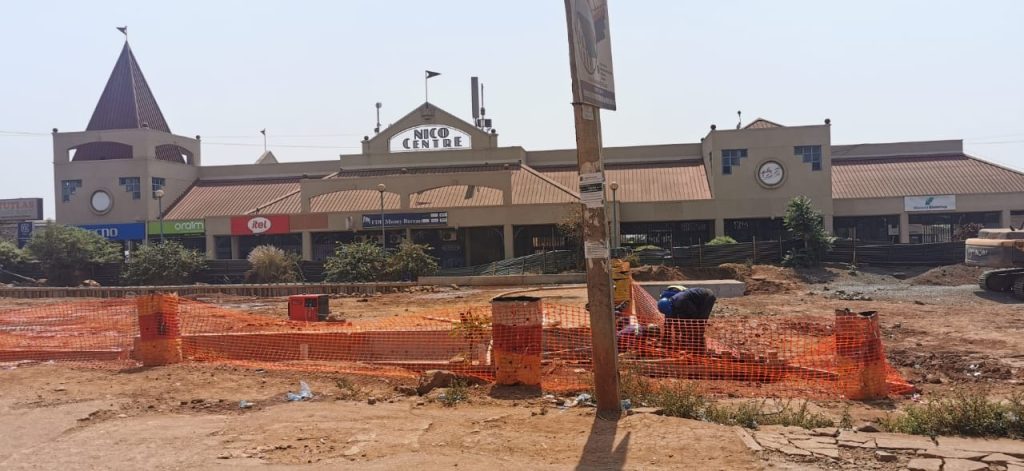
At Nico Centre in Lilongwe, Memory Macheso used to know what a good business day looked like.
For seven years, the mobile money vendor from Chinsapo relied on the steady stream of customers passing through the busy commercial area.
Now, she sits beside a road swallowed by construction, watching customers disappear.
“I depend on passersby,” Macheso said last month. “The poor access to this part of town has affected my business. Where I am operating is in the middle of construction, with few people coming this side. Survival is really becoming tough.”
Macheso’s experience mirrors the frustration spreading across Malawi’s capital as two major road projects, billed as symbols of development, have instead brought prolonged delays, dust, congestion, blocked access, vehicle damage and lost business.
The 2.2-kilometre Town Hall-Crossroads road and the 8.5-kilometre Kaunda-Chendawaka Road—from Gateway Mall to Kanengo—have both missed their original completion deadlines.
Government now expects parts of the projects to be completed by December, while some works on the Kaunda-Chendawaka road will run into next year.
For residents and businesses, however, the disruption is already exacting a heavy price.
CBD under siege
The K13.5 billion Town Hall-Crossroads project started in May 2025 and was scheduled for completion in May this year.
Contracted to China Jiangxi International, it cuts through one of Lilongwe’s busiest commercial corridors, home to banks, shops, restaurants, vendors and other businesses dependent on passing traffic.
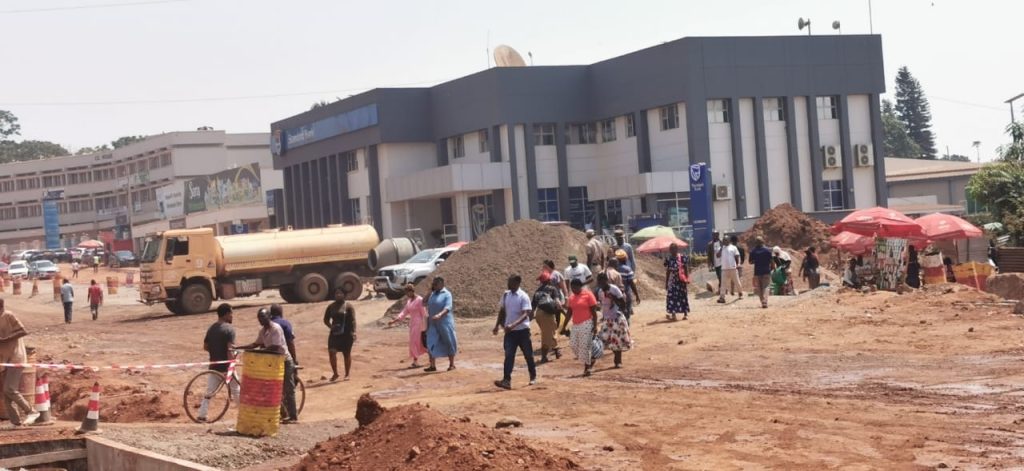
Instead, motorists and pedestrians now face diversions, dust, open trenches and blocked access routes.
At Game Complex, several businesses have lost convenient access to their premises. Some declined to speak publicly, citing fears of possible repercussions.
Others say the dust has created an additional cost.
At one electronic shop, an employee said staff now clean the premises several times a day.
“Before the road, we would clean once a day, but now we have to do it four times,” he said.
The shop’s owner, who also asked not to be named, said construction had reduced customer traffic while increasing cleaning costs.
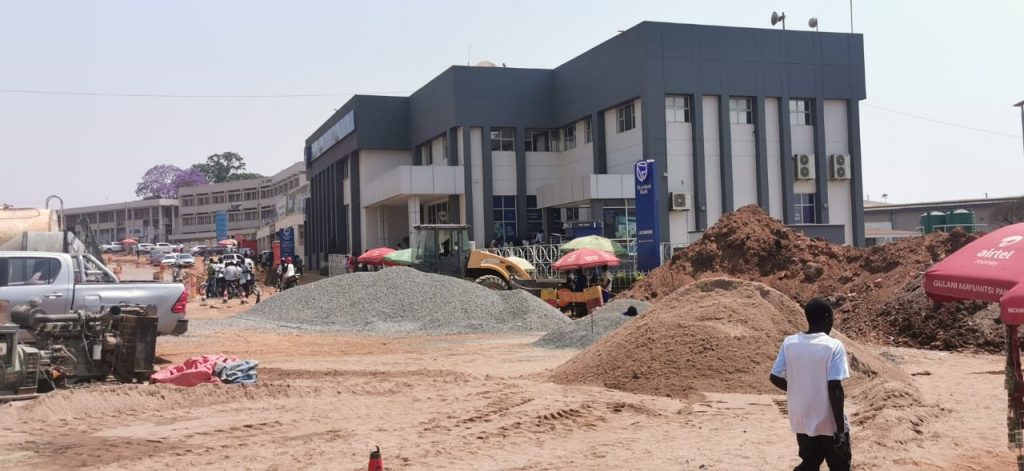
“The construction has reduced traffic to our shop, yet we have to spend more to make sure the place is cleaned because of the dust,” he said.
At National Bank’s Area 3 Service Centre, the disruption has gone beyond inconvenience.
The bank’s marketing and corporate affairs manager, Akossa Mphepo Hiwa, said prolonged construction had made access more difficult for customers and staff.
“During peak construction periods, traffic diversions and congestion have at times made it difficult for customers to reach the service centre conveniently,” she said.
Hiwa said the bank had documented losses associated with the disruption but declined to disclose the figures, citing business confidentiality.
Limited access and parking, dust and noise were among the challenges, she said.
To maintain customer access, the bank has encouraged greater use of digital platforms, ATMs and other branches.
Standard Bank, NBS and Sunbird Lilongwe, which also operate around the affected area, did not respond to requests for comment.
But the disruption extends beyond corporate businesses.
Outside National Bank, open pits have accumulated litter and stagnant water, while vendors and mobile money operators have squeezed into whatever space remains.
For people whose livelihoods depend on foot traffic, there is little choice but to operate amid the chaos.
The Ministry of Transport and Public Works acknowledges that the delays are affecting businesses.
Its spokesperson, Chikondi Chimala, said the Town Hall-Crossroads project is now scheduled for completion on December 30 2026, attributing much of the delay to financial constraints.
A road that punishes motorists
Further north, the Kaunda-Chendawaka road presents another version of the same problem.
The K70 billion project involves upgrading about 8.5 kilometres of road from a single carriageway to a four-lane highway linking Mchinji Roundabout and Kanengo through heavily populated areas, including 47, Mtandire, 49 and 25.
Construction began in September 2024 and was scheduled for completion in March this year.
But a Roads Authority project report in January 2026 put physical progress at only 10 percent.
For motorists, the unfinished road is becoming an expensive ordeal.
Area 51 resident Lameck Kanjazi said the condition of the road was damaging vehicles and making journeys unpredictable.
“You have to be worried with spare parts. The nature of the road damages cars. Think of the cost of fixing a car these days with the cost of spare parts due to forex shortages. Driving here is hell,” he said.
“You cannot plan, as travelling has become too difficult.”
Businesses along the route are also feeling the squeeze.
Comfort Chamveka, an Area 25 resident who runs an eatery beside a roadside drinking joint, said customers were avoiding the area because of dust, noise and poor access.
“The road is a welcome development, but the delay in completing construction has affected us,” she said. “With the dust and noise, not many want to come here as was the case before the project.”
The road serves a large residential population and links businesses, filling stations, Gateway Mall and other commercial establishments.
The project is divided into three lots: Mchinji Roundabout to Bingu Stadium; Bingu Stadium to Rail Junction; and Rail Junction to Kanengo.
But the Roads Authority report identifies several obstacles, including the relocation of Escom power lines, Water Board pipes and OCL fibre lines.
“Several services need to be relocated, especially Escom lines, Water Board pipes and OCL fibre lines. Payment for relocation of services is taking too long,” reads the January report submitted to the Ministry of Transport.
The report also cites foreign-exchange shortages affecting the importation of construction materials.
“A request to assist the contractor to access forex for importation of bitumen has already been submitted to Ministry of Finance,” it says.
Government now expects part of the road to be completed by December, with other sections following in May next year.
Chimala said the contractor had been directed to complete the Mtandire Bridge before the rainy season and surface about five kilometres on one side of the Chendawaka-Kanengo dual carriageway by December 2026.
He said the ministry had held meetings with contractors and the Roads Authority to accelerate the works.
“The Principal Secretary [Bright Kumwembe] has warned that government may consider bringing in another contractor to complete sections of the stretch should progress be slacking,” Chimala said.
The environmental cost
The disruption is not confined to traffic and business.
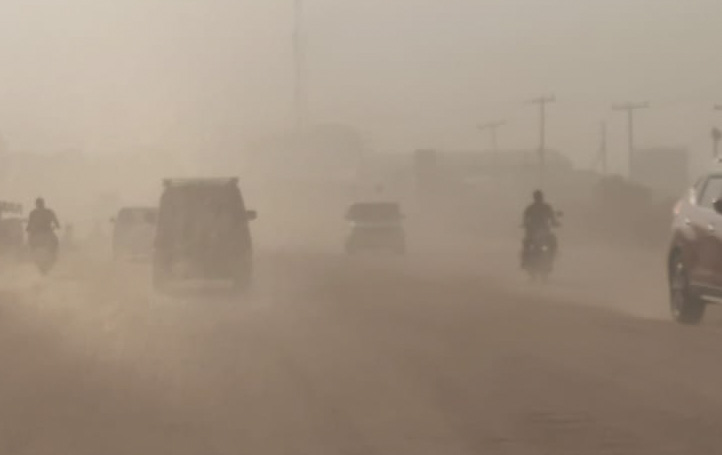
Along the affected roads, residents and traders are exposed to clouds of dust, while open excavations, stagnant water and accumulated litter have become familiar features of the construction landscape.
The Environmental Management Act of 2017 gives the Malawi Environment Protection Authority (Mepa) responsibility for environmental monitoring and enforcement.
Chimala said the Roads Authority’s social and environmental unit works with Mepa to monitor environmental concerns.
“The Roads Authority always works hand-in-hand with [Mepa],” he said. “All borrow pits that are excavated during construction are supposed to be filled and made good once the construction works have been completed. The process is supervised by Mepa.”
Roads Authority chief executive officer Joel Longwe and Mepa director general Wlfred Kadewa had not responded to inquiries by publication time.
A warning that changed little
The delays are not new.
In January, Transport and Public Works Minister Jappie Mhango toured the Town Hall-Crossroads project and acknowledged the delays, describing the prolonged disruption as unacceptable for such an important commercial area.
He directed the Roads Authority and contractor to accelerate the works, particularly drainage, after flooding had worsened conditions during the rainy season.
The Roads Authority subsequently assured the minister that corrective measures would be taken and that the contractor would remain on site.
Months later, however, businesses and residents say the disruption continues.
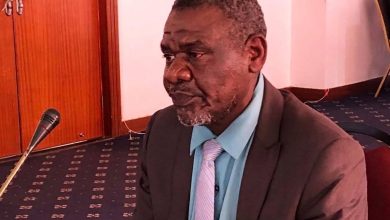
In Parliament, responding to Dowa North-East legislator Sam Kawale, Mhango attributed some of the delays to road projects that were initiated during last year’s campaign period without adequate funding for implementation.
“Most of the projects started at the wrong time when we were moving towards the elections,” he said.
But he assured lawmakers that no project would be abandoned.
“It is the instruction from the President that every project that was commenced be brought to conclusion in good time,” Mhango said.