One year into the DPP’s return to power, Malawi has a rather awkward anniversary present for its government: the same old problems, only wearing a new calendar.
The DPP asked Malawians to return it to power because it promised to do better. Voters obliged. Twelve months later, the question is no longer whether government inherited a difficult economy. It did. The question is whether it has done enough to make that difficulty less painful for the people who gave it the keys.
The answer, judging by the most basic necessities, is decidedly uncomfortable.
Fuel queues are back. Forex is still painfully scarce. Public hospitals are running short of essential medicines. The economy continues to behave like a patient who has changed doctors but is still coughing.
The most revealing problem is fuel because, underneath the queue at the filling station, there is another queue nobody sees: the scramble for dollars.
Malawi imports all its petroleum products. When the country cannot secure enough foreign exchange to finance those imports, fuel supplies begin to wobble. That is precisely what is happening now, with renewed diesel shortages and erratic petrol supplies being linked directly to the country’s wider forex constraints.
So the fuel crisis is not really a fuel problem. It is a dollar problem wearing a fuel-pump uniform.
And the consequences are multiplying. Transport operators wait for diesel. Businesses pay more to move goods. Consumers eventually pay the bill. The black market happily fills the gap, with diesel reportedly selling at prices far above the official pump price.
This is where the first-year conversation becomes serious.
Malawians did not vote for a government that could explain why fuel was unavailable. They voted for one that had spent years telling them it knew what was wrong and how to fix it.
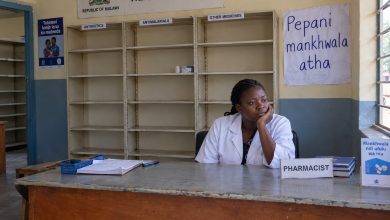
The same dollar shortage is now reaching hospital shelves.
The Central Medical Stores Trust (CMST) says availability of essential medicines has fallen to 40 percent, from 51 percent in April, while only 18 percent of essential items are fully stocked at central hospitals. CMST owes international suppliers about $18 million, with forex shortages hampering efforts to replenish supplies.
There is something almost perfectly Malawian about this arrangement. The doctor can diagnose you and prescribe the medicine. The pharmacy can tell you it is out of stock. Your wallet is then invited to complete the treatment.
That is not a health system. It is a relay race in which the patient is handed the baton at the finish line.
To be fair, not everything is grim. Food availability has improved, helped by maize imports from Zambia and a better agricultural season, and this is a meaningful relief in a country where food insecurity has repeatedly been a source of household distress. The DPP itself points to food security, fuel availability and free secondary education among its first-year achievements.
Those gains should be acknowledged.
But Government cannot use one area of improvement to ask citizens to ignore the areas where life remains painfully difficult.
And that is where the first-year verdict becomes harder to avoid.
A government cannot spend five years in opposition explaining what the previous government was doing wrong, return to power, and then expect another five years of grace to explain why the same problems are still there.
The public does not demand miracles in 12 months. It does demand direction.
It wants to see that the fuel problem is being attacked at its forex roots, not merely managed at filling stations. It wants to know that medicine procurement will no longer be strangled by unpaid suppliers and foreign-currency shortages. It wants businesses to produce, trade and invest without treating access to dollars as a privilege.
Most importantly, it wants the government’s promises to begin appearing in ordinary life.
Because political anniversaries are celebrated in speeches. Economic performance is measured at the filling station, in the pharmacy and at the household table.
The DPP has completed its first year.
The honeymoon is over. The explanations are familiar. The mandate is fresh.
Now comes the difficult part: delivery.
Malawians did their bit. They voted the DPP back into power.
They did not vote for another explanation.
They voted for change.