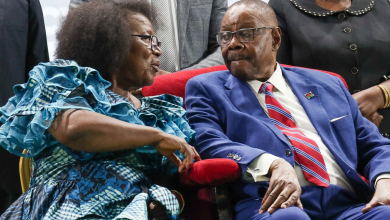
Last week, we rummaged through the political archives and revisited Lazarus Chakwera—from his early opposition days and promises of good governance to the familiar shortcomings of Malawi’s presidential leadership during his 2020–2025 tenure.
We examined his opposition-era standards on integrity, servant leadership, fighting corruption, the rule of law, transparency and accountability, and his promise of uniting Malawians and prospering together. We then held those standards to the real test in terms of what he demanded of his immediate predecessors (Joyce Banda and Peter Mutharika) versus what Malawians experienced under his own presidency.
As you may recall, the good reverend entered mainstream politics after leading the flock at the Malawi Assemblies of God for 24 straight years from 1989. So, when he crossed into the political wilderness in 2013, he brought more than polished English and promises of salvation, including the language of the pulpit—servant leadership, integrity and a ‘New Malawi’.
Then came 2020. Malawians removed Mutharika and handed Chakwera the keys to State House. Soon, however, the political packaging met the realities of government. Chakwera appeared indecisive when decisiveness was needed, reactive when anticipation was required and uncertain when clear direction was demanded. His fierce opposition language soon met the hard and unforgiving business of governing this country.
Meanwhile, the economy struggled, the cost of living rose, fuel and foreign-exchange shortages became routine and his administration faced repeated criticism over corruption and procurement. That, folks, is where political mathematics stopped adding up. Then on September 16 2025 voters said enough and returned Mutharika to the State House.
Which brings us to the emerging drama over MCP’s future leadership.
As Nation on Sunday reported recently, MCP is currently wrestling with whether Chakwera should remain its face for the 2030 project or whether it should find someone new to revive its fortunes. Chakwera’s allies want him to continue, while critics are pushing for new leadership. Other names in the succession conversation reportedly include Prince Kapondamgaga, Eisenhower Mkaka and Alex Major. And here is where mathematics gets interesting.
MCP must seriously interrogate what kind of leader it believes Malawians need in 2030, because winning the presidential ticket and being a credible torchbearer for the party in 2030 are two very different things. Unless someone still believes that the former is simply whoever commands the party machinery, survives the internal political battles and emerges with the ticket.
In all fairness, the party doesn’t merely need someone who can win the leadership ticket, but someone who can persuade Malawians from Nsanje to Chitipa and Nkhotakota to Mchinji that the party is ready to govern again. Anyway, that’s none of my business.
My concern is the constitutional question also hanging over this leadership contest.
We hear that Chakwera’s critics are citing Article 31 of the MCP Constitution, which they interpret as limiting the party presidency to two terms, subject to an exception for a party president elected State President during the second party term. Since their leader lost the 2025 presidential race, his critics argue that the exception no longer applies. But the dispute remains contested within MCP.
And whether that interpretation ultimately survives legal scrutiny is another matter. Politically, however, the question is already here. Let me also be clear that there is nothing wrong with Chakwera remaining politically active or seeking the presidency again. The Republican Constitution limits a president to two terms, meaning he still has room for one more.
But in genuine democracies, politics is not always about what individual politicians are legally entitled to do. It is also about principle, consistency and the standards one publicly sets for oneself. I, therefore, see this whole chapter as another test of Chakwera’s own commitment to the rule of law, which he preached so passionately before and during his presidency.
If the law sets the rules inside MCP, surely those who preach it should be willing to live by its spirit as well as its letter. After all, you cannot preach the rulebook and then ask for a different set of rules when your turn comes.
That’s how the third-term ghost entered the former ruling UDF.