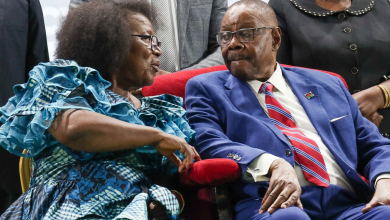
This week, First Vice-President Jane Ansah broke her silence and confirmed that she is being ‘systematically’ sidelined within the Peter Mutharika-led DPP administration. Yes, we know some responsibilities previously assigned to her office were snatched and transferred elsewhere, and it was only a matter of time!
But in the same breath, she maintained that her relationship with President Peter Mutharika remains cordial. Now, folks, what exactly are we supposed to make of that?
Before last year’s elections, DPP presented Mutharika and Ansah to Malawians as a highly competent team capable of solving the myriad socio-economic and political problems created by the MCP regime, which necessitated the removal of Lazarus Chakwera from office.
Ansah was then a ‘valuable political asset’ in DPP. But soon after they won elections, the political chemistry started changing and things started becoming rather less romantic in the blue camp. Malawians started noticing a growing gap between her office and the State House. There were also questions surrounding her working relationship with Mutharika as well as with some senior figures in both the Cabinet and DPP.
For Ansah to publicly claim that she is being sidelined from aspects of the government she was elected to serve alongside APM is no small matter. The question is: Who, exactly, at State House, Capital Hill, in the DPP or elsewhere is deciding the limits of the First Vice-President’s role?
This is not merely a political question. It is a constitutional one. And if the administration maintains that there is nothing constitutionally improper about ‘sidelining’ her, then surely it should be straightforward to explain to Malawians what those arrangements are, who authorised them and under what constitutional or legal authority.
In her account, Ansah, 70, declined to name all those she believes are responsible, but she made clear that she knows who they are. Given that she has chosen not to identify them publicly, the prudent course is not for others to speculate or assign blame, but for the administration, through the Chief Secretary to the Government, Justin Saidi, to clarify the circumstances she has raised.
Ansah also claimed she had contacted Saidi more than once seeking an explanation, but had not received a response. Of course, I cannot independently verify this, but in my view, silence from the Office of the President and Cabinet may be politically convenient, but it is not a satisfactory answer to questions concerning the functioning of a constitutional office.
Perhaps that is the question Ansah’s complaint should force all of us to confront in our minds. What exactly does Malawi expect from her office? And why did framers of our constitution even establish it in the first place?
For sure, holders of this office aren’t some deputy managers whose productivity must always depend on the daily mood of the manager or chief executive officer. This is a constitutional office. Sadly, since the advent of multiparty democracy in 1994, we have all repeatedly seen bad blood growing between Presidents and Vice-Presidents largely over politics, not national interests.
There is also another important matter worth remembering. The First Vice-President is not merely next in the political queue. If the presidency becomes vacant, the Constitution provides that he or she assumes the office for the remainder of the term. And if the President is constitutionally incapacitated, the First Vice-President assumes the powers and duties of Acting President under the procedure set out in the Constitution. So, if our Constitution expects the First Vice-President to be ready to assume the presidency when circumstances require it, how constitutionally sensible is it for any single person to keep that office at arm’s length from the routine business of government? Are we really serious as Malawians?
I, therefore, think that the Mutharika-Ansah feud should not be reduced to yet another quarrel between two or more political actors with competing ambitions.
Malawians have had enough of these President and Vice-President fights, from the times of Bakili Muluzi and Justin Malewezi to Chakwera and Saulos Chilima. They have also seen where competing political interests can take the business of government.
That is the real danger here.