Malawi’s dream of becoming a productive and industrialised nation hinges on getting the basics right, including revamping a crop that dressed its people and kept the economy ticking.
Cotton has built civilisations, from Egypt to Mesopotamia. However, Malawi has slowly lost its grip on the crop from the farm to ginneries, textile factories and export markets.
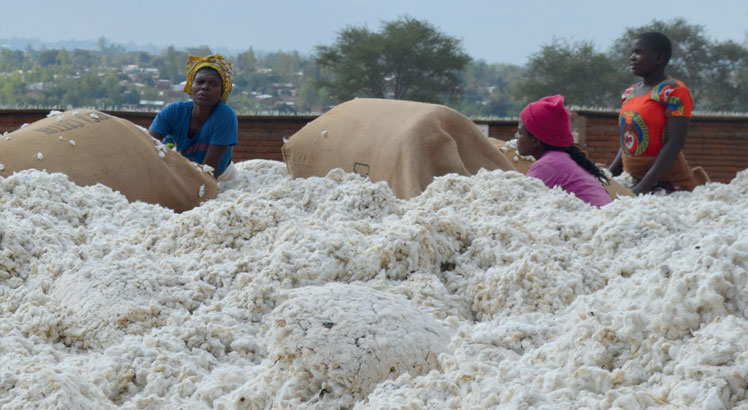
Cotton production reached a historic peak around 1986 before dipping in the mid-1990s. By 2002, seed-cotton output had fallen to about one-fifth of that peak.
There has been a stuttering recovery, with cotton harvests rising from about 50 000 metric tonnes (MT) in 1999 to nearly 80 000 MT in 2008, before falling again to about 27 000 MT in 2010.
Recently, production has generally remained around 20 000 MT annually, while planted area fell to roughly 17 000 hectares by 2020.
For old-timers who recall the better years, the figures tell only part of the story.
Khimisi Tembo has grown up in a cotton-growing family in Ngabu, Chikwawa.
The president of Tikondane Traders Association remembers 2009 to 2012 as years of abundance.
“Many people were growing cotton and the Shire Valley was covered with the crop, which was our main source of income,” he says. “That was our best time. Looking back, we ask ourselves: Can we get back to those days?”
The problems have ranged from unreliable access to quality seed, affordable pesticide and rewarding markets.
Low or volatile prices amid rising input prices, falling harvests and a weakening wider value chain have scared away farmers along the Shire River and Lake Malawi.
For Tembo, rebuilding cotton requires addressing what happens beyond the farm.
“Farmers need to know that after investing in costly seed, labour and other inputs, there will be a rewarding market for their harvest,” he says.
Agriculture expert Tamani Nkhono-Mvula says Malawi’s cotton has huge potential.
He recalls that cotton was among the country’s first cash crops, with a developed institutional and legal framework to support its growth and marketing.
Nkhono-Mvula said companies such as the privatised David Whitehead & Sons also recognised the potential of the industry and invested in Malawi.
“The potential is there; it has always been there, but the higher end of the value chain failed to develop sufficiently. That is where the country needs to focus if it is to make cotton commercially attractive again,” he says.
Nkhono-Mvula said government could use the Agricultural Development and Marketing Corporation (Admarc) to create a reliable market.
Since 1995, Admarc has established ginneries in cotton hinterlands of Ngabu in Chikwawa, Ngala in Karonga and Balaka District.
Nkhono-Mvula says dependable markets would stimulate seed companies, lenders, extension service providers and other players to invest in the cotton value chain.
“The market will put the farmers in and then they will demand extension, credit and all those things will fall into place,” he says.
Malawi has depended heavily on costly imported hybrid cotton seed, exposing farmers to foreign-exchange pressures and delays in accessing seed at the beginning of the growing season.
Cotton Council of Malawi executive director Prisca Jamali says one of the biggest constraints is access to inputs, particularly seed.
She says imported hybrid seed is expensive, requires foreign exchange and can delay planting.
“We cannot sustain the adopted seed technology unless we produce it locally,” Jamali says.
According to the council, hybrid cottonseed costs about K95 000 per kilogramme, four times higher than open-pollinated varieties that cost K22 000.
But Tembo says the buying price reaches K145 000 per kg.
This makes the current production model unsustainable for small-scale farmers faced with market uncertainties.
The problems extend across the entire value chain, where byproducts of textile manufacturing could be used to produce cooking oil and animal feed.
A stronger domestic industry could therefore create demand for farmers while retaining more value within Malawi.
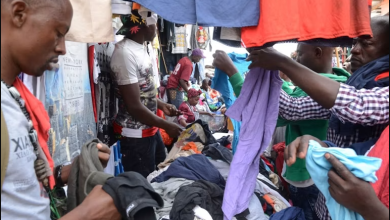
The crop is partly smothered by the influx of secondhand clothing that is stiffling the textile industry at a time the highly importing country envisages becoming a self-reliant, industrialised, upper-middle-income economy by 2063.
Malawi has grown the crop before. It has built institutions around it before. It has attracted textile investment before.
However, it struggles to sustain the entire chain—from seed affordability to marketing, processing and manufacturing.