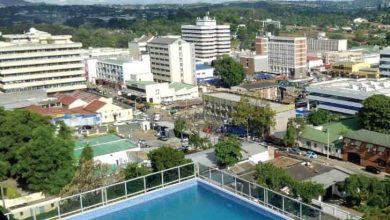
The Malawi Electoral Commission (MEC) could lose its Lilongwe headquarters as early as Monday next week after its landlord issued a seven-day ultimatum to settle K274.8 million in unpaid rent or face repossession of the premises.
Capital Development Limited, which owns Chisankho House in the Lilongwe City Centre, has served the commission with a statutory notice warning that it will exercise its right to repossess the property if the arrears, together with interest and other charges, are not paid within the stipulated period.
The notice, filed in the High Court of Malawi, Commercial Division, under Commerci a l Cause Number 323 of 2026, accuses MEC of defaulting on rental payments for six months, f rom May 1 2026.
The outstanding amount comprises monthly rental s of K45.79 million, inclusive of Value Added Tax (VAT).
A court order dated October 26 2026 states: “You are hereby required to remedy the said breach by paying the total outstanding rentals of K274 782 936, interest thereon and statutory collection fees/ and party costs… within 7 days from the date of service of this notice.”

dispute. (Inset) Mwafulirwa: We have received the order. | Nation
The notice warns that failure to settle the debt within the seven-day period will entitle the landlord to terminate the lease through forfeiture and re-entry or commence proceedings to recover possession of the premises.
The landlord maintains that MEC’s failure to pay rent breaches a
lease agreement that runs until April 30 2028.
MEC spokesperson Sangwani Mwafulirwa confirmed receiving the court order but declined to disclose the commission’s response or intended course of action.
“I can confirm that we received the order but there will be no further details from MEC at the moment because this is a court issue,” he said in a written response.
The Ministry of Lands, which oversees government housing and office accommodation, had not responded to an inquiry sent through its spokesperson, Fostina Kamanga, by press time.
The latest threat comes as MEC faces a series of property-related disputes that have already affected its operations and ability to conduct elections.
The commission is also embroiled in a legal dispute with the Executive over a presidential directive ordering it to relocate its headquarters to Blantyre. MEC has challenged the directive, arguing that the President has no authority to compel the constitutional body to move. The matter is before the courts.
In another setback, MEC has faced the sealing of its Lilongwe warehouses over unpaid rent, restricting access to electoral materials.
The commission said the continued sealing of its Njewa warehouse had made critical materials inaccessible, contributing to the postponement of court-sanctioned fresh parliamentary elections in Nsanje South and Mangochi East constituencies, which were scheduled for September 29 2026.
The accumulating disputes have also raised concerns among civil society organisations and the Malawi Law Society (MLS) about the potential implications for MEC’s independence and ability to discharge its constitutional mandate.
MLS president Davis Njobvu previously questioned the Attorney General’s handling of the dispute between MEC and the Executive, particularly the directive requiring
the commission to relocate to Blantyre.
“An illustration of this concern can be seen in the manner in which the AG has handled the dispute with MEC, which arose following an Executive Order requiring MEC to relocate to Blantyre. This raises broader questions about the independence of the AG and whether the existing constitutional arrangements provide sufficient safeguards against executive influence,” said Njobvu.
MEC has also expressed concern over the Attorney General’s instruction to police to arrest its officials over alleged financial mismanagement cited in a disputed audit report.
The commission maintains that the audit, which formed the basis for the arrests, was never presented to it for a response.
Meanwhile, the postponement of the Nsanje South and Mangochi East elections has drawn criticism from the Civil Society Elections Integrity Forum (Cseif), which says the affected constituencies have been denied timely parliamentary representation.
Cseif chairperson Benedicto Kondowe said the postponement undermined the constitutional rights of residents in the two constituencies to elect their representatives.
“Section 62(1) and (2) of the Constitution requires every constituency to be represented in the National Assembly and guarantees each constituency the right freely to elect its representative. Section 40(3) further protects every person’s right to vote. MEC itself acknowledges that the postponement delays the democratic right of these communities to parliamentary representation,” he said.
Cseif argues that the developments undermine MEC’s independence and amount to a breach of the Constitution