Malawians who want to own a flat, office or shop in a shared building still cannot obtain an individual title, nearly two years after Parliament passed a law allowing sectional ownership.
The Sectional Titles Act came into force on January 13 2025 and allows individuals and companies to own separate units in a building, such as flats, offices or shops, while sharing ownership of common areas such as staircases, lifts, parking spaces and roofs. Before the law, developers could only sell an entire building to one buyer because Malawi did not have a legal framework for registering ownership of individual units in multi-storey properties.
Ministry of Lands, Housing and Urban Development spokesperson Fostino Kamanga said in a WhatsApp response on Wednesday that the outstanding gazetting of the Sectional Titles Regulations is the main step remaining before the law can be fully implemented.
“Gazetting of the Sectional Titles Regulations remains the key step to facilitate the effective implementation of the Act,” she said.
Kamanga said the ministry had prepared a zero-draft of the regulations, which will be submitted to the Ministry of Justice after stakeholders complete final validation.
She said the ministry expects the process to be completed by the end of 2026.
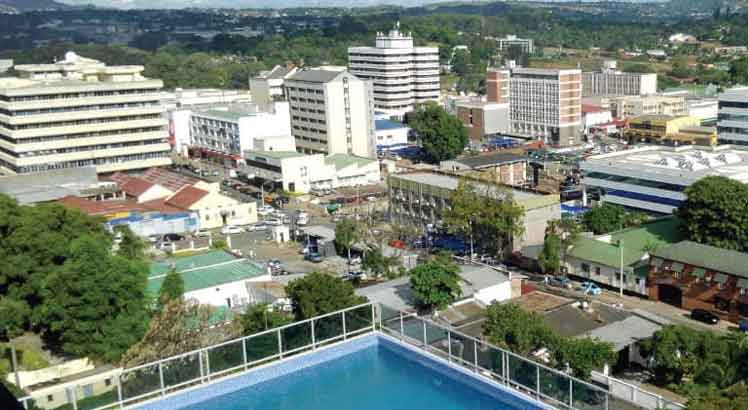
The delay means prospective buyers cannot yet secure individual titles under the new framework, which allows separate ownership of units in a building while providing for shared ownership and management of common areas such as staircases, lifts, roofs and parking spaces.
Before the law, Malawi lacked a framework for registering individual units in multi-storey properties, limiting the ability to sell or transfer separate flats, offices and shops with independent titles.
When Parliament was considering the Bill, then deputy minister of Lands Deus Gumba said the law would allow multiple people to hold titles within the same building, improving land use as the population grows.
He also said the framework would address difficulties in transferring buildings to multiple heirs, who could otherwise be forced to sell the property and divide the proceeds.
Real estate consultant Prince Matchika has also argued that addressing Malawi’s housing shortage requires expanding affordable housing and fully implementing the Sectional Titles Act to maximise the use of urban land.
“The long-term solution is increasing affordable housing while fully implementing the Sectional Titles Act to maximise the use of urban land,” he said.
Kamanga said the regulations would establish the operational framework for individual ownership of units and the management of common property.
The implementation delay comes as the ministry sets ambitious targets for sectional-title registration under its 2026–2031 Strategic Plan, launched last week in Lilongwe by Minister of Lands, Housing and Urban Development Chimwemwe Chipungu.
The plan targets the registration and issuance of 3 000 sectional titles in the 2026/27 financial year, rising to 6 500 in 2027/28, 14 800 in 2028/29, 17 000 in 2029/30 and 22 000 in 2030/31.
The ministry also plans to declare or convert 500 eligible leasehold properties into sectional-title arrangements in 2026/27, increasing the target to 4 500 by 2030/31.
For sectional plans, it targets 4 000 in 2026/27, rising to 21 000 by 2030/31.
“To achieve the targets, the ministry will intensify sensitisation efforts among property developers on the benefits of sectional-title registration,” Kamanga said.
She said the engagements would help developers understand the concept and encourage them to participate in the registration process.
Chipungu said the strategic plan would guide the ministry in improving land administration, promoting orderly urban development, expanding access to adequate and affordable housing and strengthening land governance.
He also highlighted the need to improve land registration, digital land services and tenure security, alongside stronger partnerships with property developers, financial institutions and other stakeholders.
The five-year plan allocates K350 million for the declaration and conversion of eligible leasehold properties, K300 million for the allocation, surveying, preparation and registration of sectional titles, K350 million for preparing and approving sectional-title plans, and K300 million for registering and issuing titles.
The allocations total K1.3 billion over five years.