Essential medicines and medical supplies remain in short supply in public hospitals across the country, a month after Minister of Health and Sanitation Madalitso Baloyi assured Malawians that the problem would be resolved within a week.
Baloyi made the assurance last month, promising improved availability in public health facilities by October 10. However, spot-checks in Blantyre, Chikwawa, Machinga and Nsanje in the Southern Region; Lilongwe, Ntcheu and Nkhotakota in the Central Region; and Rumphi, Mzimba and Nkhata Bay in the Northern Region show that shortages persist.
The crisis is forcing patients, many of whom cannot afford private healthcare, to buy prescribed medicines from private pharmacies or go without treatment.
Patients bear the brunt
For Amina Lajabu of Traditional Authority Liwonde in Machinga, a visit to Machinga District Hospital ended in distress after she was advised to buy Salbutamol, which she needs to manage her asthma, from a private pharmacy.
Unable to afford it, she returned home without treatment.
“I returned home with nothing because I was advised to buy medicines from a pharmacy which I could not afford. This worsened my condition, also considering the distance I walked,” she said.
Kondwani Mbedza of Mthumba in Chikwawa faced a similar experience after being told to buy Aspirin from a private pharmacy because Chikwawa District Hospital had run out of the medicine.
In Lilongwe, patients at Kamuzu Central Hospital (KCH) and Bwaila District Hospital also reported difficulties accessing prescribed drugs.
At KCH, patient Lines Katengeza said she was given the available medicines and asked to leave her phone number so staff could contact her when the remaining drugs arrived.
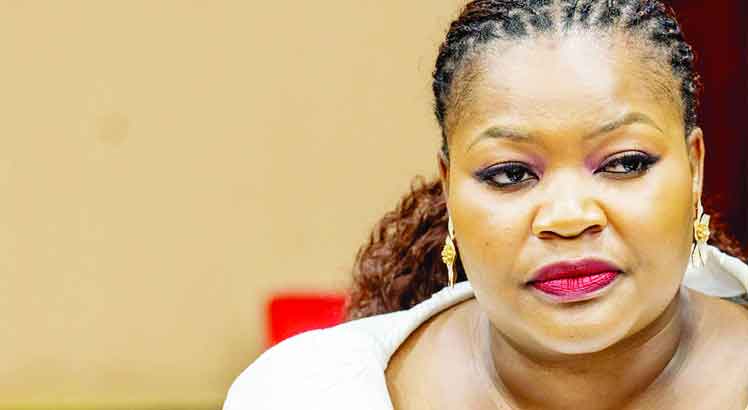
Another patient, Jericho Palimoyo, said the shortages were undermining confidence in public hospitals, forcing patients to purchase medicines that should ordinarily be provided by government.
At Bwaila, Aisha Muhammad of Chinsapo said two visits to the hospital had not yielded the diclofenac and other medicines prescribed for her heart pain, backaches and migraines.
“The doctor gave me a prescription which included diclofenac and other medications, but they are all not available, so I have been told to buy but I can’t afford to buy,” she said.
A pharmacist at the facility, who requested anonymity, said the hospital had gone almost two weeks without painkillers, while the children’s pharmacy was also affected.
“The sad part is most of the patients who come here are poor and fail to afford some of the medicines we send them to buy,” he said.
Spot-checks at the two hospitals found that although some commonly used medicines, including paracetamol, amoxicillin and LA, were available, several prescribed drugs were not.
Bwaila had particularly serious shortages, with no painkillers and only a few diclofenac injections reserved for high-risk wards. The high-risk theatre ward, which admits women recovering from Caesarean section operations, also reportedly had no catheter bags and limited antibiotics.
District hospitals struggle
Chikwawa District Hospital administrator Hope Moyo described the situation as “dire”, saying the facility sometimes refers patients to private pharmacies.
He said paracetamol, ibuprofen and Aspirin were among the medicines in short supply, alongside examination and surgical gloves, disposable aprons, gauze rolls and glutaraldehyde solution.
“As we are talking, we literally have no examination and surgical gloves. This means it can be difficult to treat patients involved in accidents,” said Moyo.
Blantyre District Director of Health and Sanitation Gift Kawalazira said there had been no improvement, forcing the district to prioritise life-saving medicines using limited resources.
“The challenge is still there, but through the 10 percent of our budget we get from the Blantyre District Council, we are now only focusing on life-saving medicines,” he said.
Machinga District Medical Officer Wongani Nyirenda said the hospital sometimes resorts to second- and third-line medicines when first-line treatments are unavailable, but even alternatives are not always accessible.
“But in a situation where we don’t have all the medicines, we have no choice, but to tell patients to buy from private pharmacies,” he said.
In Ntcheu, a health official at the District Health Office said availability of medicines and medical supplies had deteriorated significantly since April.
The district was operating at just 19 percent of its requirements, down from 57 percent in April, 36 percent in July and 26 percent in August.
Devolved drug allocation under pressure
Nkhotakota District Health Officer Jacob Kafulafula said the district was relying on its 10 percent devolved drug allocation to cushion the impact of shortages. However, the funds were being depleted faster than planned.
“Currently, we have already used about 76 percent of our 10 percent allocation, but we were supposed to be at around 51 percent. So, my fear is that if this continues, we will reach a time when we will completely run out of these medicines and other medical supplies,” he said.
The allocation allows districts to procure medicines and medical supplies locally, while the remaining 90 percent of the national drug budget is centrally managed by the Central Medical Stores Trust (CMST) through the National Local Government Finance Committee.
According to Unicef’s 2025/26 Health Budget Brief, the centrally managed district drug budget stood at approximately K32 billion, against K2.5 billion for the devolved component.
Meanwhile, Nsanje, Rumphi and Chitipa district health officers Gilbert Chapweteka, Arnold Jumbe and Jollings Kasondo, respectively, acknowledged continued challenges, although they said their facilities were managing.
Funding and supply chain weaknesses
The shortages expose deeper financing and procurement weaknesses in Malawi’s health sector, which remains heavily dependent on external assistance.
A Unicef analysis shows development partners financed an average 54.5 percent of health expenditure between 2016 and 2022, compared with government’s 24.1 percent, households’ 11.9 percent and private insurance’s 9.1 percent.
The 2026/27 national budget allocates K1.02 trillion to health, representing 9.2 percent of total spending, below the 15 percent Abuja Declaration target.
Of this amount, K108.3 billion is earmarked for medicines and medical supplies, comprising K58.3 billion for central hospitals and K50 billion for district hospitals. Government has also allocated K20 billion towards settling public hospitals’ arrears to CMST.
CMST’s financial difficulties have further complicated procurement. The trust reportedly owed foreign suppliers about $18 million (K31.5 billion) last month, limiting access to imported medicines. Government also owed CMST K76 billion as of March 31, 2026, for medicines and medical supplies supplied on credit.
Parliamentary Committee on Health chairperson Anthony Masamba described the shortages as alarming, warning that failure to address them before the rainy season could cost lives as malaria and cholera cases increase.
He urged the Ministry of Health to pursue urgent interventions, including seeking international support.
Malawi Health Equity Network executive director George Jobe questioned whether the K1.02 trillion health allocation was adequate amid inflation and foreign exchange constraints. He also cited weaknesses in procurement, forecasting and distribution as contributing to persistent stock-outs.
Health advocate Maziko Matemba said delayed Treasury disbursements, hospital debts to CMST, lengthy procurement processes and weak financial controls were undermining medicine supplies.
He stressed that budget allocations alone could not guarantee availability without effective financial and supply chain management.
Government response
Ministry of Health and Sanitation spokesperson Benedicto Mbewe said government was making progress following engagements with local pharmaceutical manufacturers, some of whom had expressed willingness to help address the shortages.
He said local banks had also committed to assist with foreign exchange for medicine purchases and the settlement of outstanding debts, subject to procurement procedures.
However, Mbewe did not disclose the funding secured, quantities procured or when hospitals would see sustained improvements.
CMST spokesperson Herbert Chandilanga, who requested a questionnaire on the trust’s debt, had not responded by press time.
Additional Reporting by EMMANUEL MAINJE and ESNART TEMBO, Staff Writers