The Economics Association of Malawi (Ecama) has cautioned that the country’s growing external debt burden threatens to squeeze funding for essential public services and development projects, while exerting additional pressure on scarce foreign exchange resources.
Ecama president Bertha Bangara-Chikadza said rising debt obligations would further constrain government’s limited fiscal space, potentially undermining investments in healthcare, education, agriculture and infrastructure.
The caution follows the release of the World Bank’s International Debt Report 2026, which shows that Malawi’s external debt increased by 8.1 percent to $4.05 billion in 2025, compared with a 5.5 percent increase across developing countries.
The report indicates that Malawi’s external debt has more than doubled over the past decade, rising from $1.72 billion in 2015 to $4.05 billion in 2025, representing a 135 percent increase.
It further shows that external debt-service payments accounted for approximately 11 percent of the country’s export earnings, highlighting the pressure that repayment obligations place on its limited foreign currency resources.
Reacting to the findings, Bangara-Chikadza said rising debt obligations risk diverting resources from essential public services towards repayments.
“This means essential goods and services like medicine in hospitals will also face funding shortages. Funds that can be used to respond to emergencies and shocks will also be little,” she said.
She further warned that the implications would extend to productive investments needed to stimulate economic recovery.
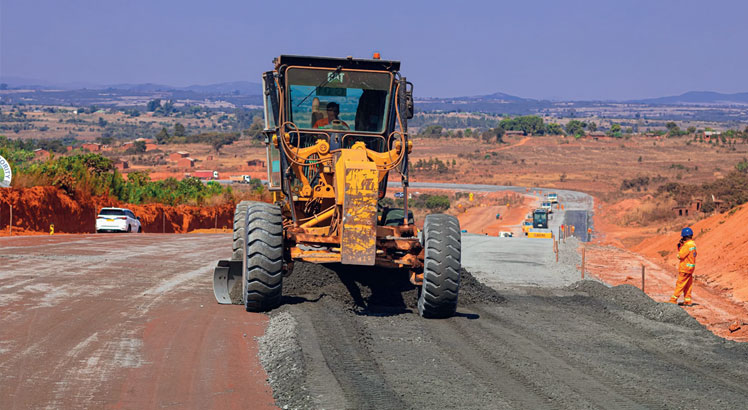
“These high debts will also reduce money that can be used for developments such as roads, electricity and agriculture.”
Bangara-Chikadza said external debt servicing would also intensify pressure on foreign exchange reserves, potentially affecting businesses dependent on imported raw materials and other essential inputs.
She urged government to strengthen fiscal discipline, broaden the domestic tax base and accelerate export diversification to improve its capacity to meet external obligations.
The Ecama president also called for credible debt restructuring where necessary to ease immediate repayment pressures.
The World Bank data show that approximately 91 percent of Malawi’s public and publicly guaranteed external debt is owed to multilateral creditors, whose financing generally carries more favourable repayment terms than commercial loans.
However, Scotland-based Malawian economist Velli Nyirongo, in an earlier interview, cautioned that concessional borrowing does not automatically guarantee debt sustainability.
“However, concessional financing does not automatically guarantee debt sustainability,” he said.
Nyirongo argued that Malawi’s repayment capacity ultimately depends on its ability to generate sufficient economic growth, government revenue and foreign exchange.
He said borrowed resources should increasingly finance productive investments in agriculture, energy, transport, irrigation and mining to strengthen export competitiveness and economic returns.
“The challenge is to ensure that projects are not only completed but also economically viable, efficiently managed and capable of generating measurable returns,” he said.Nyirongo called for stronger project appraisal, implementation monitoring and accountability to ensure borrowing contributes to productivity, employment and domestic revenue mobilisation.