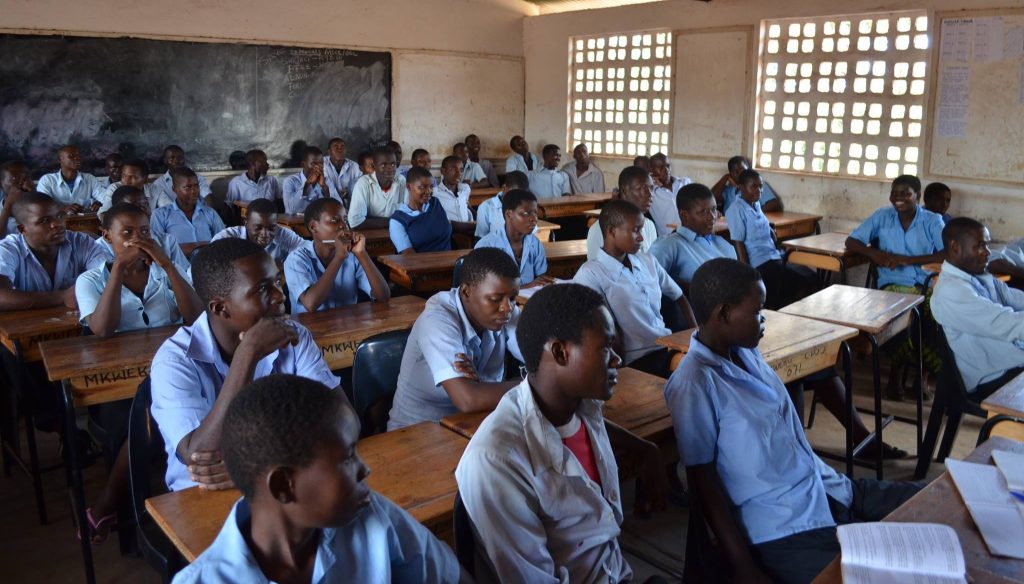
Funding inequalities have come under the spotlight in Malawi’s education financing system with community day secondary schools (CDSSs) receiving more than five times less allocation per learner than conventional secondary schools.
The ‘Secondary education in Africa: Expanding pathways to work, livelihoods and lifelong learning’ report by the Mastercard Foundation has warned that the disparity threatens efforts to provide quality education to disadvantaged learners.
The report, which was launched on Tuesday, has placed Malawi’s experience within a wider continental challenge of expanding access to secondary education while ensuring that learners acquire skills relevant to a rapidly changing economy.
It shows that CDSSs, which accounted for 44 percent of secondary school enrolment in 2025, receive $20 (about K35 000) per learner compared to $114 (about K200 000) allocated to each learner in conventional secondary schools.
Reads the report: “This funding gap contributes to shortages of qualified teachers, learning materials and infrastructure and is associated with lower academic performance.
“Most community day schools have examination pass rates of below 50 percent, and only 16 percent of their students’ transition to university compared with more than 90 percent in conventional schools.”
Reacting to the findings in an interview yesterday, Civil Society Education Coalition executive director Benedicto Kondowe said an education financing system that allocates the least to those who need the most risks perpetuating inequality rather than correcting it.
He expressed fear that this model risks entrenching socioeconomic inequality, as disadvantaged learners in CDSS face inadequate resources and poorer outcomes, while wealthier families access better opportunities, undermining education’s role in promoting social mobility.
Catholic University of Malawi head of Education Alipo Kaphwiyo in a separate interview said this situation contradicts Malawi’s poverty reduction and development aspirations.
She said the aspirations recognise education as an important tool for reducing poverty, promoting social mobility and addressing inequalities among citizens.
According to the report, Malawi is prioritising debt servicing over investment in education, as debt servicing is currently taking 8.9 percent of gross domestic product (GDP) against 4.1 percent for education.
In the K10.9 trillion 2026/27 National Budget, the government allocated K1.28 trillion to the education sector, representing 11.7 percent of the total budget and 4.1 percent of GDP, while debt servicing is at K2.793 trillion, or 8.9 percent of GDP.
Centre for Social Concern Economic Governance programme officer Agness Nyirongo said it was concerning that Malawi was allocating insufficient resources to developing the capabilities of its young population while committing substantial public resources to servicing accumulated borrowing.
Meanwhile, Mastercard Foundation president and chief executive officer Sewit Ahderom has said Sub-Saharan Africa needs an estimated 10.7 million additional secondary teachers to achieve universal secondary education by 2030.
Ministry of Education, Science and Technology spokesperson Lilly Kampani said she would provide a response on Friday when she is back in the office.