First Vice-President Jane Ansah has called for reforms in political parties, campaign financing and electoral institutions, warning that women cannot compete fairly for political leadership while rules governing elections continue to disadvantage them.
The retired Malawi Supreme Court of Appeal judge said women’s participation as voters had not translated into proportional representation among candidates and elected leaders, with barriers often arising long before election day.
She said this yesterday in her keynote address delivered virtually at the inaugural High- Level Annual Conference on Gender and Elections in Africa in Johannesburg, South Africa.
“The ballot cannot correct an exclusion that has already been engineered at the nomination table. Political parties must therefore be central to our reform agenda,” said Ansah who previously chaired the Malawi Electoral Commission.
She urged political parties to adopt transparent candidate-selection processes, give women fair access to winnable constituencies and campaign resources, and increase their representation in party leadership.
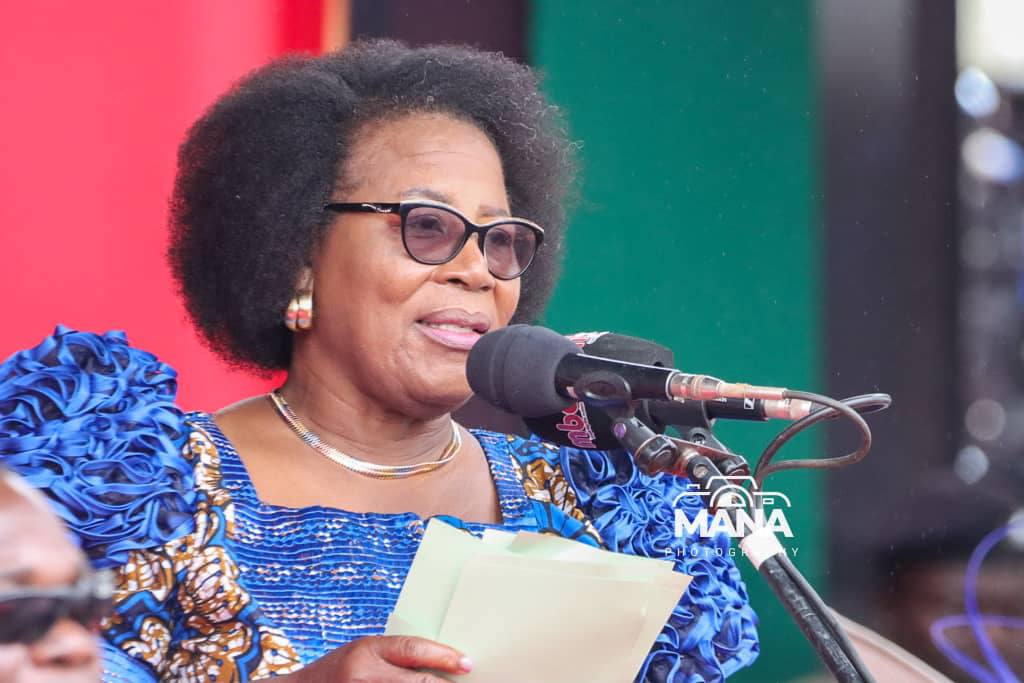
an exclusion. | Office of the Vice-President
Ansah also called for a review of political financing arrangements to level the playing field for women seeking elective office.
She warned that violence against women in politics, including intimidation, harassment, threats and online abuse, undermined both women’s participation and electoral integrity.
“Electoral management bodies should incorporate political violence into their risk monitoring and complaints systems. Law enforcement agencies and courts should respond promptly to reported violations,” said Ansah.
The Veep called for stronger regional cooperation, including the sharing of electoral data and experiences on candidate selection, as well as coordinated responses to technology-facilitated abuse.
Ansah said governments, political parties and electoral management bodies should establish clear responsibilities, allocate resources and set timelines for implementing reforms.
“The next frontier is not simply opening the door to women. It is changing the rules, resources and institutions that determine who enters, who wins and who exercises power,” she said.
In a subsequent interview, Ansah said greater representation of women in political leadership was achievable, citing former president Joyce Banda, her own position as Vice-President and other African women leaders as examples of progress.
“Although it may take time, it is an achievable goal. We have role models whom other women can look up to and draw inspiration from as they aspire to leadership positions,” she said.
Ansah’s call comes as women remain underrepresented in Malawi’s political institutions despite years of advocacy for gender equality.
In the National Assembly, women occupy 47 of the 227 seats, representing 20.7 percent of legislators, according to the
Inter-Parliamentary Union’s latest data.
Women also accounted for 21.9 percent of parliamentary candidates in the September 16 2025 General Election, down from 22.2 percent in 2019, according to the European Union Election Observation Mission’s final report.
Although 48 women were initially elected in 2025, their share of parliamentary seats remained below the 22.9 percent recorded after the 2019 election, partly because the size of the National Assembly increased.
Women also remain underrepresented in other political institutions. They account for seven of the 28 Cabinet members, while a government report submitted to the United Nations put their representation among local government councillors at 14.6 percent of 462 councillors.
The NGO-Gender Coordination Network (NGO-GCN) is proposing 28 additional parliamentary seats reserved for women, with one allocated to each district alongside existing constituency seats.
NGO-GCN board chairperson Maggie Kathewera Banda has argued that the absence of legal guarantees for women’s representation, coupled with limited campaign financing and barriers within political parties, continues to disadvantage women.
She said political parties lacked specific constitutional provisions stipulating the number or proportion of women they should field as candidates or include in leadership positions.
The two-day conference, held under the theme ‘Try women: Amplifying women’s leadership in African Elections’, was organised by the Women’s Academy for Leadership and Political Excellence (WALPE Africa), the African Women’s Development and Communications Network (FEMNET) and partners.
It has brought together 100 leaders from across Africa, including policymakers, women leaders and civil society representatives, to develop strategies for increasing women’s participation in elections and political leadership.