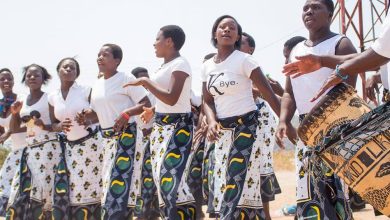
Standing in a line, some members of a cultural troupe at Zomba Central Prison started to swirl around the dance floor, moving in rhythm with the sharp slaps and syncopated accents of ng’oma, the Malawian drum. Dressed in wrappers (zitenje), wigs and make-up, the dancers impersonated women and started performing Chisamba.
As the crowd buzzed, the dance floor was swiftly invaded by Gule Wamkulu dancers such as Makanja, Kawelewele, Mgomo, and Simoni. All this happened in the midst of claps, chants, and ululations that echoed through the high walls of Zomba prison.

This memorable performance is a mirror of cultural troupes in Malawi prisons performing music, dances and dramas, during events. That happened on September 6 when Centre for Human Rights, Education, Advice and Assistance (Chreaa) organised a voter education exercise for inmates.
Apart from entertaining visitors and peers, one may wonder how music and dance interact with inmates’ souls and psyche to enhance transformation and rehabilitation as they practice and perform amid incarceration.
Origin of cultural troupes
According to the Malawi Prison Service, the inmates’ cultural troupes can be traced to around 2010 and 2011. During this time, the initiative had no solid structures because the small number of interested inmates assembled only when requested to hold on-the-spot performances during in-house events.
In 2012, the initiative struck gold. Applied theatre expert, Effie Makepeace from the United Kingdom, through Nanzikambe Arts, provided theatre training to prisoners at Blantyre Prison, commonly known as Chichiri Prison. In this way, prisoners learnt about professional theatre and incorporated their own knowledge of traditional dances from different parts of the country. Thus, the Chichiri Cultural Troupe was formally established and recognised by the Malawi Prison Service.
Through their dedication and practice, the Prison Service allowed them to tour other prisons such as Mzimba, Maula in Lilongwe and Zomba Central, to sensitise fellow prisoners about establishing cultural troupes that are in operation today.
Inmate life without art
Chichiri Cultural Troupe secretary Charles Mambo, from Manje in Blantyre, was incarcerated in 2020 for reasons he could not explain. With nine months remaining on his sentence, he reminisces about how incarceration took a toll on him in his first months.
“When I first came inside these walls, I thought it was the end of my life,” he recalls. “Out of ignorance, I was filled with rage and mischievous thoughts of vengeance towards those I thought wronged me by contributing to what led me here.”
A University of Nigeria research article in The Journal of Forensic Psychiatry & Psychology states that incarcerated individuals register higher rates of mental and physical illnesses compared to people in the community.
Malawian prisoners are not exempt from similar burdens, especially after considering reports from the media and other concerned bodies about recurring struggles experienced by inmates. For instance, separation from family, hopelessness and the frustration due to idleness amid other challenges such as inadequate food rations, poor sanitation and abuse from other prisoners.
Impact of art on inmates
On the other hand, a study by Nottingham University in the Prison Service Journal states that inmates who join such groups learn teamwork, which influences one to develop patience, confidence, self-control, and tolerance, among others.
Additionally, the rounds of applause, cheers and compliments showered after their performances increase their sense of worth. This is because being incarcerated can render feelings of insignificance. One feeling like nothing good can come out of them.
Mambo stands witness to this experience with the cultural troupe over the years
“When I started taking the cultural troupe seriously, it kept me occupied due to regular practice and touring,” he says. “Eventually, I accepted it as part of my life. This helped me to find comfort among my troupe mates and let go of the bitterness while focusing on improving my performances.”
The involvement of inmates in a cultural troupe goes further to improve their livelihoods through bonuses they receive from the Prison Service after commercial performances.
“See the clothes we are wearing. They are also from the money we are given by our prisons bosses after performing in people’s events,” recalls another member, Damson Naminga, in his maroon golf shirt, black trousers, and black trainers.
“In 2020, I arrived in this prison empty on theatre and dance. When I started observing these benefits, I quit staying idle and oversleeping in the cells to focus on learning and realising my talent.”
Patrick Liremba is an ex-prisoner and troupe leader at Blantyre Prison. In May last year, he was released from prison. The prison officers, along with his former troupe mates, organised a farewell to celebrate Liremba’s successful service.
In his farewell speech, documented on the Prison Service YouTube channel, Liremba, emphasises how the cultural troupe helped him find peace.
“Look at me, I’m not even looking like how people usually expect someone coming from prison to look. I look like someone coming from work,” says Liremba in his neat golf shirt and bald head hairstyle.
“This is all because my talents allowed me to associate well with fellow inmates. People outside prison always think it is a completely miserable place, but that was not the case for me.”
On how he sees the future, Liremba expresses confidence in the theatre skills he has obtained at Blantyre Prison.
“Once I step into the world, there are many dance groups that I hope to join. In this way, I believe I will be able to come back here and help my friends in any way I can,” he adds.
These sentiments of former and currently incarcerated individuals reflect the realities of other inmates who partake in artistic activities in Malawi prisons. In these groups, inmates compose songs and plays based on provided themes for social behaviour change.
For instance, in the period preceding the September 16 2025 General Election, the Malawi Electoral Commission hired cultural troupes to help educate the public on electoral issues through theatre and dance.
Areas of improvement
Amid all this, the benefits of art in prisons through cultural troupes remain one-sided. Female prisons in the country have no established cultural troupes. Hence, depriving them of the mental and material benefits of art.
In a separate interview, Chreaa executive director Victor Chagunyuka Mhango agrees with international academic research on the benefits of artistic performances by incarcerated individuals.
He said: “Just like Patrick Liremba, after release, many carry these skills and talents back into society, where they can join community cultural groups, churches, or even start careers in the arts. This helps in reintegration and reduces the likelihood of re-offending.”
Additionally, while emphasising the need to establish cultural troupes in female prisons, Mhango appeals to the public for assistance that can help establish and expand the cultural troupes
“This can be through donating instruments, costumes, or training support for inmates with talent. Communities and organisations can also collaborate with prisons to host cultural exchange events,” Mhango says.
“By supporting these initiatives, we invest not only in the well-being of inmates but also in safer communities, as rehabilitated individuals are more prepared to return positively into society.”