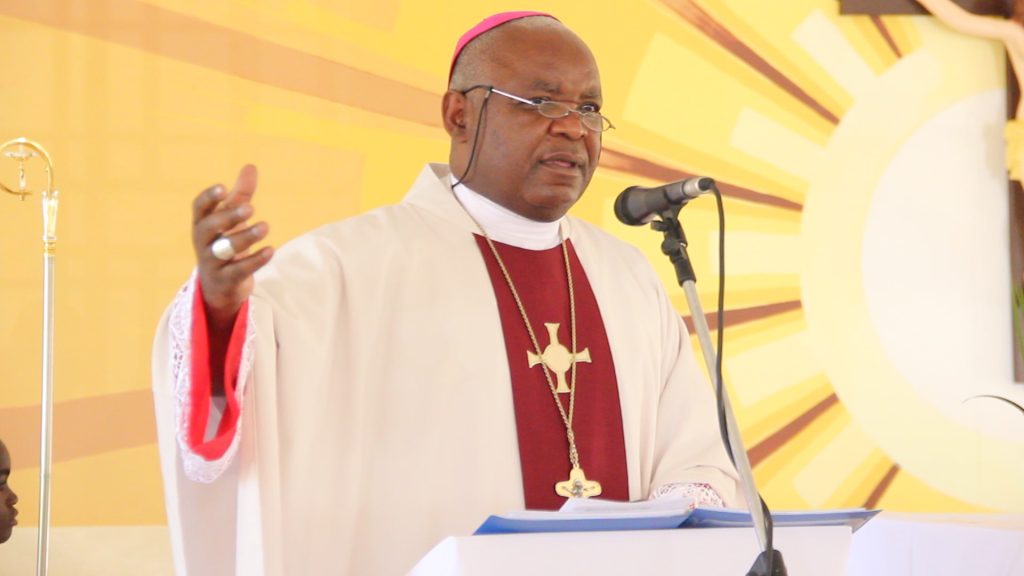
Bishop Martin Mtumbuka has hit out at mob violence fuelled by witchcraft suspicions that imperil the elderly, calling it a legacy of shameless ‘God-fearing’ Malawians who fill prayer houses while secretly seeing witchdoctors.
The outspoken man of the mitre heads the Catholic Diocese of Karonga at the northern tip of Malawi, which is notorious for killings of the elderly suspected of witchcraft.
“Churches have kept quiet too long and Christians in this country have no shame. They sit in church on Sunday and go to consult a witchdoctor on Tuesday. God help us,” he said during a conference organised by the CCAP Synod of Livingstonia.
The chairperson of the Conference of Catholic Bishops in Malawi has been a vocal critic of the discriminatory attacks targeted at senior citizens.
He termed witchcraft as vipambi vya ubulu and ukavu—fruits of ignorance and poverty.
This time, he also linked it to laziness and jealousy, which delay change and fuel property grabbing against the vulnerable, especially widows and the elderly.
“When people are found with HIV, some blame witchcraft. Even when it is clear that you had [unprotected] sex, they will say, ‘but someone cast a spell on you’. Even when a road accident occurs due to driving while drunk, they will find someone to blame,” he argued.
The country’s colonial-era law prohibits witch-hunts and accusing another of witchcraft.
However, campaigners warn that the stalled review of the witchcraft law enacted in 1911 under British colonial rule could worsen human rights violations, as it seeks to recognise the reality of witchcraft beliefs.
Previously, traditional witch finders used to administer mwabvi, a poisonous concoction, to punish suspected sorcerers.
The witch-hunts persist even though over 90 percent of Malawians claim to belong to some religion.
Livingstonia Synod general secretary, The Reverend William Tembo, urges the faithful to rise and defend the vulnerable.
“It is time for all God-fearing Malawians to stand up and speak against the vice caused by witchcraft accusations,” states Mtumbuka.
This year, the Ministry of Gender, Children, Disability and Social Welfare reported 16 deaths of elderly people in the first five months. This put Malawi on pace to exceed the 22 deaths recorded in 2025.
The Malawi Network of Older Persons’ Organisations (Manepo) estimates that witchcraft accusations cost the lives of 300 elderly people between January 2016 and April 2026.
The bloody decade totalled 10 to 30 murders annually.
The figures send a stark message to perpetrators: The system does not prioritise older persons, and, as a result, justice is easily evaded.
In an interview, Manepo country director Andrew Kavala said: “Witchcraft accusations are deep-rooted and they wear a religious face, so faith leaders have to play a role to ensure people believe in the right things, not wrong ones. When they speak, people take it as gospel truth and start to change wrong beliefs.”
Malawi Human Rights Commission executive director Habiba Osman says traditional and religious leaders must be given “a mandate to protect, not merely to condemn after the fact”.
Faith leaders, chiefs, activists and policymakers worked hand in hand in a national task force against attacks on persons with albinism fuelled by get-rich-quick superstition.
Osman urges courts to speedily prosecute about 90 unresolved murder cases involving elderly victims.
An Afrobarometer opinion poll shows that 74 percent of Malawians strongly believe that witchcraft exists.
Rights defenders warn that this, coupled with the populist proposal to amend the witchcraft law, puts older people, especially women, at greatest risk of targeted attacks.
The Catholic church, which has spent 125 years in Malawi, fights against witchcraft-related atrocities through the pulpit and its social justice arms.