Chifuniro Kandaya has released a new children’s book titled The Desert Bloom Club, which celebrates youth leadership, environmental stewardship and Africa’s agricultural potential.
He is a senior research associate and advisory board member at the Centre for Ecological Intelligence of the University of Johannesburg in South Africa.
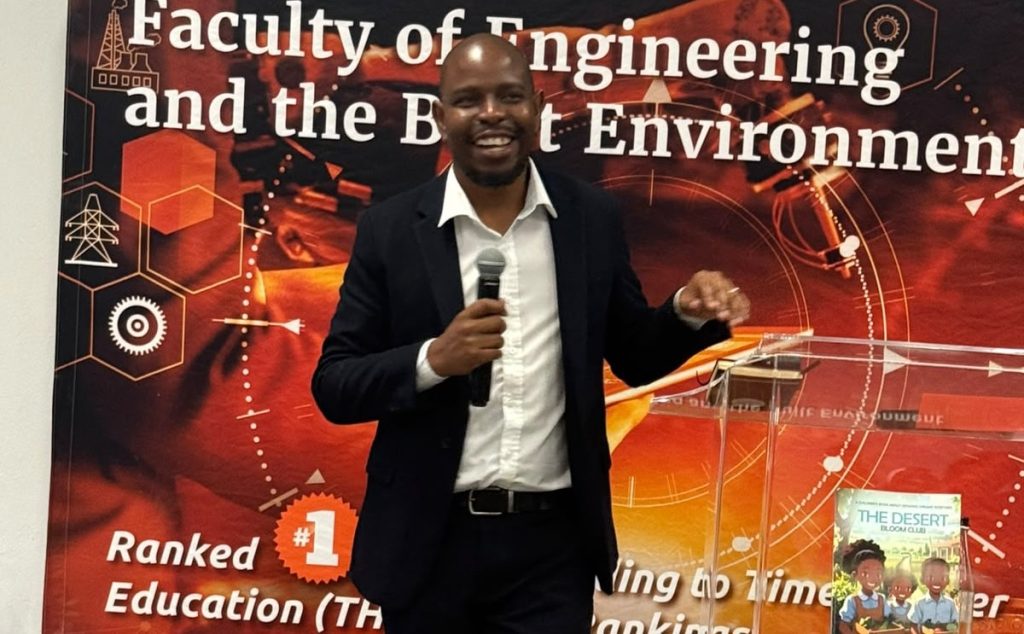
Kandaya told The Nation last week that the book blends African cultural wisdom with modern ecological science, teaching children about living soil, sustainable farming and the value of teamwork.
Designed for schools, community programmes, and families, Kandaya said the book aims at igniting a new generation of young agripreneurs and environmental champions.
“The Desert Bloom Club is more than a book, it is an entry point into youth-led agricultural transformation. Through a relatable story rooted in African culture, this book introduces children to ecological intelligence, food security and sustainable farming practices. It supports national goals around climate resilience, healthy nutrition and youth empowerment,” he said.
While stating that hard copies will be in Malawian bookshops soon, Kandaya said he was inspired after reflecting on numerous issues like how access to food is more than a fundamental right, what kind of food Africa is consuming and where it comes from and how Africa holds 65 percent of uncultivated arable land, abundant resources—yet 309 million people, roughly 20 percent of the continent, face hunger and undernourishment.
He said: “These reflections inspired me to write the book, The Desert; reflection on 60 percent uncultivated arable land in the world that is found in Africa. Bloom; our potential to produce our food. Club means that it happens if we don’t work in isolation.”
Kandaya said the book can be integrated into primary and secondary school subjects like natural sciences, life skills and geography to teach food security, ecosystems, and environmental care, as well as early childhood development and community projects to foster teamwork, leadership and practical agricultural skills among young people.
He further said it can be used in interactive field exercises and bedtime reading.
University of Johannesburg’s Centre for Ecological Intelligence director Professor Michael Rudolph said there is need for innovative approaches for teaching children, and that the book is fulfilling that mandate.