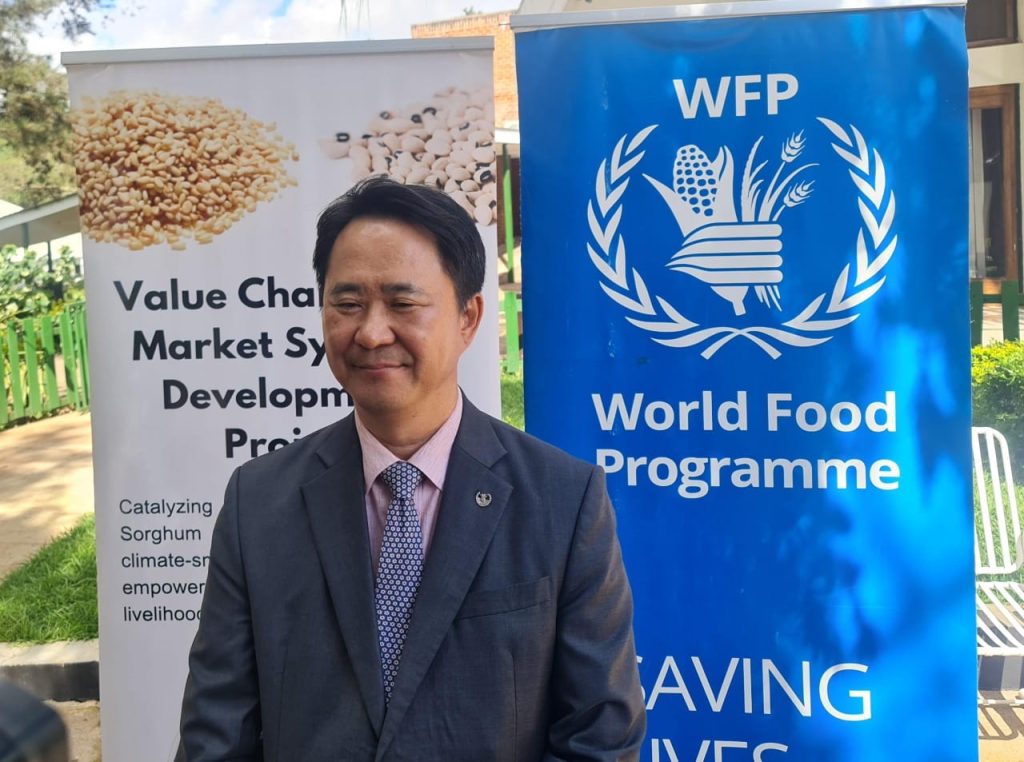
Malawi’s humanitarian response system is under mounting strain as successive climate disasters collide with shrinking global aid budgets, according to the World Food Programme (WFP). In an interview with Weekend Nation, WFP Country Director HYOUNG-JOON LIM warned that the rapid shift from El Niño-induced drought to destructive flooding, increasingly described by scientists as “climate whiplash”, is overwhelming emergency systems not designed for continuous crisis mode. Excerpts:
How has WFP Malawi’s operational capacity changed over the past 24 months, particularly moving directly from drought response into flood relief?
WFP Malawi has been under constant pressure from successive climate shocks, including cyclones, droughts and localised flooding. Food security remains fragile, with around four million people estimated to face acute food insecurity during the October 2025 to March 2026 lean season, some at emergency hunger levels. In response, WFP expanded food assistance through in-kind distributions and cash transfers while scaling up nutrition support for malnourished children, pregnant and breastfeeding women, and people living with HIV and tuberculosis. During the 2025/2026 lean season, about one million people received food and cash assistance. At the same time, long-term resilience work has come under pressure due to funding cuts. Some planned interventions have been reprioritised, reducing efforts to tackle the underlying causes of repeated emergencies. Nevertheless, WFP continues to invest in initiatives such as the Zero-Hunger Village model, which promotes climate-smart agriculture, livelihood diversification and community-led nutrition systems to reduce future dependence on aid.
With global humanitarian budgets tightening, how is WFP Malawi managing funding shortfalls?
WFP is balancing life-saving interventions with more targeted and cost-effective operations. Humanitarian needs worldwide continue to outstrip available resources. Although four million people were projected to face food insecurity during Malawi’s 2025/2026 lean season, funding constraints meant WFP reached only one million people against an initial target of two million. When resources are limited, assistance is prioritised using vulnerability indicators and government assessments. Priority groups include vulnerable households, malnourished children, pregnant and breastfeeding mothers, people living with HIV and tuberculosis, and communities with limited coping capacity. Areas with severe food gaps and poor access to services, including parts of the Lower Shire, receive special attention.
Which programmes are most vulnerable to funding cuts?
Resilience-building initiatives have been among the hardest hit. Refugee support, school meals and integrated resilience programmes are facing significant funding gaps, potentially leaving children without nutritious meals and limiting climate-smart agricultural support for smallholder farmers. Such reductions risk reversing years of progress and increasing future humanitarian needs. WFP is, therefore, focusing on the Zero-Hunger Village approach, which combines school feeding, nutrition, climate-smart agriculture and community asset creation.
How has climate volatility affected WFP’s last-mile delivery systems?
Rapid shifts between drought and heavy rainfall have created major operational challenges. Dry spells reduced agricultural production, while floods damaged roads, washed away bridges and disrupted transport routes. Flooding in districts such as Nkhotakota and Mangochi affected both local access roads and major transport corridors. To maintain operations, WFP has increasingly relied on pre-positioning food stocks, flexible logistics systems and collaboration with institutions such as DoDMA and the National Food Reserve Agency. In severe cases, expensive alternatives including water transport, temporary storage and air operations have been required. Helicopters, for example, were deployed during Cyclone Freddy to deliver aid to isolated communities.
Beyond financial costs, what is the human impact on the response system itself?
The human cost is significant for both affected communities and frontline responders. Repeated climate shocks have depleted household resources, increased food prices and pushed families toward harmful coping strategies. Malnutrition cases also rose significantly in late 2025. For humanitarian workers and local partners, moving from one emergency to another creates growing physical and psychological strain. According to Lim, this reinforces the importance of resilience-building measures that reduce the frequency and severity of future crises.
Is the current reactive humanitarian funding model still sustainable for Malawi?
Malawi requires predictable and flexible financing systems that support anticipatory action, multi-year resilience investments and stronger institutional capacity. Anticipatory action allows support to be released before disasters fully unfold using early warning systems. Communities can then receive interventions such as cash transfers, drought-tolerant seeds, livestock support or evacuation assistance before crises escalate. Sustained investment in climate-smart agriculture, nutrition systems and social protection would help move humanitarian efforts away from repeated emergency responses and towards long-term resilience and food security.