Ministry of Justice has said the Correctional Services Bill formerly the Prison Bill is set to be tabled in Parliament this November.
The enactment of the Bill could see prisons decongested through creation of a parole system and introduction of community servicing for minor crimes, among others.
Community service is unpaid work, intended to be of social use, that an offender is required to do instead of going to prison.

meetings are underway
For instance, an offender may be sentenced to sweep a market for a specified period instead of going to jail.
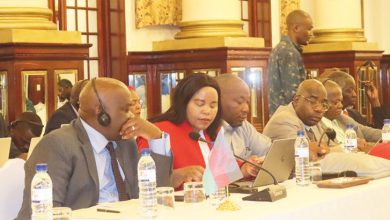
Confirming the development yesterday, Ministry of Homeland Security Principal Secretary Steven Kayuni said his ministry has already started consultative meetings with other stakeholders, including civil society organisations (CSOs) in readiness for the tabling of the proposed amended Bill next month.
He said the proposed legislation is an overhaul of the penal system in Malawi and that it will help to fix it.
Said Kayuni: “The terrain is likely to change with a human-centred approach, clarified operations and decision processes, rehabilitative and decongested system.
“For instance, there are halfway homes as a proposed approach to rehabilitation, psychosocial support and medical support structure, probation and operational framework that will make the penal system work.”
A halfway home is a residence located in the community where people are placed to either serve all or part of a sentence, or serve a period of time after being released from federal prison, in order to prepare for re-entering the community.
Human rights organisations such as Centre for Human Rights Education, Advice and Assistance (Chreaa) and Malawi Human Rights Commission (MHRC) have for a long time called for the enactment of the Bill, noting that the Prisons Act of 1956 is outdated and does not reflect the realities of today’s world.
Among others, the human rights organisations have been advocating for prisons where convicts can rehabilitate, reform and reintegrate and not be a place of punishment as stipulated in the Prisons Act of 1956.
In an interview, Chreaa executive director Victor Mhango said the Bill represents a significant step towards commitment to justice and the rule of law.
“The current 1956 Prison Act is outdated and no longer meets the needs of our modern society. Reforming our prison system is essential for ensuring that it upholds human rights, provides better rehabilitation opportunities, and improves overall conditions,” he said.
Malawi has a total of over 16 536 prisoners, 136 percent more than the recommended 7 000