The High Court of Malawi Financial Crimes Division has maintained restrictions on four bank accounts linked to the controversial sale of Amaryllis Hotel but cleared two operational accounts to allow the business continuity.
In a ruling delivered on Monday in Lilongwe, High Court judge Redson Kapindu said the release of the two accounts followed a mutual agreement between the parties, namely Yusuf Investments Limited trading as Amaryllis Hotel, Anti-Corruption Bureau (ACB) and Financial Intelligence Authority (FIA).
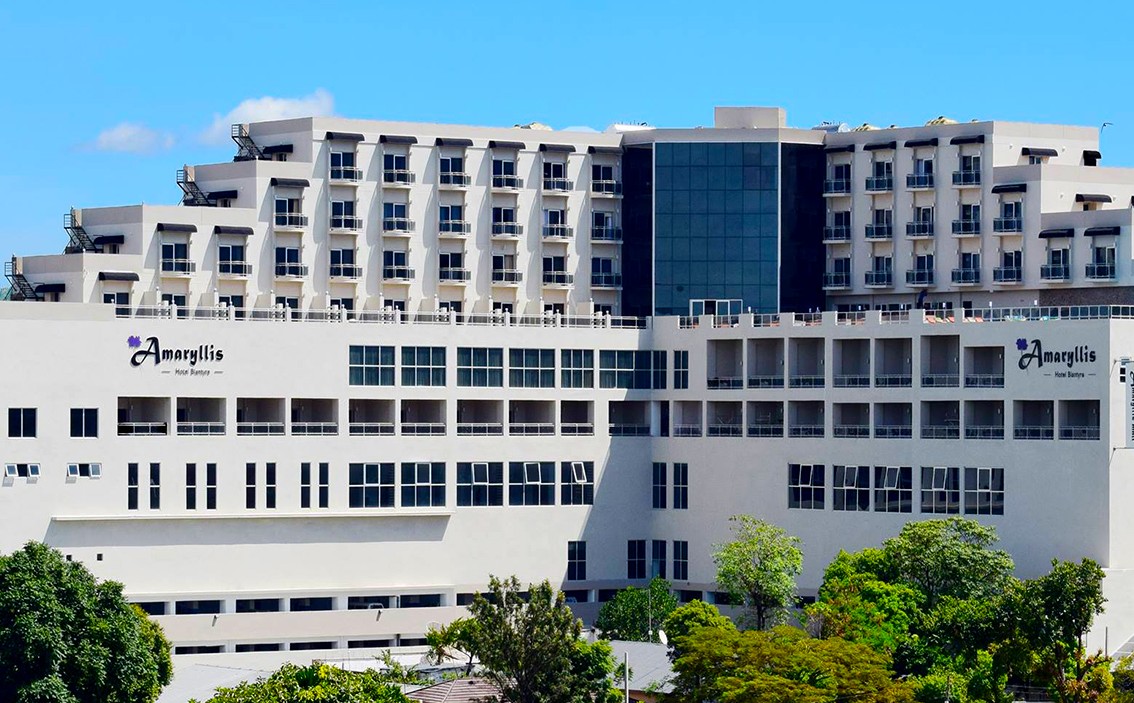
He said that while the State has a legal obligation to investigate suspected illicit funds, such action must be proportionate and should not unnecessarily cripple legitimate business operations.
Said Kapindu: “In respect of the remainder of the accounts to which the restriction notices herein relate, and in respect of which the application to have the restrictions thereon discharged or varied has been dismissed, the court hereby awards the costs thereof to the respondent.”
In the application, Yusuf Investments Limited sought to have all freezing directives and restriction notices imposed by the FIA and ACB lifted, arguing that the funds in question were proceeds from a lawful, arm’s-length sale of Amaryllis Hotel to the Public Service Pension Trust Fund which it said was cleared by ACB and Attorney General.
Yusuf Investments Limited chief executive officer Yusuf Shiraz Yusuf, in support of the application, argued that freezing the bank accounts has “occasioned severe, immediate and ongoing” disruption to its business operations.
He said while the hotel is able to continue receiving payments from its normal operations, it is wholly unable to access or utilise such funds.
Reads Yusuf’s sworn statement in part: “Customers are able to settle bills electronically, but such payments do not translate into usable working capital…
“Payments to suppliers and contractors have been halted; payroll obligations cannot be met and staff members are suffering, and statutory obligations remain outstanding.”
But the ACB, through its director of legal and prosecutions Chrispin Khunga, opposed the application, arguing that the restriction notices were lawfully issued under the Corrupt Practices Act to safeguard suspected proceeds of crime during ongoing investigations.
The bureau noted that the restriction notices are preventive, not punitive and that they do not amount to arbitrary deprivation of property.
National Bank of Malawi (NBM) plc last Thursday told Parliament’s Public Accounts Committee (PAC) that legally it could not disclose details of how K90 billion paid to Yusuf Investments Limited for Amaryllis Hotel purchase was disbursed because the law limits how much customer information banks can give to third parties.
PAC sought details on beneficiary accounts, transfers and whether any of the money was channelled to the hotel’s operational accounts.
But NBM plc chief executive officer Harold Jiya told the inquiry that funds in the account that received the proceeds remained frozen following a directive from the FIA.
“When we got an order… all the accounts were frozen on March 13 2026… The funds that were there when RBM [Reserve Bank of Malawi] and FIA came to us remain the same,” he said, adding that the hotel’s operational accounts were later unfrozen to allow business continuity.