The crew of the Malawi Defence Force (MDF) Dornier 228 had several options to avoid the Chikangawa crash, including turning back or diverting to Karonga if it could not safely land at Mzuzu, retired pilot Captain Jackson Sagawa has told Parliament.
Sagawa said the crew should have maintained its assigned altitude under visual flight rules (VFR) and alerted air traffic control (ATC) if weather or any other problem forced it to deviate from the route.
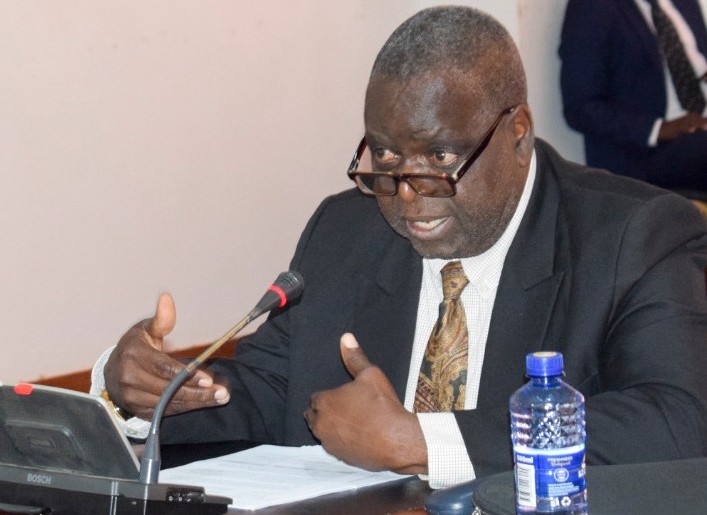
controllable. | Jacob Nankhonya
“If I need to go out of that, maybe because of the weather, then I need to request ATC. Or I need to call Pan-Pan,” he told the parliamentary Ad hoc Committee investigating the crash.
Responding to questions from Mulanje North DPP MP Gilbert Khonyongwa about the aircraft’s position, manoeuvres and final communication with ATC at about 10.12am, Sagawa said the crew could also have returned or diverted to Karonga.
He described the final contact with ATC as a crucial opportunity for the crew to report difficulties or issue a distress call.
“At 10.12, this was the best opportunity for the crew to voice out any distress call if they were in trouble because they had communication with air traffic control,” he said.
“In the absence of them mentioning any distress call, I cannot allude that they were under distress.”
Sagawa said the aircraft appeared to remain controllable until it struck terrain, describing the accident as controlled flight into terrain.
“As far as I’m concerned, it was still controllable,” he said.
He cautioned, however, that conclusions about the crew’s intentions and cockpit decision-making should not be treated as established facts because the aircraft had neither a cockpit voice recorder nor a flight data recorder.
Sagawa urged the committee to examine the wider aviation system alongside the crew’s decisions.
He said the BFU report attributed the crash to low-level flying in marginal weather, loss of situational awareness and inadequate pre-flight preparation.
He said GPS data showing the aircraft repeatedly flying at low altitude over hilly terrain was important in tracing how the risk developed.
“In my professional view, aviation safety is strongest when an organisation makes a safe decision, the easiest decision,” he said.
Sagawa said air traffic, flight information and weather services were intended to support pilots’ decisions but did not remove the responsibility of the pilot-in-command.
He said pilots should not fear blame for delaying or diverting a VVIP flight when safety demanded it.
“Good information, disciplined procedures, competent crews and an unambiguous safety culture” should prevent a flight from reaching an “unavoidable and irrecoverable state”, he said.
He also said protocol and VVIP officers should accept that safety could require a delay or diversion, and that programme pressure should never override such decisions.
His evidence came after the committee heard that the aircraft took off without a weather briefing because the crew had not requested one.
The inquiry also heard that Mzuzu Airport had operated for more than 10 years without functional navigation equipment and lacked a basic system for recording radio communications.
The June 10 2024 crash in Chikangawa Forest killed Vice-President Saulos Chilima and eight others.