The Japanese Government has committed $246 666 (about K439.3 million) to improve water and sanitation services and establish a bio-fertiliser production unit at Dzaleka Refugee Camp amid growing pressure from dwindling humanitarian support.
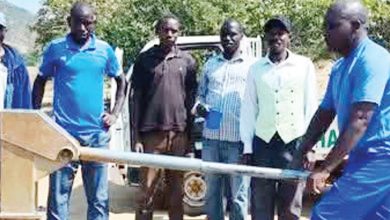
Of the funding, $140 000 will improve water and sanitation services for about 30 000 people in the camp and surrounding host communities, while $106 666 will finance a bio-fertiliser production unit targeting 300 women from the Solidarity of Refugee Women for Social Welfare (Sofres).

The projects are being implemented as Dzaleka, which was designed to accommodate between 10 000 and 12 000 people, now hosts about 63 000 refugees and asylum-seekers.
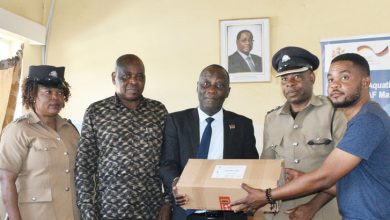
Speaking during a visit to the camp on Thursday, Japanese Ambassador to Malawi Naito Yasushi said the bio-fertiliser project would help reduce agricultural production costs while creating income-generating opportunities for participating women through the sale of surplus fertiliser.
He said the interventions were part of Japan’s efforts to promote self-reliance and restore hope among refugees.
“Japan’s cooperation is fundamentally guided by the principle of ‘human security’, which asserts that every individual deserves to live in dignity, safety and with hope for the future,” Naito said.
The support comes at a difficult time for Dzaleka, with development partners scaling back assistance to refugees and asylum seekers.
UNHCR representative Precious Nkoka said this month would mark the end of the World Food Programme’s (WFP) blanket food assistance to refugees, after which support would be targeted at the most vulnerable people.
The targeted programme will prioritise vulnerable groups, including families with children and people with disabilities, Nkoka said, adding that UNHCR was working with WFP and the government to mobilise resources and communicate the changes.
Commissioner for Refugees in the Ministry of Homeland Security Ignacio Maulana warned that conditions at Dzaleka could deteriorate further once the current phase of WFP assistance ends.
“I think the situation is bad. And it’s going to get worse,” he said.
Maulana said limited land within the camp meant farming alone could not provide a sustainable solution to refugees’ food and livelihood challenges.
The government has identified about 145 hectares in Chitipa for a proposed settlement that would provide additional agricultural land and livelihood opportunities. The area could also be irrigated to support farming.
However, relocation has yet to begin as the government is still mobilising resources to compensate people whose land would be used for the settlement.
Nkoka confirmed that compensation payments were incomplete, saying UNHCR was supporting the government through resource mobilisation and engagement with stakeholders.
For UN Women, which is supporting the bio-fertiliser project, the initiative is intended to address both food insecurity and women’s economic vulnerability.
Interim UN Women country representative Fatma Mohamed said refugee women were disproportionately affected by food insecurity and that the project would make agricultural inputs more affordable while creating income opportunities.
She said the initiative could eventually supply fertiliser beyond Dzaleka, potentially contributing to the wider agricultural economy.