Five months after the Malawi Supreme Court of Appeal faulted the revocation of the ‘dead’ Finance Bank Malawi’s banking licence, the State has questioned the basis of its K1 trillion compensation claim.
Presenting its case before High Court and Supreme Court assistant registrar Ibrahim Hussein in Blantyre yesterday, Finance Bank paraded its witnesses to justify its claim.
The bank paraded its liquidator Sokwani Chilembo and Nkhuzo Kuwani, a financial adviser for the Zambia-based Mahtani Group of Companies.
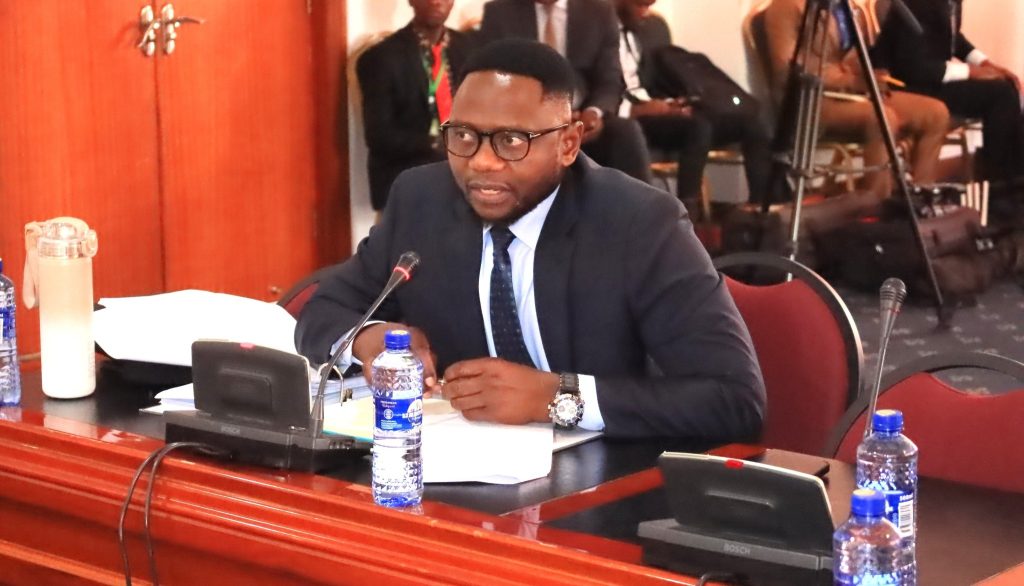
The two witnesses faced a five-hour cross-examination from the State’s legal team comprising Attorney General Frank Mbeta and Reserve Bank of Malawi (RBM) lawyers, namely Zumbe Kumwenda and two Senior Counsels (SCs) James Masumbu and Patrice Nkhono.
In their cross-examination, the State’s side asked Chilembo to explain why the claim was made in United States dollars when the defunct bank was registered in Malawi and its operations involved collecting deposits and issuing loans in Malawi kwacha.
The bank is seeking $150 million for the alleged violation of its constitutional rights and $134 million for loss of profits and business.
“Was the Finance Bank lending in dollars? Do you have records that it was taking deposits in dollars?” Mbeta queried.
He also asked the court to note that the defunct bank has been in liquidation since 2006, but was claiming “almost a trillion kwacha” which he described as “a huge figure”.
But in response, Kuwani told the court that the bank could have generated additional income if it remained operational and that the revocation of its licence resulted in an opportunity cost.
“There was a loss of opportunity. We are pricing that opportunity,” he said during cross-examination by Masumbu.
Taking his turn, Nkhono put it to the witness that the bank was “not dead” per se because it is still undergoing liquidation and has assets whose value could be relevant to the claim and the assessment before the court.
But Kuwani said the current value of the bank’s assets was not relevant because if it remained operational, it would have generated additional value.
During re-examination by one of the bank’s lawyers, Modecai Msisha, SC, Chilembo said the claim was made in dollars because the investors were foreigners who had invested in foreign currency.
In February this year, the Supreme Court faulted the regulator of financial services’ decision to revoke Finance Bank’s licence over alleged malpractices, including claims that the bank opened ghost accounts used to externalise foreign currency. The ruling ended a 21-year legal battle dating back to May 2005.
The Supreme Court also granted Finance Bank its wish for compensation for loss of business.
Records show that Finance Bank in 2001 made a profit-after-tax of K70 million while in 2002 the profit jumped to K159 million and in 2005 it dropped to K121 million.
In June 2006, Finance Bank chairperson Rajan Mahtani said in a statement that between June and December 2005, the bank’s level of deposits dwindled from K2.13 billion to K381 million while total assets dropped from K3.48 billion to K926 million.
The case started in the High Court of Malawi Commercial Division in May 2005. However, Finance Bank counterclaimed for loss of business following its closure. In October 2014, the High Court awarded RBM K13 million and dismissed Finance Bank’s counterclaim.
Finance Bank opened in 1995 and after its licence was revoked in May 2005, it briefly reopened under strict supervision of the central bank before formally closing in January 2006. Ironically, in 2013 RBM granted a banking licence to New Finance Bank (Malawi) Limited with Mahtan, the same owner of the defunct Finance Bank, as a principal shareholder, a move a banking expert argued at the time raised questions about the regulation of the banking sector in Malawi.